At the World’s Edge Festival: awe-inspiring magic and the lines that connect us
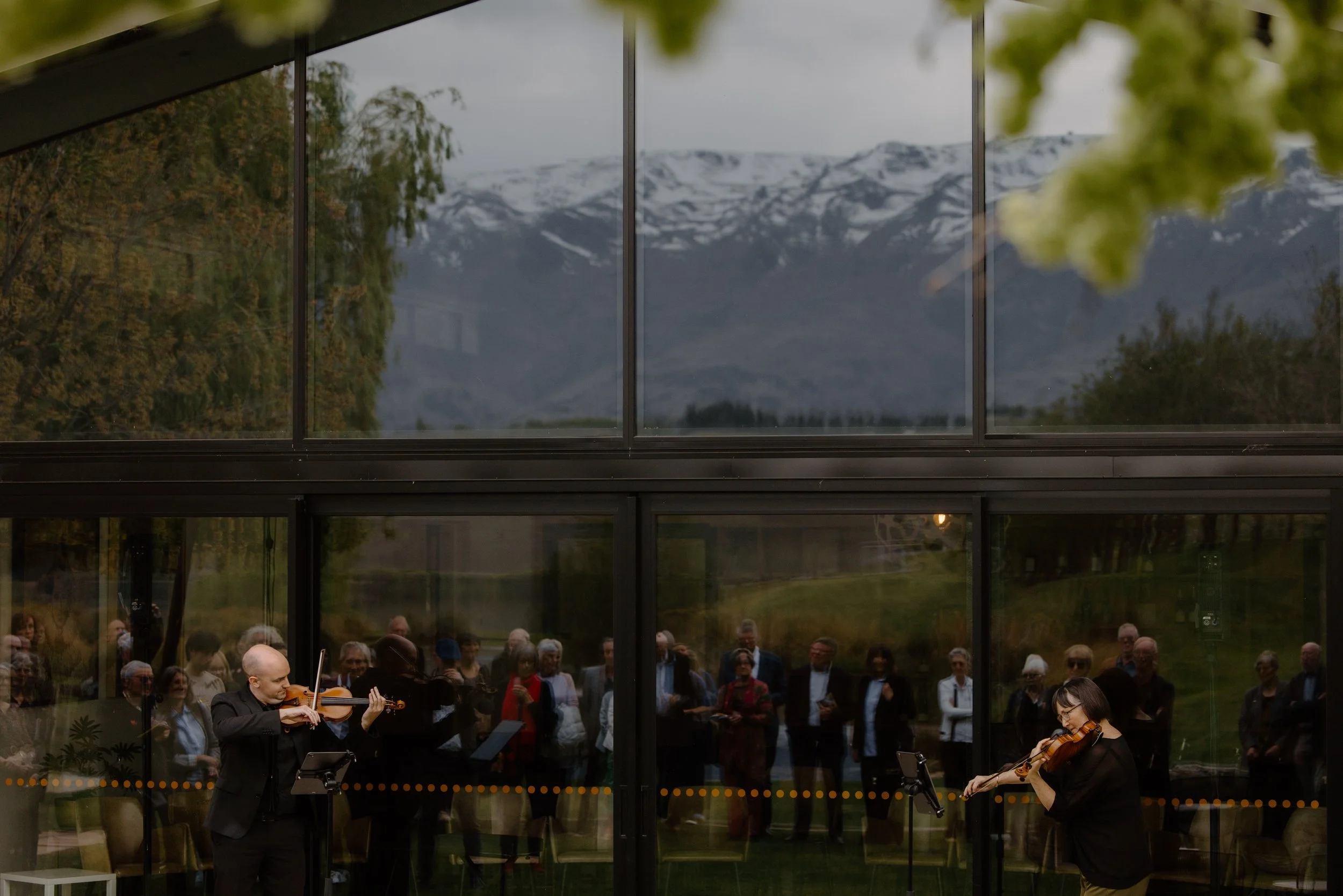
AWE directors Benjamin Baker and Justine Cormack performing Michael Norris’ work At this end of the world, there is plenty of weather
Image credit: Nat Symonds | Run in the shadows
The first concert in this year’s At the World’s Edge Festival (AWE) began with a short world premiere, a work especially written as a Festival intro for violinists Benjamin Baker and Justine Cormack, the AWE directors, by the festival’s 2026 composer-in-residence Michael Norris. Called At this end of the world, there is plenty of weather, the energetic duet is an intense, heated and dynamic exchange, perhaps invoking the creative forge within which these two had fashioned their sixth splendid AWE festival in Aotearoa.
AWE began life in 2021, Baker and Cormack holding their nerve in the face of pandemic disruptions to deliver their first festival. From its beginnings, the annual event has been bold and ambitious in scope, and since 2022 has settled into a format of seven main festival programmes, located around Queenstown Lakes, a region of New Zealand famous for its awe-inspiring environment of mountains and lakes.
Committed to the intensity and intimacy of chamber music, Cormack and Baker have located eleven concerts in small, beautiful venues with responsive acoustics in Queenstown, Wānaka, Cromwell and Bannockburn. Four of the seven programmes are repeated to ensure audiences are accommodated. Winery settings in stunning contemporary small halls in Wānaka and Cromwell - the Rippon Winery Hall overlooking Lake Wānaka and the Cloudy Bay Shed near Cromwell – are complemented by a main base at the Te Atamira Gallery complex in Queenstown and two afternoon concerts in the small historic Coronation Hall in tiny Bannockburn.
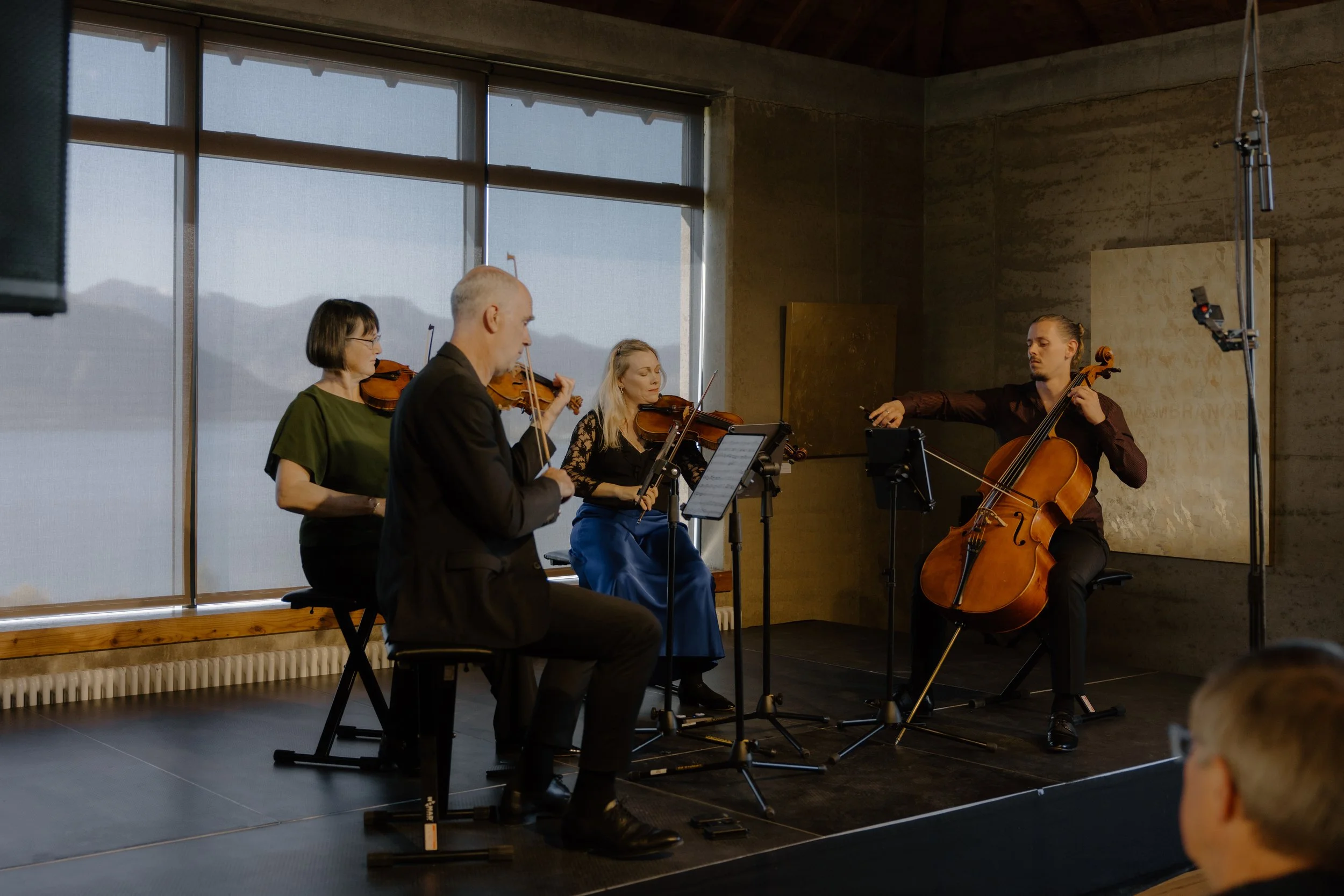
AWE musicians Florian Donderer and Justine Cormack (violins), Julia Joyce (viola) and Matthias Balzat (cello)
…performing at the Rippon Winery Hall in the first programme of the AWE Festival 2026 in Wānaka.
Image credit: Nat Symonds | Run in the shadows
Since returning home this month from my fourth visit to AWE, I’ve sought words to capture what’s special about this remarkable nine-day festival. Alongside enhancements like the strong presence of a composer-in-residence and a role for an emerging composer, an emerging artist programme for young musicians and a far-reaching schools programme, two key features stand out – the thoughtful and imaginative curation of the programme and the musical brilliance of the performers.
Concert curation
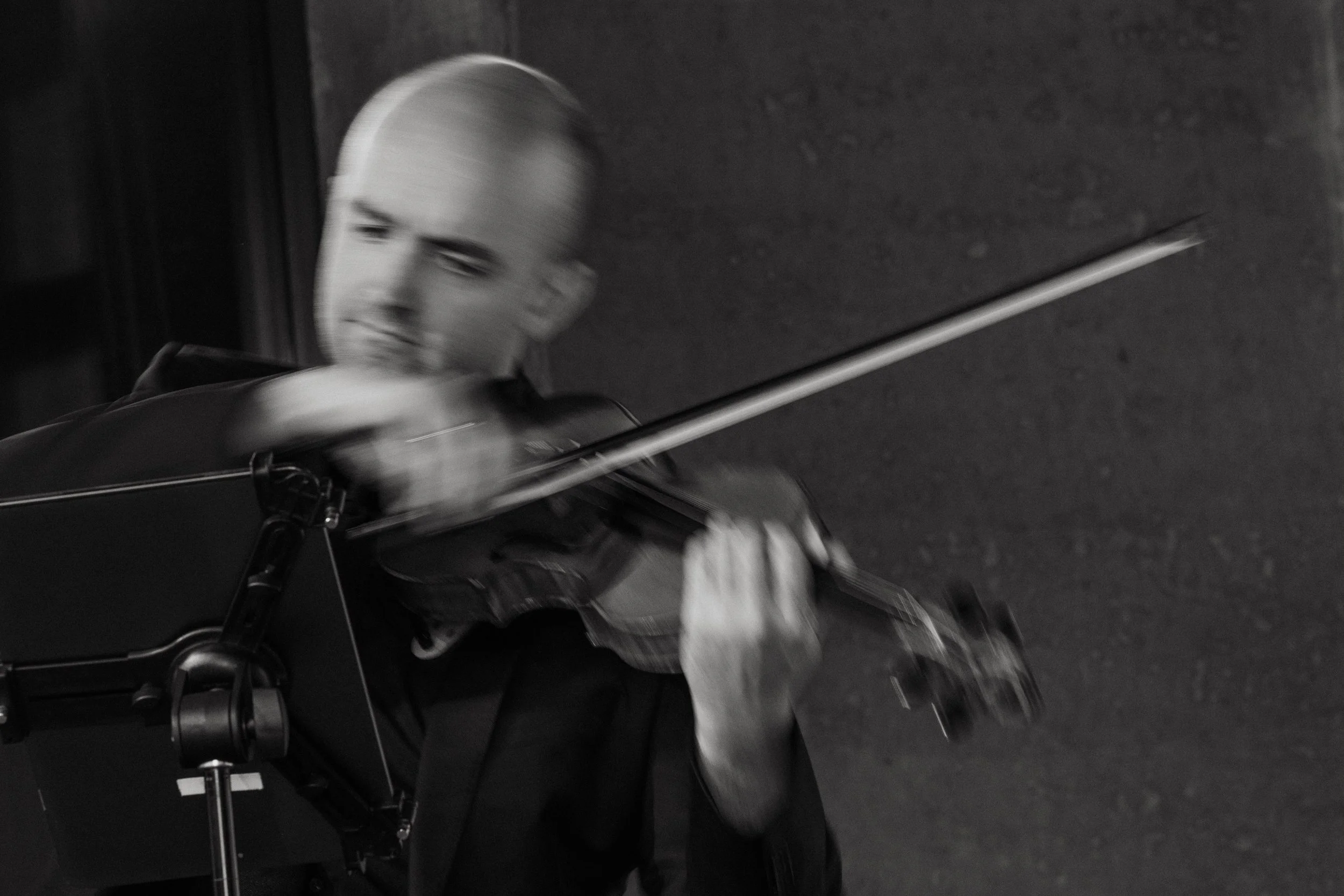
AWE artistic director Benjamin Baker
“…reached deeply into the vast repertoire of chamber music from past centuries and the present day.”
Image credit: Nat Symonds | Run in the shadows
AWE’s programming offers a marvellous example of themed concert curation, under the leadership of artistic director Baker. He reached deeply into the vast repertoire of chamber music from past centuries and the present day to enable audiences to explore the over-arching theme of “lines” in programmes called “Crossed”, “Between”, “Strung”, “Woven”, “Radiance”, “Unbroken” and, finally, “The Line”.
This was a festival that acknowledged the full scope of the art form we call chamber music. Alongside fresh and compelling performances of beloved music offering new perspectives on some favourites, I heard numerous works I’d never heard live before, in programmes that offered links and resonances within the themes, and between composers and works from many cultures and historic periods.
The very first AWE concert, in Rippon Hall in Wānaka, was a great example of Baker’s approach. After the final work on that programme, Beethoven’s 3rd Razumovsky String Quartet, the exhilarated audience rose to its feet for a prolonged ovation. Our immediate applause was for that performance, an idiosyncratic, free and compelling interpretation led by violinist Florian Donderer that allowed us to hear the well-known work anew.
Our applause was, as well, for the whole programme, called “Crossed”. It was crafted “to trace a journey in a landscape where moral, political and spiritual lines are tested, crossed and redrawn, in works born of occupation, conflict and upheaval.”
After the short Norris duet, the programme began with music from Polish violinist and composer Grażyna Bacewicz, who knew a lot about conflict. She chose four equal lines for her Quartet for Four Violins, performed with care and insight. Composed in 1949, the fierce, uncompromising work reflects her anguish under the constraints of the post-war Stalinist regime in Poland, and this fine performance revealed the compositional depth, skill and variety of expression of a composer we need to hear from more often.
The next work floated to our ears from off stage, a string quartet playing the clear lines of Bach’s much-loved chorale, Jesu, meine Freude. It created a moment of stillness with a sense of distance that led beautifully into Niflheim (“The House of Mists”), the 3rd movement of Norris’s string quartet Exitus.
With the tiny intimate sounds of bow hair passing almost silently over strings, Norris evoked the far north region of Norse mythology with its icy fogs and mists. An old Norse hymn tune was played almost inaudibly, as if from an after-world, by violins and viola, while Tanja Tetzlaff’s cello traced delicate grief-laden keening, fluttering sounds right at the top of her instrument’s range.
This magical work held the audience rapt, the spell not broken by the reverent intensity of the opening of the Beethoven Quartet that followed. From the first perfectly placed chords, the four musicians – with Donderer were Cormack, violist Julia Joyce and cellist Matthias Balzat – played with exquisite care and unanimity, weaving lines of counterpoint together. As swallows flew outside the window, the ensemble danced with conversational grace in the minuet and raced through the final fugue with dramatic brilliance.
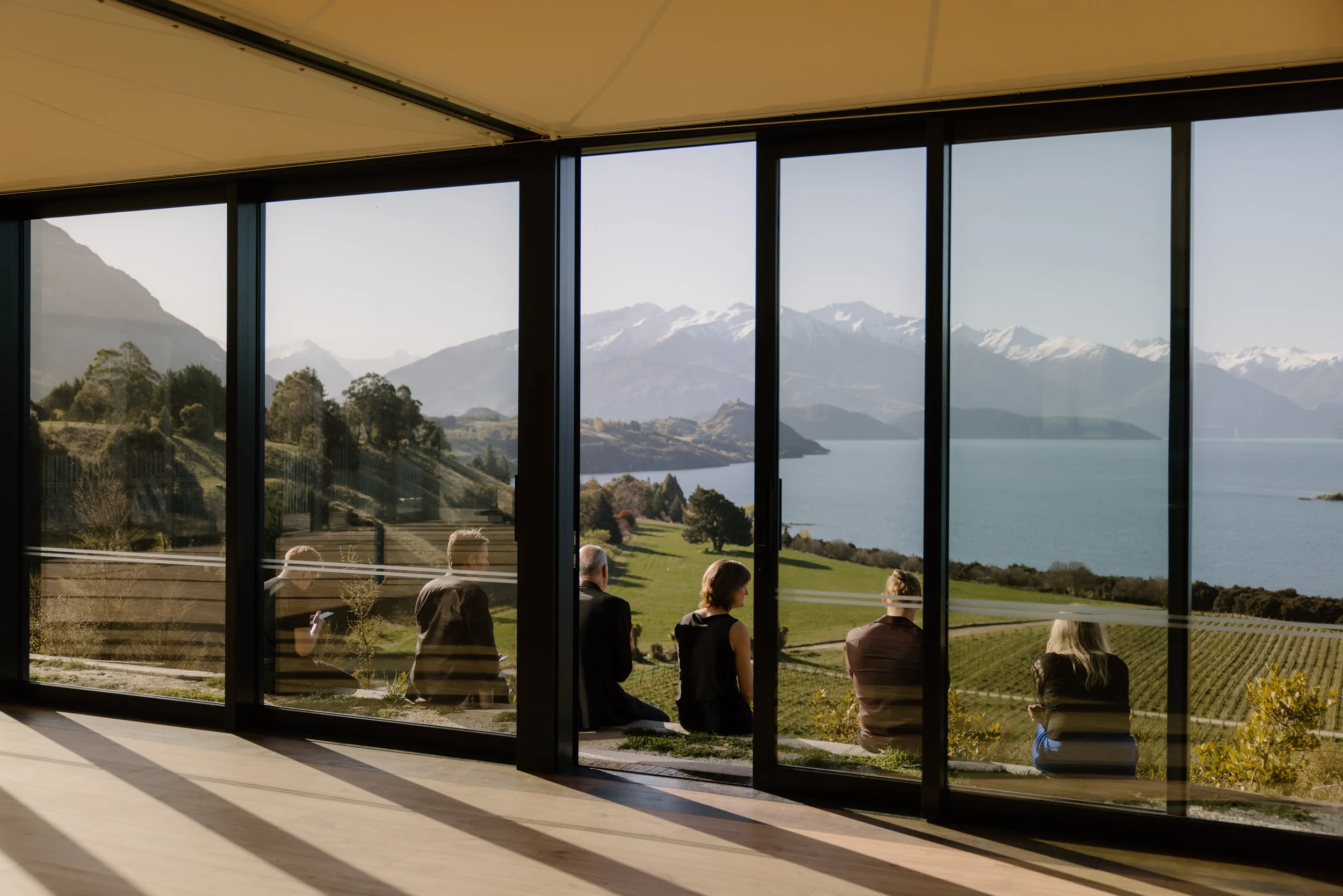
AWE musicians contemplating Lake Wānaka before a concert at Rippon Hall
“…chamber music dream team.”
Image credit: Nat Symonds | Run in the shadows
Performance quality
The outstanding quality of the performances at AWE was the other feature that stood out for this festival. A crack group of ten AWE artists was assembled from New Zealand, Europe and North America. This chamber music dream-team included German musicians Donderer and Tetzlaff, US violist Matthew Lipman, Australian US-based pianist David Fung, London-based Baker and his Estonian wife, violinist Marike Kruup, and New Zealanders Cormack, violinist Monique Lapins, Joyce and Balzat.
Chamber musicians need much more than a dazzling technique, and these musicians amply demonstrated their individual flair and intuitive musicianship, their generous collaborative qualities and flexibility and their thrilling interpretative skills in a huge range of musical styles and periods throughout the festival. Some had never met before, but Baker’s care in matching players created some thrilling ensemble relationships.
Some personal highlights
Australian-born pianist David Fung, now living in New York and Vancouver and serving on the faculties of the Manhattan School of Music and the University of British Columbia, revealed in every performance his love of piano sound. His performance of Debussy’s Estampes reminded me of the composer’s admonition that the piano should be played “as if it has no hammers”. The liquid beauty of Fung’s playing, layers superbly balanced and oriental harmonies glowing, is perfect for this music.
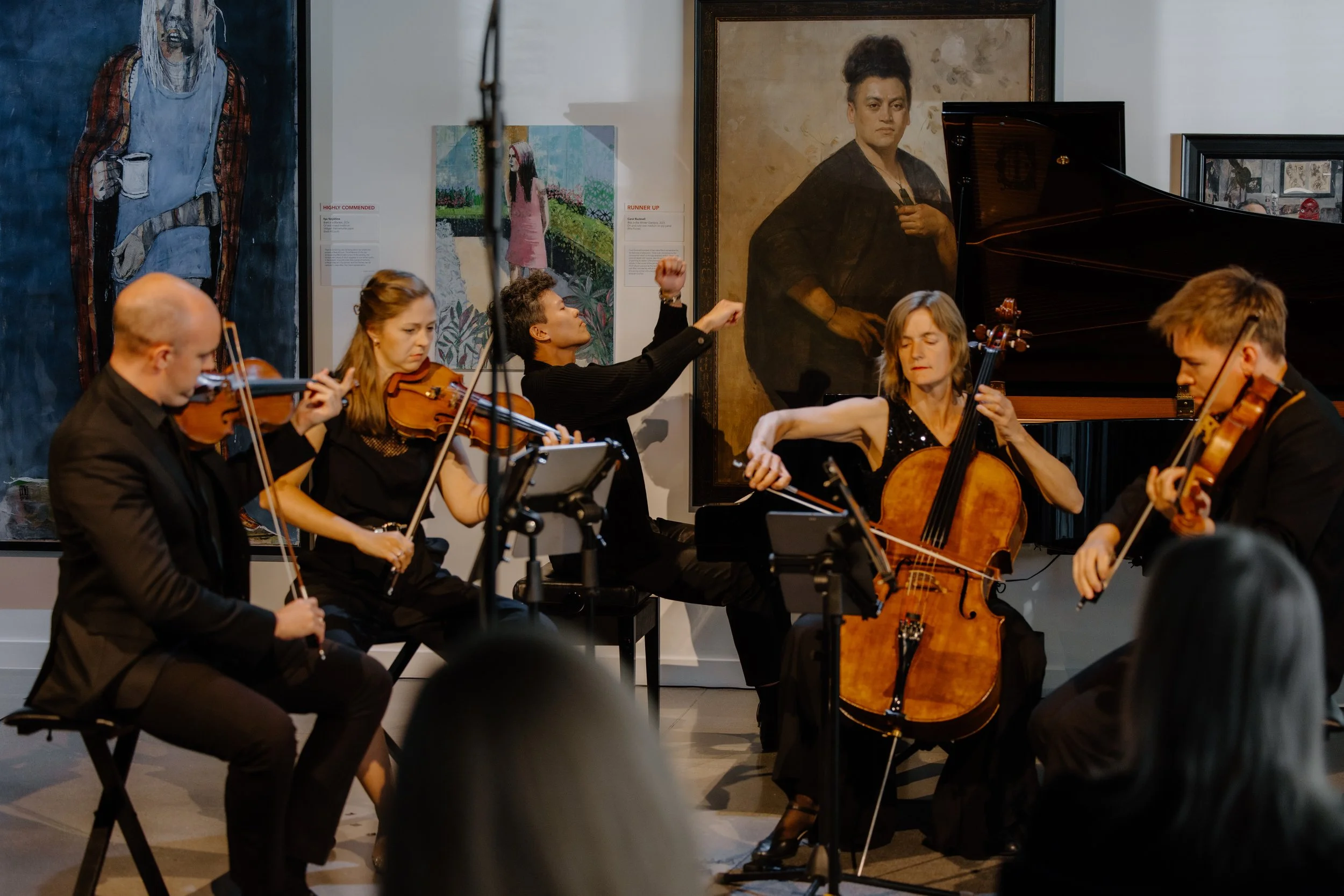
AWE musicians performing Korngold’s Piano Quintet at Te Atamira in Queenstown
…(from left) Benjamin Baker and Marike Kruup (violins), David Fung (piano), Tanja Tetzlaff (cello) and Matthew Lipman (viola)
Image credit: Nat Symonds | Run in the shadows
Fung also played in numerous ensembles, proving his great skills as a chamber music collaborator, highly attuned to his fellow musicians. A highlight was the lush, romantic early Piano Quintet by Korngold, the closing work of the Festival. With string players Baker, Krupp, Lipman and Tetzlaff in brilliant form, Fung captured all the melodrama of the highly expressive work, right through to the forearm glissandi of the big finale.
The Korngold, a work seldom performed, was preceded by Anton Webern’s early Langsamer Satz for string quartet. I had wondered why a more significant choice of Webern’s music had not been made – Langsamer Satz preceded his Opus 1 – until I heard the chamber music perfection of this exquisite performance by Donderer, Lapins, Joyce and Balzat, strong, romantic flowing lines woven together.
The three visiting string players, Donderer, Tetzlaff and Lipman, brought their deep chamber music experience to many exciting performances. Donderer and Tetzlaff, a married couple, also offered wonderful insights into their lives and careers in a fascinating meet-the-artist “Conversation” session with Baker early in the festival, and engaged enthusiastically with their colleagues and with audience members throughout the event. Their brilliant, dancing performance of Iannis Xenakis’ Dhipli Zyria for violin and cello lit up the room at the Cloudy Bay winery.
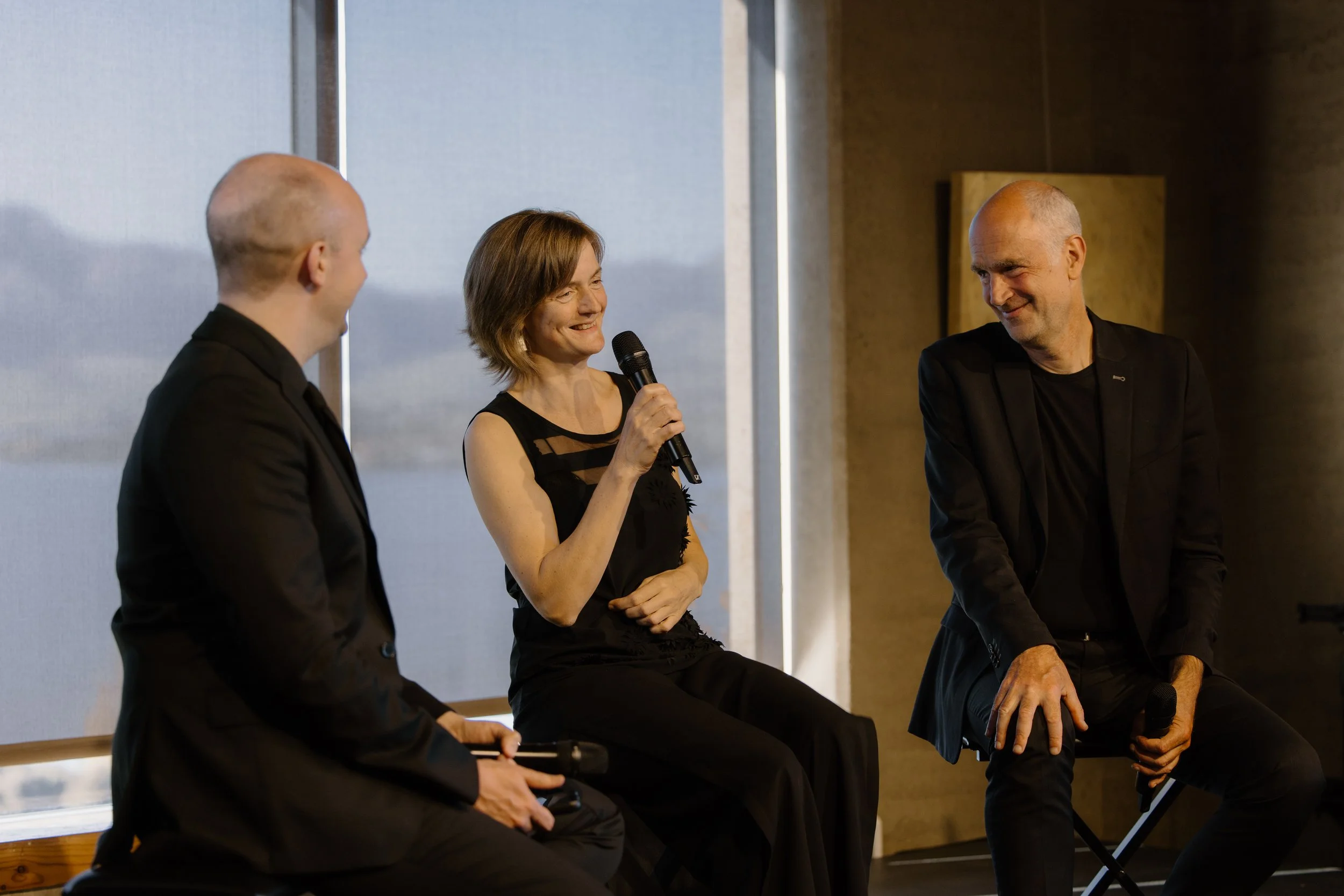
Benjamin Baker (left) interviews cellist Tanja Tetzlaff and violinist Florian Donderer about their lives in music
Image credit: Nat Symonds | Run in the shadows
Talking about his approach and the freedom he brought, for example, to Beethoven’s Razumovsky 3, Donderer explained that, for him, music “is not what’s on the page – what bores me most is being very correct. Music is dear to us personally; it touches your soul and helps you navigate your life.” Tetzlaff (sister of acclaimed violinist Christian Tetzlaff) is also a climate advocate and her international award-winning film Suites for a Suffering World frames Bach’s Cello Suites as “a reflection on nature’s beauty and vulnerability”.
Lipman, an outstanding violist in huge demand internationally, is a native of Chicago on faculty at Stony Brook University in New York. A frequent performer with the Chamber Music Society of Lincoln Centre, he regularly collaborates with the world’s top classical musicians, including pianist Jeremy Denk who captured audiences at this year’s Adam Festival in Nelson. Lipman’s gorgeous sound and playful approach in Rebecca Clarke’s Lullaby and Grotesque illustrated his joy in chamber music performance, the violist smiling with delight as he played the Grotesque movement with wit and enjoyment.
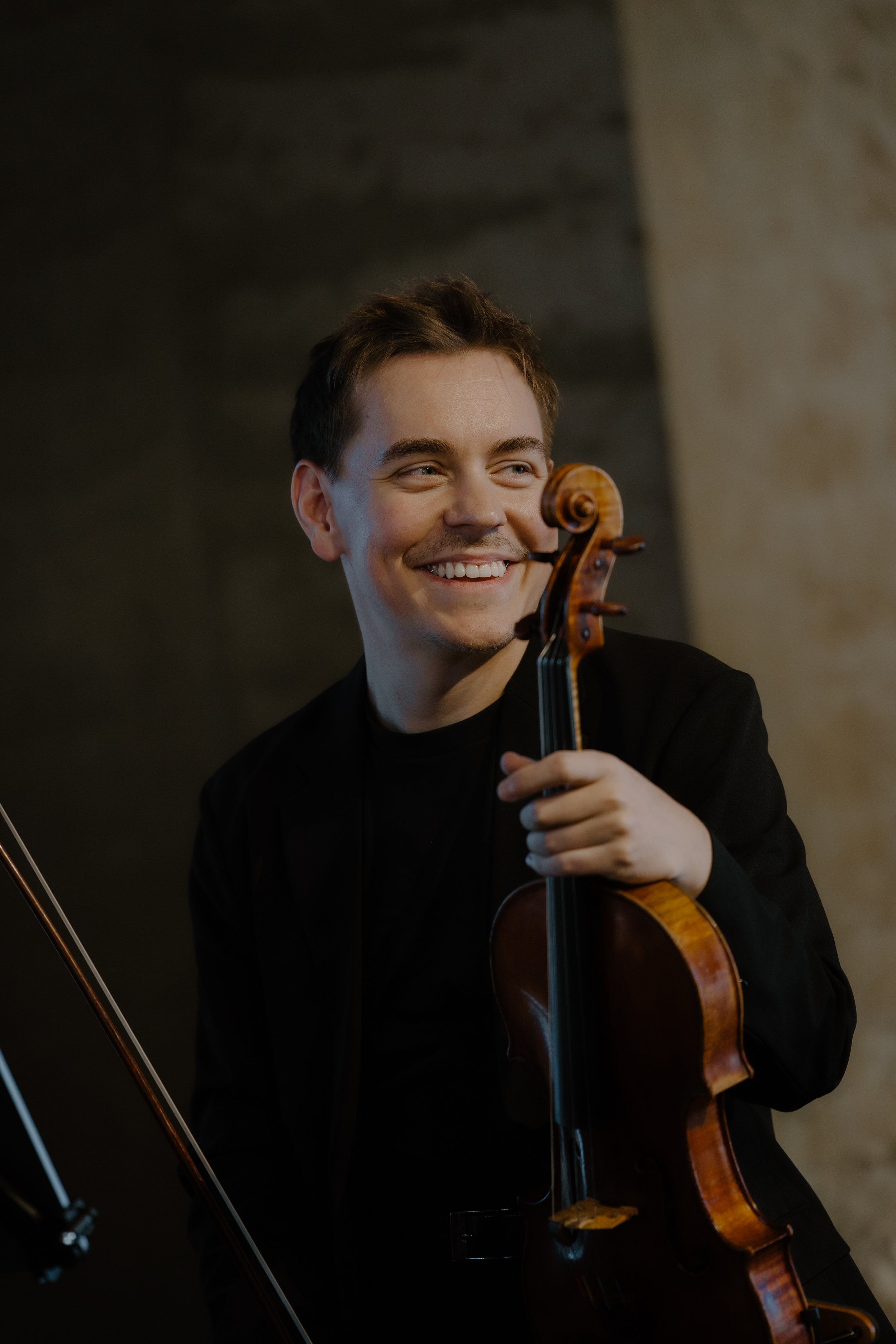
Violist Matthew Lipman
“…a gorgeous sound and playful approach.”
Image credit: Nat Symonds | Run in the shadows
In the resonant interior of the charming old Bannockburn Hall, Lipman joined with Baker and Balzat to present an expressive and extrovert performance of a String Trio by little known Czech composer Gideon Klein. Written in 1944, just days before the young composer’s fatal deportation to Auschwitz, the work and its performance, twining Moravian folk tunes and rhythms in a rich texture, had the audience cheering.
It seemed both extraordinary and moving that we had travelled to a tiny historic New Zealand town to hear this world-class performance of music by a composer few in the audience had heard of, by musicians some of whom had met just days before. Such is the magic of AWE.
Composers-in-residence
The commitment of the AWE Festival to music composed in New Zealand is shown each year by a deep-dive approach to their annual composer-in-residence, a model for any artist residency. Previous composers in the role have been Salina Fisher, Gareth Farr, Victoria Kelly, Eve de Castro-Robinson and John Psathas. This year, Michael Norris was appointed, and his music was included in every main series programme throughout the festival, covering a wide range of his chamber oeuvre. Through interesting “conversations” and introductions to the works, the audience was able to get to know him and his composing trajectory.
Each residency includes a new commission, and Norris’s Orbital for string trio and fixed electronics, a collaboration with visual artist Ed Cruikshank, was premiered in Wānaka. The work, Norris explained, contrasts the immensity of the cosmos and distant horizons with the intimacy of human relationships. Three string players, Cormack, Joyce and Balzat, “orbit” each other, beginning with muted high, remote, ethereal sounds, high in the harmonic series, against the expansive, distant electronic track floating from the speakers.
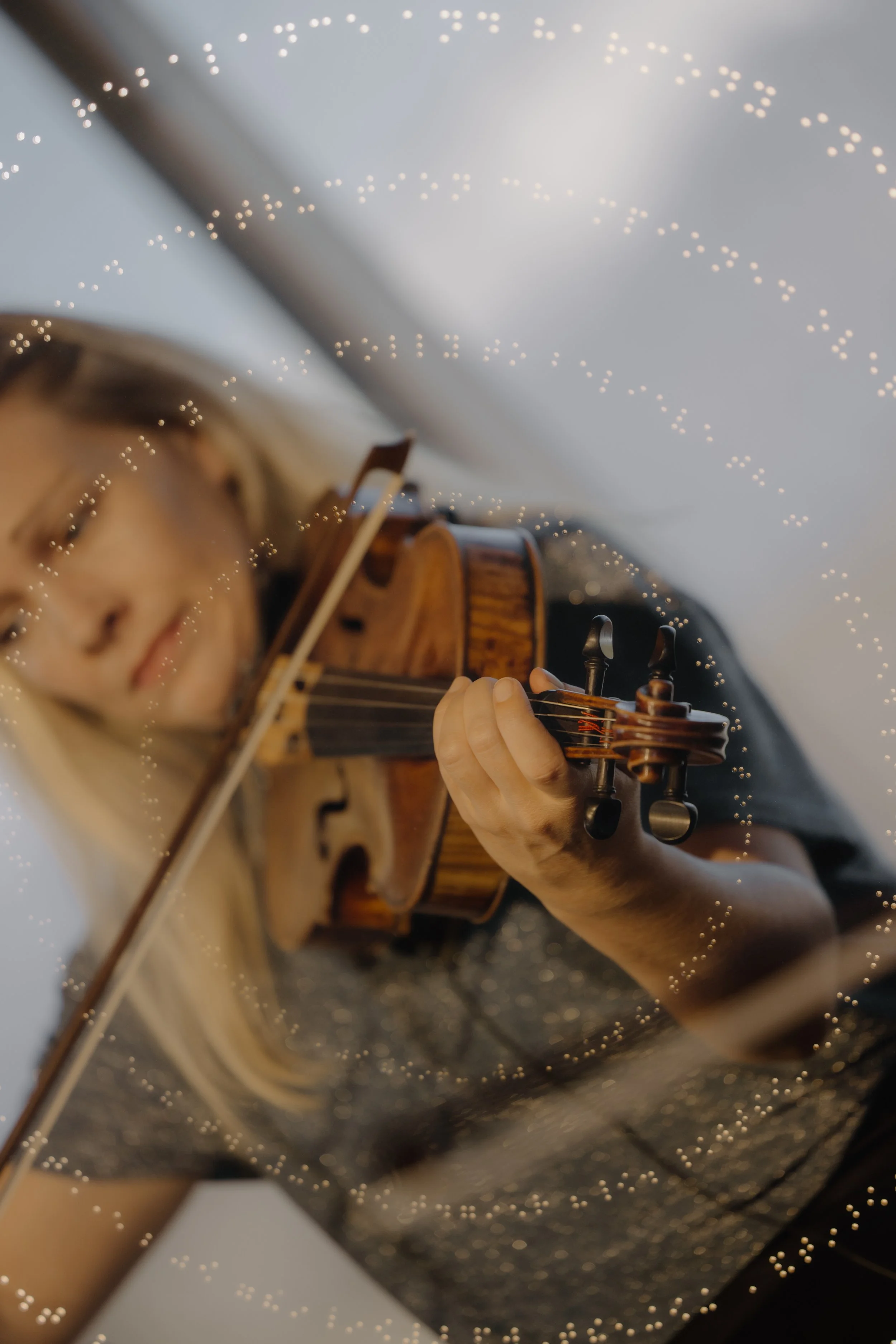
Violist Julia Joyce performing Michael Norris’s AWE commission Orbital with superimposed imagery from Norris’s collaborator Ed Cruikshank.
“…a big conception, compellingly beautiful.”
Image credit: Nat Symonds | Run in the shadows
Norris describes the musicians on stage as “a conversation, creating a psychological connection”, while the electronic sounds provide “an environment”. As his strange, compellingly beautiful work progresses, it descends from the ether, sounds becoming richer and stronger, more insistent, moving down the harmonic series, glissandi sliding, mutes returning for a magically quiet ending. It’s a big conception, performed with Cruikshank’s glowing braille-related artwork on an easel at the front of the stage and projected as a slowly rotating circular pattern of lights above the musicians.
The influence of visual images on Norris’s work was further illustrated by his Deep Field ll for violin and live electronics, inspired by a Deep Field photograph taken by the Hubble Telescope. Lapins’ beautiful violin playing was modified in real time by Norris’s imaginative use of live electronics, the composer’s technical control and “cosmic” vision evoking light from distant objects over 12 billion light years away.
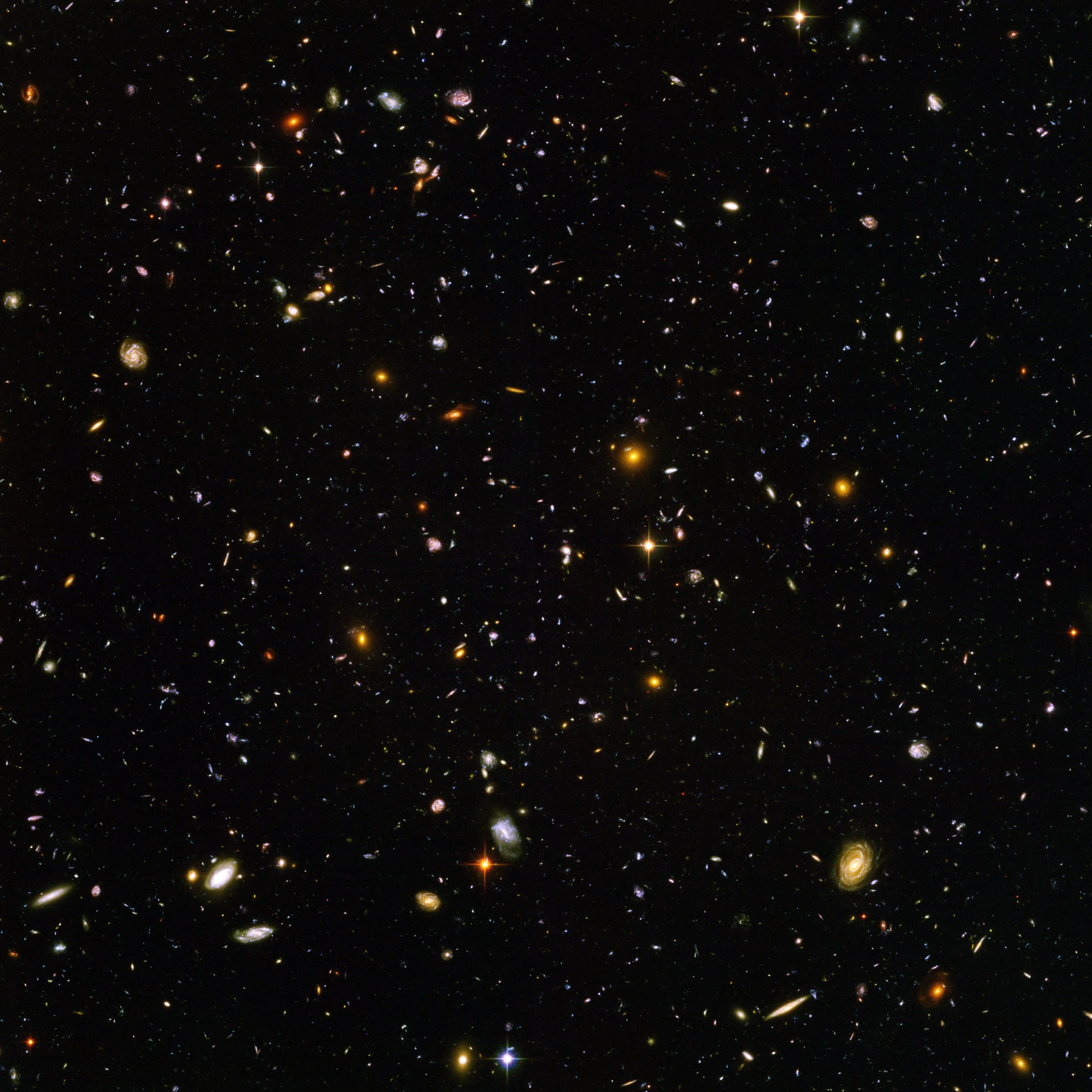
Michael Norris’s Deep Field ll for violin and live electronics was inspired by an image taken by the Hubble Telescope.
Norris’s compositional range was further illustrated by his small solo piano works from the set Where my heart sleeps, very beautifully played in Queenstown by Fung. The composer’s interest in reimagining earlier music was heard in two atmospheric “Prolation Canons” for string quartet, one based on a theme of Hildegard von Bingen, and, in the Bannockburn programme, two movements from his Time Dance, a Sarabande and Polonaise, originally composed for performance with Daniel Belton’s choreography.
In the final concert, Norris’s intensely emotional piano trio The Spaces in Between, played with loving care by Lapins, Balzat and Fung, explores a metaphor drawn from the suggestion from Norris’s geologist father that “rocks can bend over great time periods.” In this extraordinary and impactful work, which was premiered in Tokyo last year, uneasy microtones in the strings flutter angrily again the “rock” of the piano in music crafted around the parameters of dynamics, tension and colours.
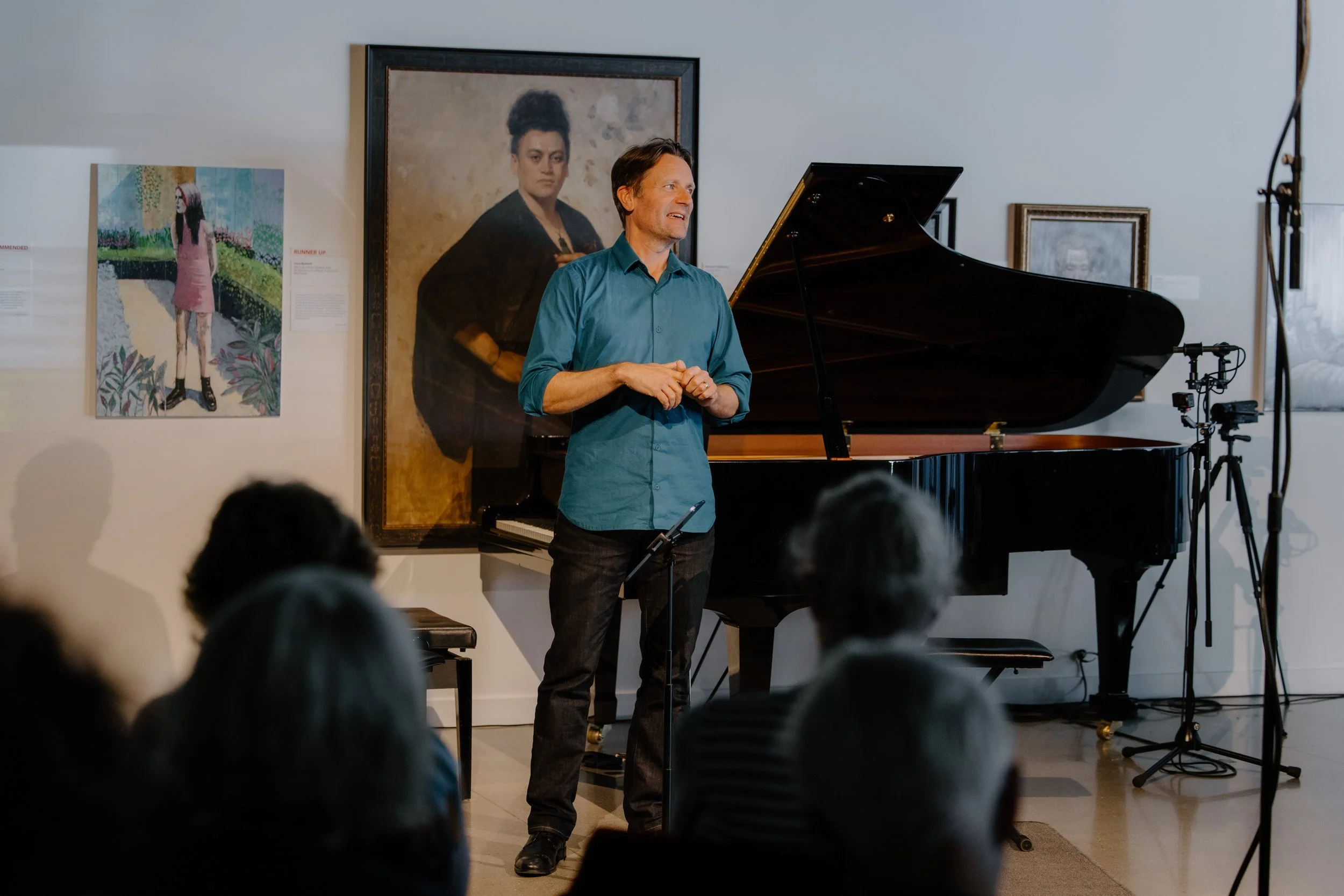
Composer Michael Norris introduces his work The Spaces in Between for piano trio
Image credit: Nat Symonds | Run in the shadows
Norris, who as well as composing is a software developer and music theorist who teaches composition and sonic arts at Te Kōki-New Zealand School of Music, had a mentoring role with the 2026 AWE emerging composer, Rafael Hosking. For five months before the festival the two worked together, and Hosking’s string quartet, The shape of upper branches, was premiered at the festival by an ensemble including the AWE emerging artists, and later performed many times in the week-long AWE touring programme to schools in the Southern Lakes region.
It’s a subtle, beautifully woven piece, based on the songs of the riroriro (grey warbler) recorded in different parts of Aotearoa. Hosking brings the birds together in conversation, gently contrasting their different tonalities, one a dark diminished scale, one a bright major, in a quiet, atmospheric composition. It’s a lovely addition to the bird-inspired body of composition by New Zealand composers, so many of whom have acknowledged our rich avian sonic environment.
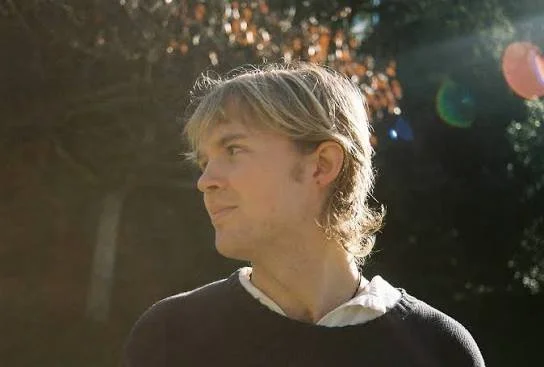
AWE emerging composer Rafael Hosking
“..his new work The shape of upper branches is a subtle, beautifully woven piece.”
Image supplied
Spreading AWE’s impact locally and internationally
The on-going ambitions of Cormack ad Baker for their festival include investing in opportunities for a younger generations of performers, sharing music with schools in the Southern Lakes region and linking AWE New Zealand to international musicians and audiences. The talented musicians of the emerging artists programme – violinist Esther Oh, violist Solace Ward, cellist Boudewijn Keenan and pianist Hana Tani – were featured in Queenstown in an inspiring Emerging Artists Showcase performing music by Mozart, Ravel, Korngold and Beethoven alongside Hosking’s new work.
During the week after the main festival, AWE education leader Kruup and Baker took the young group to 17 schools across Queenstown, Shotover, Arrowtown, Cromwell, Wānaka, Lake Hāwea and Alexandra, reaching over 2,700 children. “The schools tour has become an integral part of AWE, and we now receive more requests from schools than we can accommodate in five days,” Baker tells me. “Each performance is tailored to the age of the audience, which ranges from pre-school to secondary school, and with the emerging composer joining the group, the concerts offer the first opportunity for many children to meet someone who writes music.”
The AWE directors’ expansive vision has now taken them far beyond the Southern Alps. Earlier in 2026 AWE presented its second festival in Chicago and launched its first London season. There are now three AWE Foundation Boards in New Zealand, the UK and the US. And, the directors tell us, referring to their 2026 theme, “ in a world that often encourages us to draw lines between one another, music reminds us that the most meaningful lines are those that connect. And however far those connections reach, they all lead back here.”
At the World’s Edge Chamber Music Festival, “Bounds and bridges: Beyond the Lines”, Artistic Director Benjamin Baker, Festival Director Justine Cormack Southern Lakes, 3-16 October 2026. More information here