
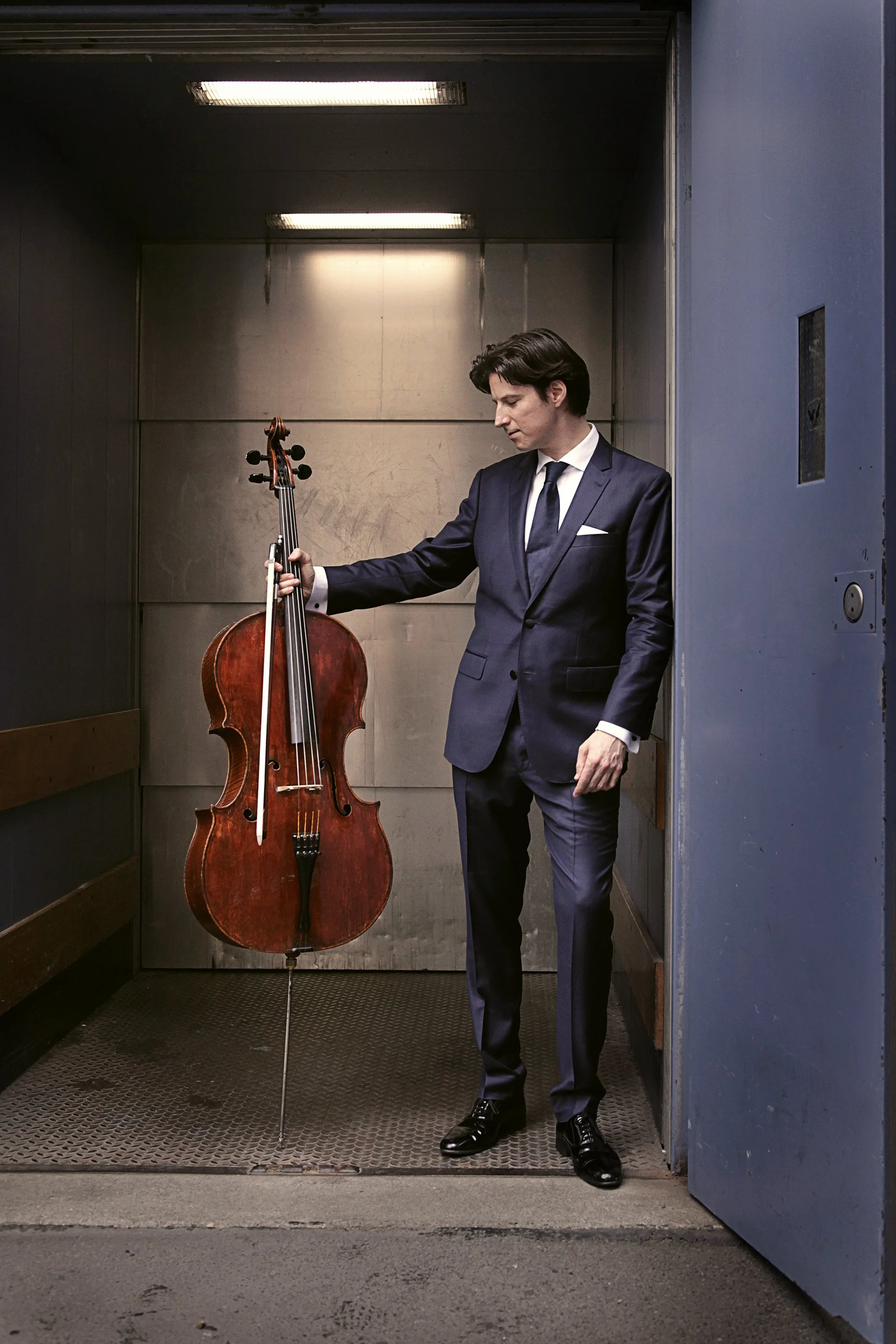
German cellist Daniel Müller-Schott with his “Ex Shapiro” Matteo Goffriller cello, made in Venice in 1727.
Image credit: Uwe Arens
German musician Daniel Müller-Schott was just five years old when his mother took him to an orchestral rehearsal in his hometown of Münich, and he became aware of the cello for the first time. “It was really just an accident,” he tells me in a recent interview.
The work he heard was Schumann’s Cello Concerto in A minor, which he will play this month with the Auckland Philharmonia. He fell in love with the instrument, he says, and its rich, beautiful sound, and thought “this is what I want to do!” The cellist, he learned much later, was a young Yo-Yo Ma.
His mother, a musician, asked a cellist friend to teach her smitten child, and Müller-Schott began private studies, moving after a year to a music school and adding chamber music to his studies. So began an award-winning career that now takes him to the world’s stages, playing concertos with the world’s finest orchestras and conductors and chamber music with professional colleagues from the upper echelons of global stars.
As well as the concerto in Auckland, Müller-Schott will shortly take a solo programme of Bach’s Cello Suites to Auckland, Wellington and Christchurch for Chamber Music New Zealand. He now relishes the opportunity such programmes offer to draw an audience into this intimate form of music-making, but as a child it was playing with others that kept him going, he says. “Sitting alone in a practice room, knowing my friends were playing soccer outside – I would not have become a musician without sharing music with others, having that communication, building up something together. I read recently a quote from my late colleague, cellist Lynn Harrell, who said he felt throughout his life that the cello is the most ‘social’ instrument, and I relate to that very strongly.”
A major career watershed for Müller-Schott was winning the International Tchaikovsky Competition for Young Musicians in Moscow in 1992. He was just 15 years old, and the prestigious Prize immediately opened doors for the teenager. “That was when I was first recognized,” he says. “Many people invited me to play, and I had a constant, regular schedule of invitations and concerts. I thought this would be a wonderful way to live your life, sharing and playing music.”
German violinist Anne-Sophie Mutter invited him to play for her after he won the Tchaikovsky Competition, and, impressed by his intense and expressive playing, introduced him to the legendary Russian cellist Mstislav Rotropovich, with whom he studied for a year. Mutter has been an important mentor and colleague in his life, and they are now friends, living just ten minutes apart in Munich.
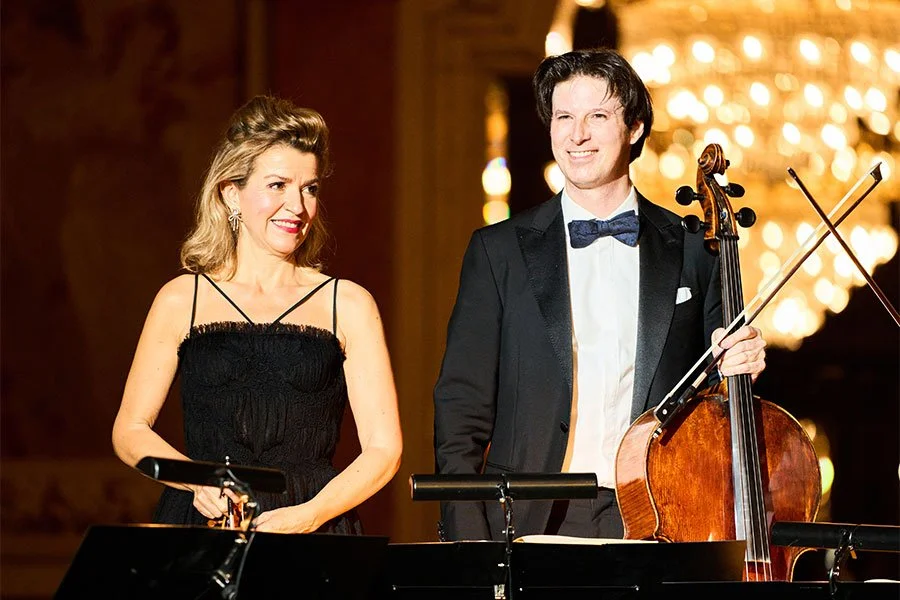
Violinist Anne-Sophie Mutter with cellist Daniel Müller-Schott
“…she is an important mentor, colleague and friend.”
“Anne-Sophie was still very young when I met her,” Müller-Schott says, “but she had already created a foundation, and has a kind of inner mission to help young musicians, which is fantastic. She believes that culture and music thrive and blossom only if you are helping others. This is a wonderful philosophy; music-making is not only saying something but also listening and reacting. It was Daniel Barenboim who said music-making is the most democratic of processes, which teaches you to feel empathy for others. Anne-Sophie had this approach from a young age, and I am grateful I can meet her regularly.”
Of course, moving from that early success to an adult career didn’t happen overnight. “The biggest gap,” Müller-Schott explains, “is between the childhood way, the young approach to music, and adulthood. Many people who are considered prodigies somehow don’t make it. It’s about gaining an understanding of what you do, questioning yourself, even doubting yourself. For me it was a period of uncertainty, how to keep that youthful approach and, in the best sense, naïveté, while gaining more life experience. It was a process that took me quite some years to figure out.”
He found the music itself contributed to his increasing maturity. “You can rely on the music, because composers often had quite tragic events in their own lives and perhaps this is why they wrote this music. You can include even things that don’t go well in your life in the music, which can be supportive.”
Help came from teachers and mentors too. Müller-Schott warmly credits Walter Nothaus, his cello teacher in Munich, Austrian cellist Heinrich Schiff, and British cellist Steven Isserlis.
I ask Müller-Schott about his repertoire preferences, noting that as well as playing the Schumann Cello Concerto in Auckland, he has recently played as concerto soloist in Australia in music by Tchaikovsky and Elgar. Is he attracted to these big, romantic works?
“The cello as a solo instrument really blossomed in the Romantic era,” he says. “And yes, I love all the works you’ve mentioned, and the Dvořák, and have a strong connection and history with them, and many others. Then in the 20th century came the Russian repertoire, Prokofiev and Shostakovich, and I also love the cello works by Britten.”
This music, says Müller-Schott, is core repertoire he never tires of. “Each time I come back, looking at the scores, reading about the history, it’s always wonderful to deepen your background understanding of these works. You have to express the music in a very personal way. The score is just a code, you must be truthful to what is written there, but you also translate it into a language that everyone will understand today, and this evolving and changing keeps it alive - it is never boring.”
The concept of “historically informed performance” is very familiar to Müller-Schott, whose mother was a pianist and harpsichordist who had studied with Nickolaus Harnoncourt, a giant of the period practice movement. “My mother,” he says, “influenced me in a very positive way. The two sides of the argument over how to interpret Baroque music have come to be more of an exchange, acknowledging that, for example, Bach can be played on the modern piano in a wonderful, historically informed way.”
Müller-Schott’s first commercial recording, when he was barely 20, was the Bach Cello Suites. Now he is about to record them again, almost three decades later. To what extent are his performances of these Baroque works influenced by period practice? “Over the years, my interpretation has hopefully deepened and evolved, but I always like to go to the source, playing on my Baroque cello but with modern pitch and steel strings,” he says. “Steel strings are a way to keep the overall harmony and intonation on a constant level, which, for me, makes the music-making more free.”
He has chosen three of the six Suites for the New Zealand tour programme, placing the fifth Suite in C minor in the middle, between numbers one and three. It’s a carefully considered choice. “That Suite, with that Sarabande, is really about what Bach had experienced in his life,” Müller-Schott explains. “His first wife, Maria Barbara, had died, and the mourning in that Suite, the reflective mood of the Sarabande, are quite unusual in Bach’s oeuvre. It’s only a few notes but every note has so much depth and so much to say. I like it to be the centre of the evening.”
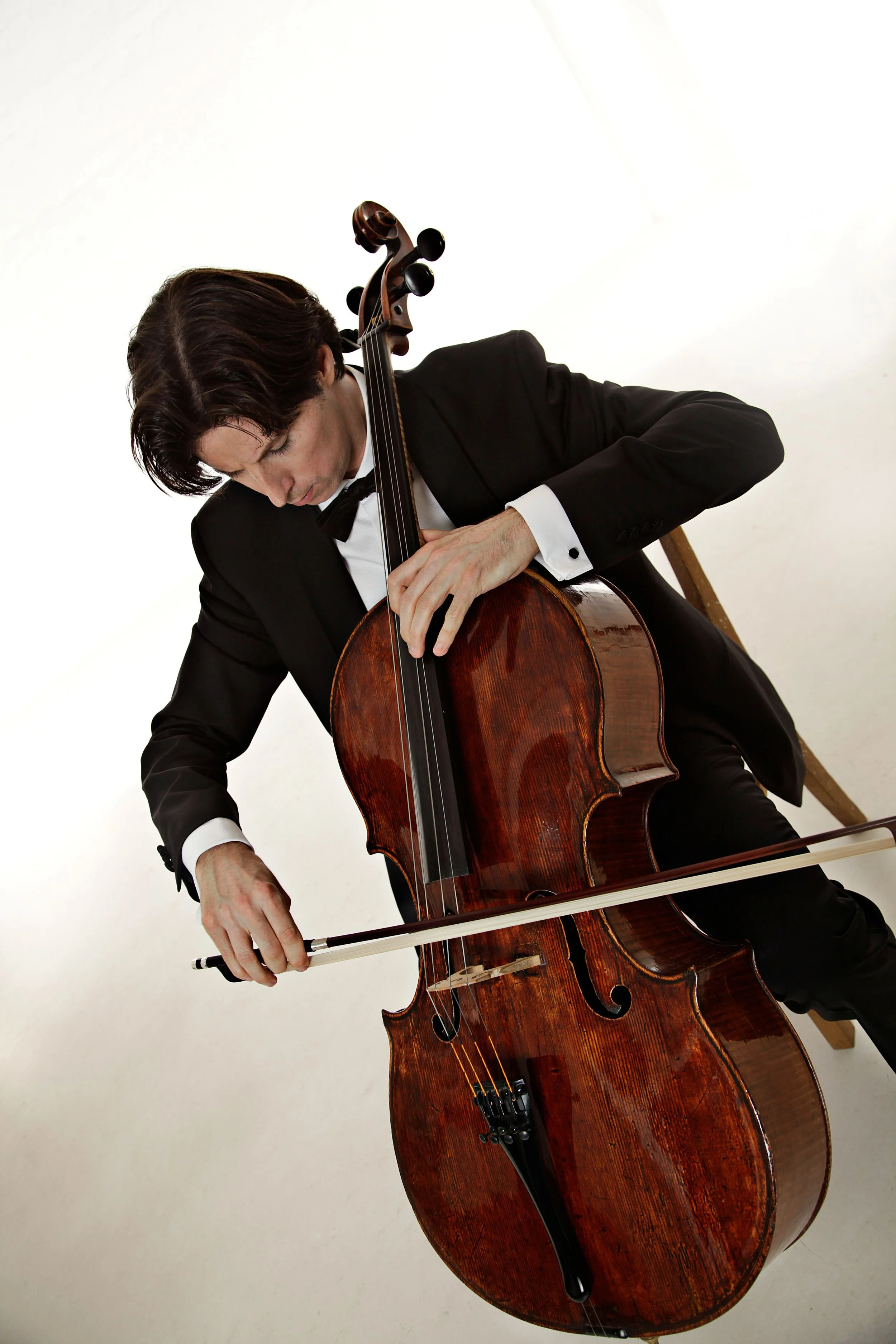
Cellist Daniel Müller-Schott
“…you have to express the music in a very personal way.”
Image credit: Uwe Arens
For the past 20 years, Müller-Schott has played on a Matteo Goffriller cello, made in Venice in 1727. He tells the story of how it came to be his with affectionate delight. “I was always drawn to the family of Goffriller,” he tells me. “When I was 19 years old, I found, in my own town, a beautiful cello by Francesco Goffriller, the son of Matteo, and with help from foundations and others, I was able to buy it and pay it off over the years. Whenever I tried other cellos, I was always drawn back to the Venetian school of luthiers.”
Two decades ago, Müller-Schott played in a concert in New York that was broadcast live. The next day, cellist Harvey Shapiro, a former teacher at the Julliard School who had listened with pleasure to the broadcast, left the younger cellist a message, asking him to get in touch. “I called him the next day,” says Müller-Schott, “and he wanted to show me the cello he had played all his life.” Müller-Schott visited Shapiro, then 93 years old, and was invited to play his Matteo Goffriller instrument. “It was love at first tone,” he smiles, “and so it became my cello. I’m very grateful that I have it now as a family member with me.”
Auckland Philharmonia Schumann Cello Concerto Daniel Müller-Schott 13 November, 2025 Bookings here
Chamber Music New Zealand Daniel Müller-Schott – Bach Solo Cello Suites Auckland 15 November, Wellington 17 November, Christchurch 18 November 2025 Bookings here