
NZSO National Youth Orchestra: an ocean voyage in radiant colour
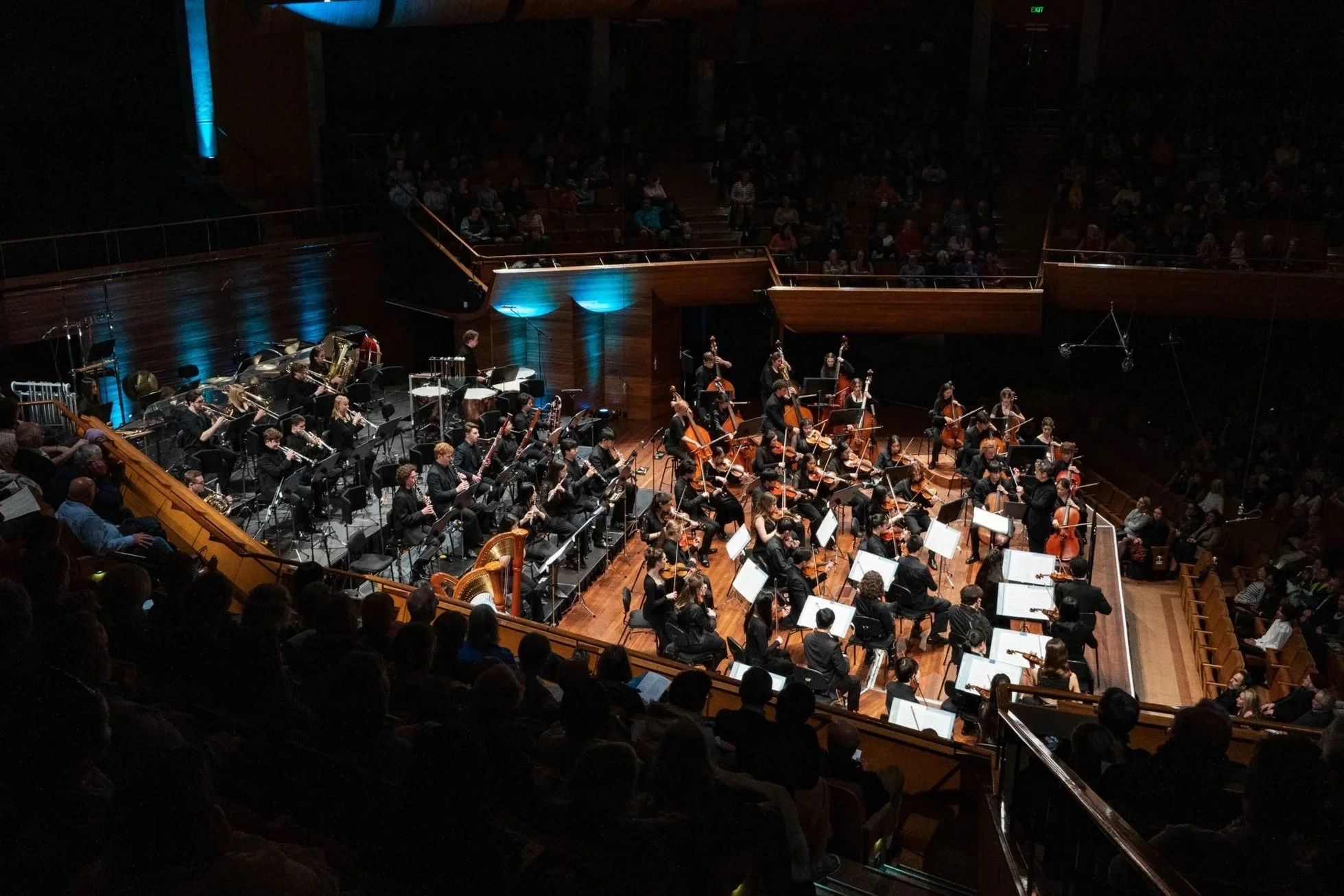
The NZSO National Youth Orchestra with conductor Dane Lam
Image credit: NZSO
This year's NZSO National Youth Orchestra (NYO) is a particularly impressive gathering of the brightest and best of New Zealand’s young orchestral musicians. Last weekend, the Orchestra delighted audiences in Wellington and Auckland with their sparkling ocean-themed programme, named “La Mer” after Claude Debussy’s masterpiece, which ended the concerts.
Our sea journey began with the world premiere of Jack Bewley’s Pray for the Wanderer, a work acknowledging those who travelled to Aotearoa across the oceans. Bewley, this year’s young Composer-in-Residence with the NYO, named his work using words from a favourite hymn of his grandparents, who immigrated here as recently as 1952. But his composition looked back much further to Pacific navigators from earlier centuries, 19th century voyages on sailing ships and more recent immigrants and asylum seekers.
How does music capture the sense of being at sea? Bewley, like other composers in this programme, showed us many ways, with rhythmic flows and surges that imitate the movement of the waves, powerful textures that evoke the depth and might of the ocean, and expressive melodies that tell the story of those who make the journey. Lyrical solos by violin and cello early in his work, beautifully played by concertmaster Ambrose Tarrant and lead cellist Elise Tian, reminded us of the feelings of loss and anticipation of those who journeyed.

Composer Jack Bewley
“…his new work, Pray for the Wanderer, exploits the full orchestra with skill and confidence.”
Photo supplied
Bewley has composed several works for brass band – he plays baritone horn – so his assured use of the brass sections was no surprise. This new work, big, strong and rolling like an ocean, exploits the full orchestra with skill and confidence, evoking not only the sea but those who rode the waves. The percussion section plays an important role, including Pacific drumming and a virtuosic timpani solo from Hannah Kagawa, the whole work ending with heroic brass to mark arrival on these shores. It was an auspicious premiere of a fine addition to the orchestral canon that deserves further performances.
Benjamin Britten drew his Four Sea Interludes from his opera Peter Grimes in 1945. Here the ocean is a descriptive and emotional backdrop to a dark tale of death and ostracism within a sea-faring community. In four movements, entitled "Dawn", "Sunday Morning", "Moonlight" and "Storm", Britten explores the many moods of the sea in orchestral writing that offers opportunities to all sections.
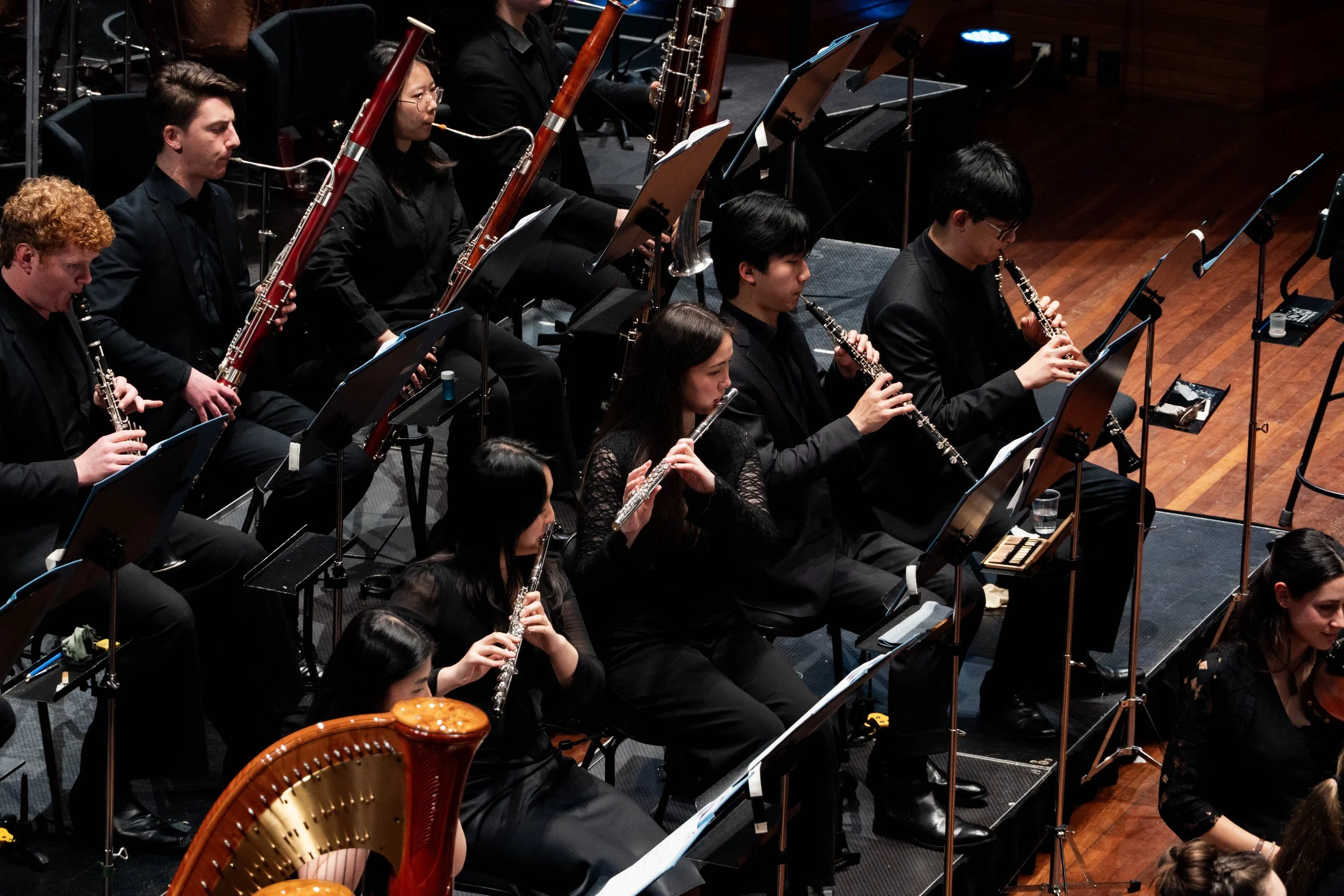
Britten’s Four Sea Interludes
“…orchestral writing that offers all sections of the orchestra an opportunity to shine.”
Image credit: NZSO
It’s a great choice for a youth orchestra. The first interlude, for instance, opens with unison violins and flutes, high and atmospheric, alternating with arpeggiated clarinets doubled by harp and violas, with chorale-like brass interventions underlined by low strings. The brass, ominous and perhaps a little menacing, builds to a climax before the interlude floats out as it began. In just minutes conductor Dane Lam created a compelling atmosphere and all sections of the orchestra had an opportunity to shine.
It’s hard to single out soloists and sections when all are playing with such aplomb, but the two clarinets, Dennis Liu and Joseph Craggs, were particularly strong and musical in Britten’s music, and the horn section fine and well-balanced. Some marvellously sprightly flutes and great work from the piccolo were complemented by consistently fine strings, the latter splendid in the surging effects of the “Moonlight “interlude where low strings work with bassoons and horns to build the tension.
The final “Storm” is marked Presto con fuoco and fast and fiery it was, menacing brass in close harmony, rapid, shrill woodwinds driving forward, more brilliant timpani playing and the full orchestra dramatic and fierce until the contrabassoon anchors all with a long pedal note. The orchestra settles and shimmers above the strong pedal before everything rises, soaring, harp flourishes adding to the atmosphere as the piece chases to its inexorable conclusion. It was a splendid performance.
Maestro Lam became music and artistic director of the Hawai‘i Symphony Orchestra a few years ago. An Australian-Chinese-Singaporean musician, he is also Principal Conductor of China’s Xi’an Symphony Orchestra. He brought the next work on the NYO’s programme, Kealaikahiki Suite by Michael-Thomas Foumai, from Hawai’i, his new home country.
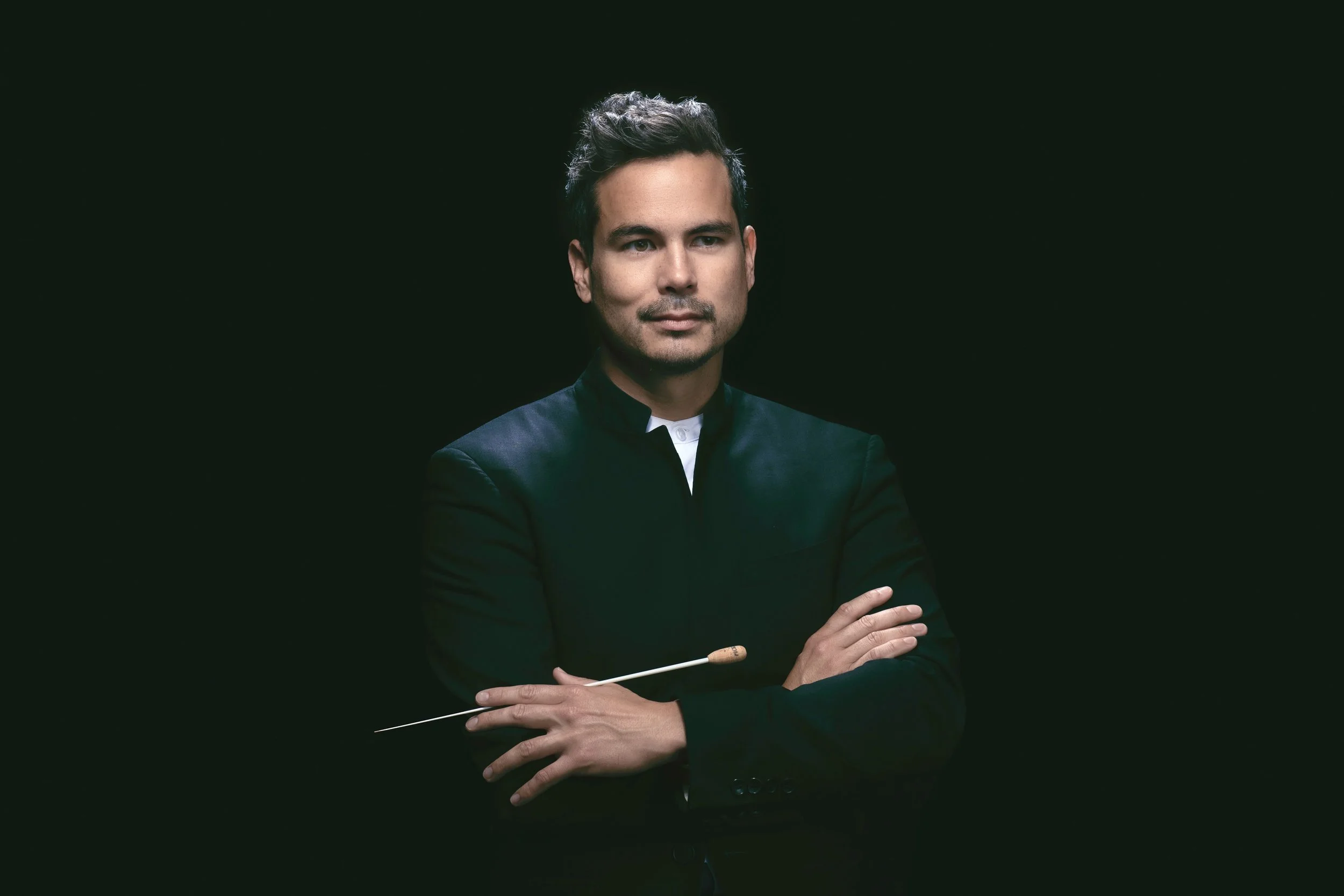
Conductor Dane Lam
“…created a compelling atmosphere.”
Image credit: NZSO
The background to the three-movement work is the voyage from Hawai’i to Tahiti 50 years ago by the Hōkūle’a, a traditionally made double-hulled wa’a (canoe), using only traditional seafaring methods. Proving such a journey was possible allowed Hawaiians to celebrate their history on the Pacific Ocean at a time when much indigenous knowledge had been lost. In 2018, Hawaiian-raised composer Foumai wrote a large orchestral/choral work, Raise Hawaiki, commemorating the voyage of the Hōkūle’a, from which this orchestral Suite was adapted.
It’s a story with considerable resonance for the residents of Aotearoa. Harmonically the language is more conventionally tonal than those of the preceding works, simple, tuneful ideas orchestrated with a confident grandeur that reflects the music of American movies. Fouymai doesn’t always avoid harmonic cliché, but draws skilfully on a great variety of orchestral colours, offering this youth orchestra plenty to do, from a delicate opening from flutes and percussion, through soulful low strings, nice solos for piccolo and trumpet, big brass effects, and, in the third movement, a repeated rhythmic figure tossed around the orchestra leading to a splendidly dramatic ending.
The concert’s ocean voyage ended with one of the most wonderful musical evocations of the sea ever composed, Debussy’s La Mer. In his twenties Debussy wrote: “Music is made for the inexpressible and I should like it to seem to rise from the shadows and indeed sometimes return to them.” A decade and a half after writing those words, he composed La Mer, orchestral music that seems, to paraphrase the composer, to rise from the ocean and sometimes return beneath the waves.
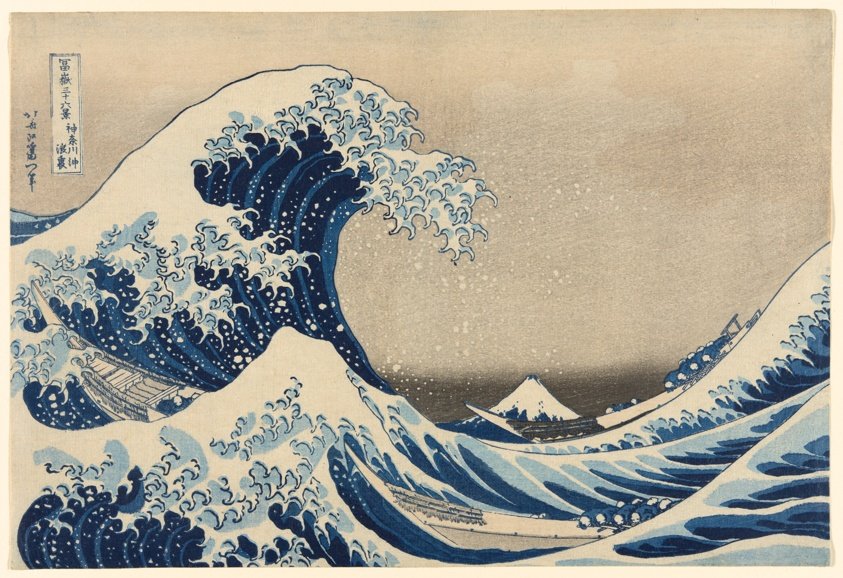
The Great Wave by Katsushika Hokusai
…Debussy chose this image as the frontispiece for his score of La Mer.
Although his music is more evocative than descriptive, Debussy offers us titles for the three movements – “From dawn to noon on the sea”, “Play of the waves”, and “Dialogue of the wind and the sea” – that help us understand where his colours and rhythms are taking us. The ocean is in fact the perfect metaphor for music that has abandoned the sense of direction offered by the traditional harmonic development of German Romanticism in favour of everchanging musical surfaces and depths of timbre and rhythmic flow.
A word on “impressionism”, a term sometimes attached to Debussy’s music. It’s well-known that Debussy himself disliked the label. Writing about his Images for orchestra he explained: “I tried to make ‘something else’ of them and to create—in some manner—realities—what imbeciles call ‘impressionism,’ a term as poorly used as possible, especially by art critics...”. In simple terms, La Mer is based not on an “impression” of the sea but on its “reality”.
The NYO musicians under Lam seemed to understand La Mer with intuitive musicianship. This performance had all the flexibility needed to capture Debussy’s sense of the ocean’s ever-shifting power, its profound depths and its light, shimmering surfaces. Lam was able to paint with the vivid colours before him without overly controlling the orchestra, the soloists finding their own rubato, the strings soaring gorgeously, a sense from these young musicians that they loved this challenging music and were committed to finding its essence.
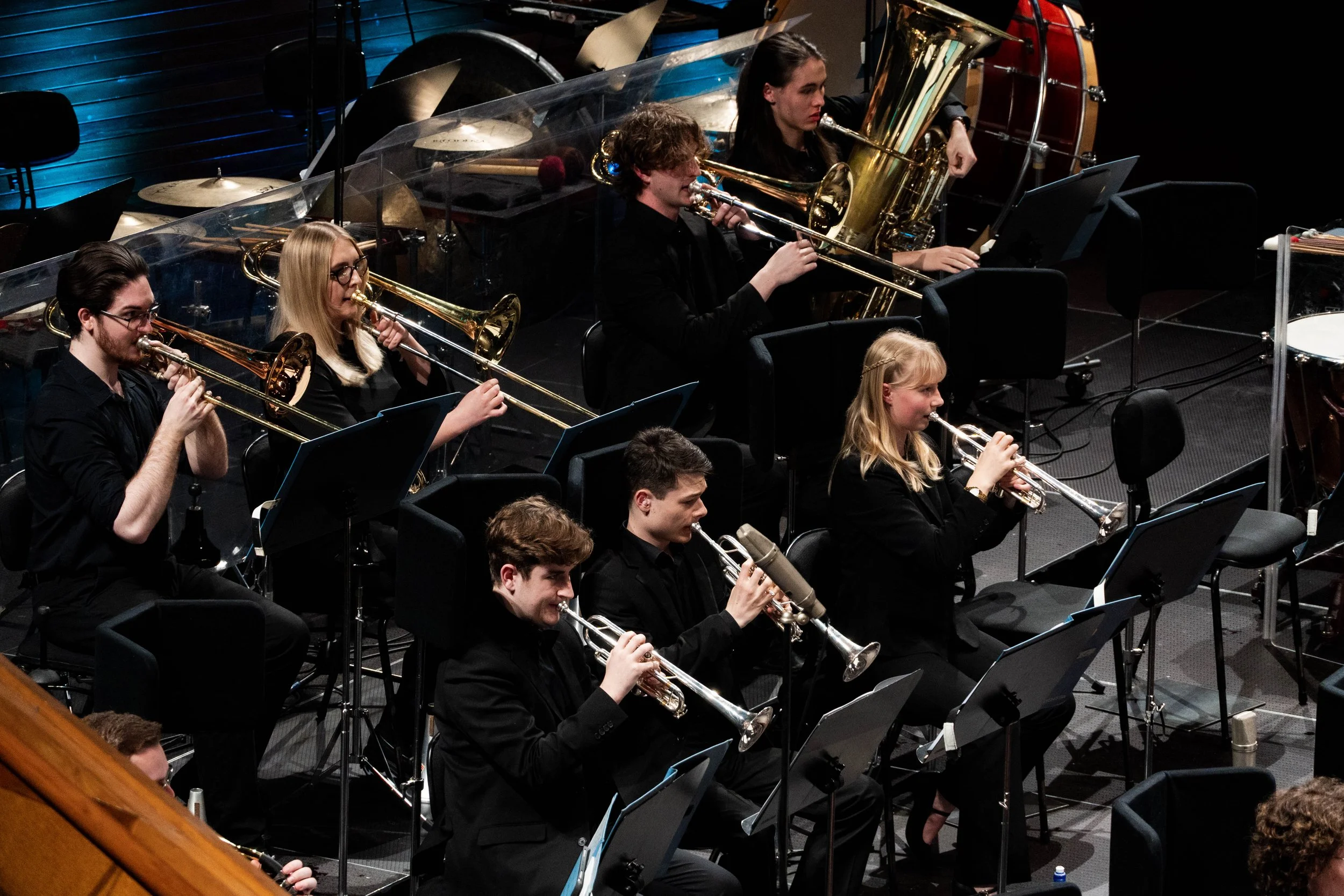
Debussy’s La Mer
“…the whole brass choir working brilliantly together.”
Image credit: NZSO
The final movement is stormy and dramatic, exploiting again the great skills of the young timpanist, woodwinds glowing beautifully, a sonorous horn section and the whole brass choir working brilliantly together as the first movement chorale returns, driving the piece to its surprising resolution in D flat major. After the tumultuous ending, the conductor singled out soloists and sections for applause, the audience acknowledging with enthusiasm the NYO as both a collection of talented individuals and the magnificent ensemble created by them all.
NYO LA MER: NZSO National Youth Orchestra with Dane Lam (conductor), music by Jack Bewley, Benjamin Britten, Michael-Thomas Foumai and Claude Debussy, Wellington 3 July, 2026