
Orchestra Wellington and some thoughts on virtuosity
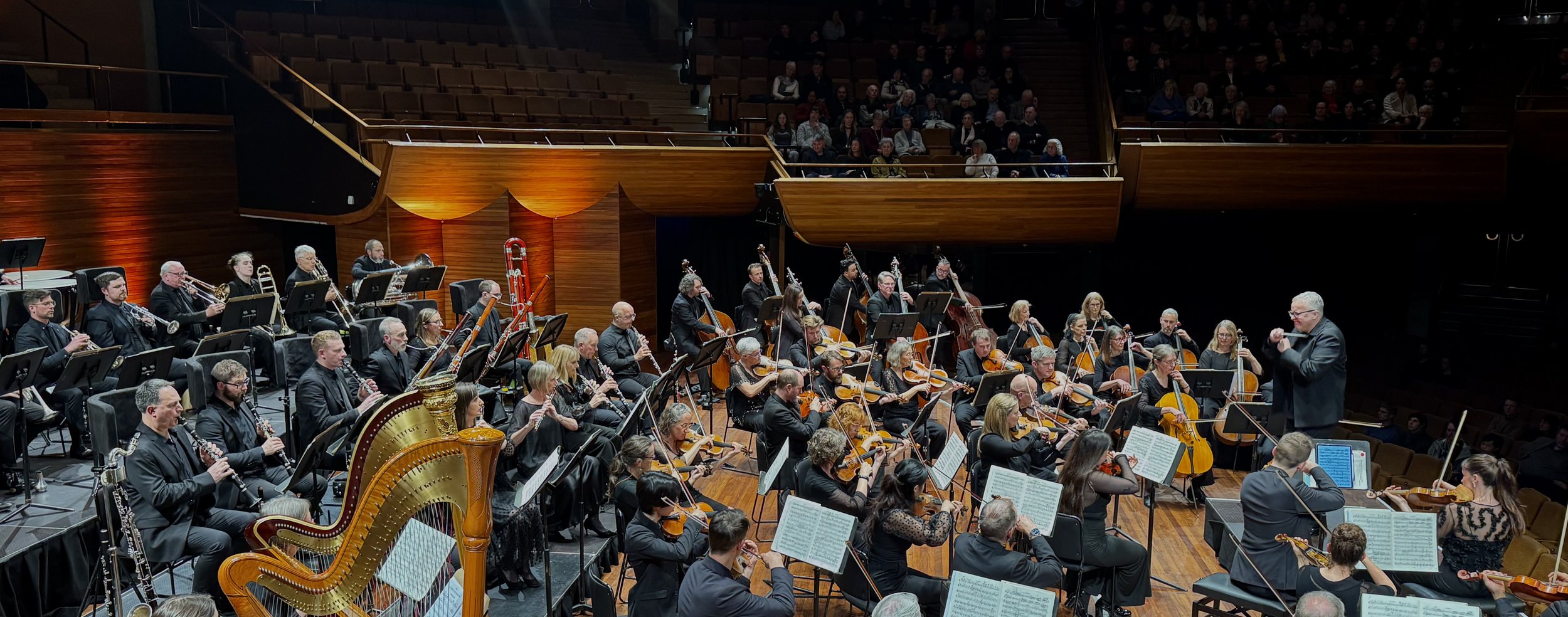
Orchestra Wellington and conductor Marc Taddei performing Bartók’s Concerto for Orchestra
Image credit: Andy Best
Orchestra Wellington's recent concert ‘Virtuosi’ was the second of its 2026 Collaborations series. Virtuosity is these days a rather vexed concept. Technical brilliance is now a bottom line for professional musicians, and a flashy technique is never enough. It is the ability to use that remarkable facility in the service of artistic expression and emotional communication that sets the finest musicians apart.
The concert opened with Edward Elgar's Introduction and Allegro for Strings, a lovely work that is not really about virtuosity at all. Scored for string orchestra with a string quartet as a kind of concertino, it was to some extent inspired by Bach and Purcell. The effect is close to chamber music, full of intimate conversations between the solo group and full ensemble.
I've heard this work with the solo quartet positioned in front of the conductor surrounded by the orchestra, and a particularly successful chamber orchestra performance with no conductor, the orchestra standing around the seated quartet and palpable rapport between all musicians. The decision to place the concertino group, the New Zealand String Quartet, at the front of the stage with Marc Taddei conducting from the podium behind them caused some uneasy ensemble moments early on, before Taddei and Peter Clark, first violinist with the NZSQ, worked out their sightlines.
Elgar, himself a violinist, uses the low strings, violas, cellos and basses, with particularly expressive drama and I've never heard the strings of Orchestra Wellington sound better, the whole ensemble playing with richness, depth and musicality.
The thematic core of the work is a Welsh theme, stated first by solo viola, Gillian Ansell's gorgeous playing singing forth with a melody Elgar had heard while on holiday in Wales. After the lush Introduction, the Allegro section builds to a climax with an exciting fugue, with fine playing by the quartet and nicely managed if not always impeccable counterpoint from the full ensemble. Elgar signs off the work with a gracefully placed pizzicato chord.
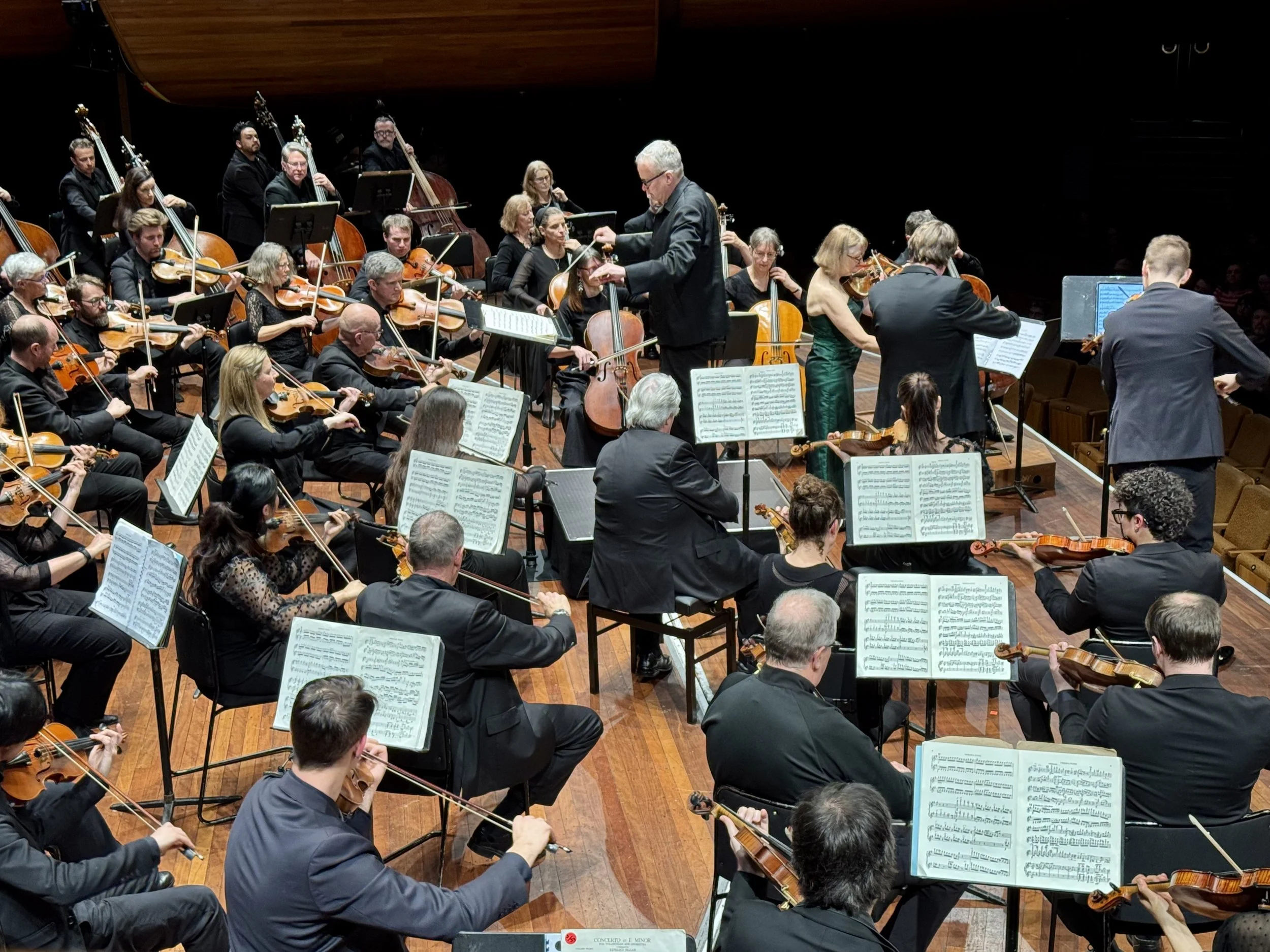
Orchestra Wellington with the New Zealand String Quartet playing Elgar’s Introduction and Allegro
“…the whole ensemble playing with richness, depth and musicality.”
Photo credit: Andy Best
The Orchestra stayed with Elgar for a work more suited to the theme of virtuosity. His famous and beloved Cello Concerto in E minor Opus 85 was written in 1919, after the end of the First World War, the composer’s response to a tragic time. Unfortunately, a disastrously under-rehearsed premiere by the London Symphony Orchestra under Elgar’s baton was panned by critics and the concerto didn’t achieve popular or critical success in his lifetime.
The work waited some 30 years after his death in 1934 for the landmark recording by 20-year-old cellist Jacqueline Du Pré that saw the Cello Concerto acknowledged as a masterpiece. Writing on the 100th anniversary of the 1919 premiere, music journalist Warwick Thompson suggested “she blew the cobwebs off it and revealed a kind of adolescent fury and mercurial whimsy in the piece, which caught the public’s imagination.”
Du Pré also revealed its passionate virtuosity, and her performance has been something of a benchmark for cellists and audiences ever since. The Elgar Cello Concerto takes its place now in almost every professional solo cellist’s repertoire.
Inbal Meggido, Associate Professor at the New Zealand School of Music and frequent leader of Orchestra Wellington’s cello section, was soloist for this performance. The work begins slowly – the first movement is marked Adagio - Moderato – and Meggido took her time, playing thoughtfully with a lovely tone. However, as the work developed, the emotional momentum was not maintained, and in spite of her warm, vibrato-heavy melodic approach in the slow sections, this passionate music was not as engaging as it can be and the audience fidgeted and coughed. The faster sections, perhaps for technical reasons, lacked the deep expression and visceral edge-of-the-seat excitement this undoubtedly virtuosic work requires.
Bartók’s wonderful Concerto for Orchestra Sz.116 reveals virtuosity of another kind. Although the composer calls the work “Concerto”, it is the musicians of the orchestra who become the soloists, and while the Orchestra Wellington string sections continued their fine performance, the work offers the winds and brass in particular many individual opportunities to shine.
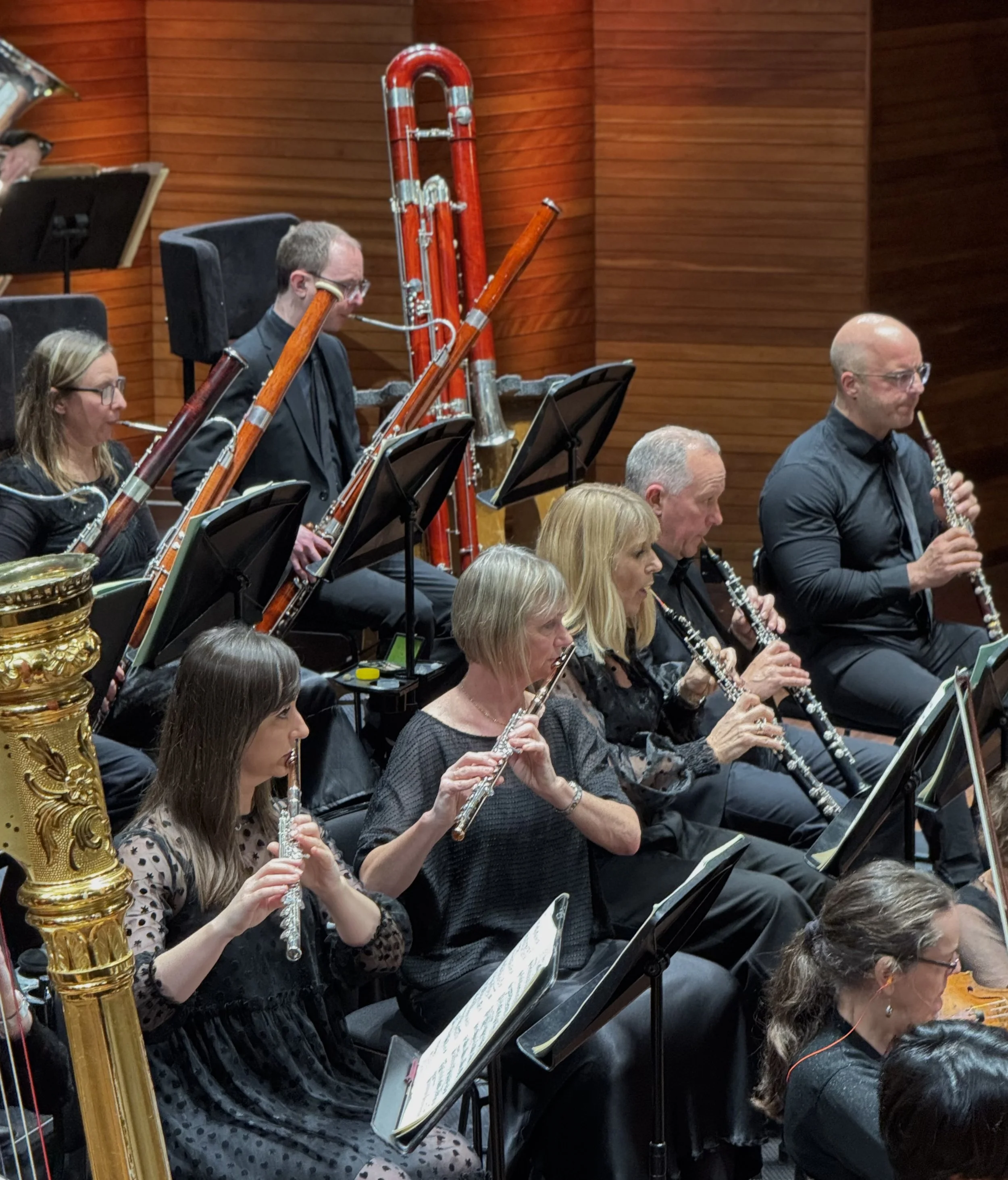
Orchestra Wellington’s wind players in Bartok’s Concerto for Orchestra
“…the musicians of the orchestra become the soloists.”
Image credit: Andy Best
And shine they did. The opening, with shivering high strings over the basses and tiny, subtle flute fragments, created a wonderful atmosphere. Taddei and the orchestra found the drama of the work as well its folk quality, winds and brass providing excellent solo work, the two harps adding to the magic and the string sections consistently strong. The NZSQ’s newly appointed cellist Martin Smith led the cello section with musicianly authority.
Bartók’s eccentric scherzo-like second movement is called Giuoco delle coppie, a game of couples, and we were treated to splendid wind duets by bassoons, oboes and clarinets and a particularly brilliant display by flutists Karen Batten and Hannah Darroch. It’s a movement full of shifting colours, with muted trumpets, a splendid brass choir, four whimsical horns and three quirky bassoons over pizzicato strings and shimmering harps.
The five-movement Concerto is symmetrically arranged around the central slow movement, Elegia, which begins quietly with Bartókian ‘night music’, and grows to a high-volume full-textured middle section. Again there were virtuosic moments for individual musicians, including a fine piccolo solo, before the work turned on its axis, dancing through the folk-influenced, almost comical fourth movement, an “interrupted” Intermezzo, featuring the warm-toned beauty of the viola section in a popular Hungarian song.
It’s quite a feat to maintain momentum in this quick-changing, almost episodic work and occasionally in this performance it seemed a little too fragmented. But the work’s final movement, which begins with a great horn fanfare, developed into the wild energy of a presto dance, strings bowing, plucking and strumming at speed, the moto perpetuo harnessed in a series of fugues featuring many soloists. The conclusion, when it comes, is dazzling, the whole orchestra taking off in a vivid ascent through three octaves to the final, glorious chord. Orchestra Wellington captured all the thrills and the audience was delighted.
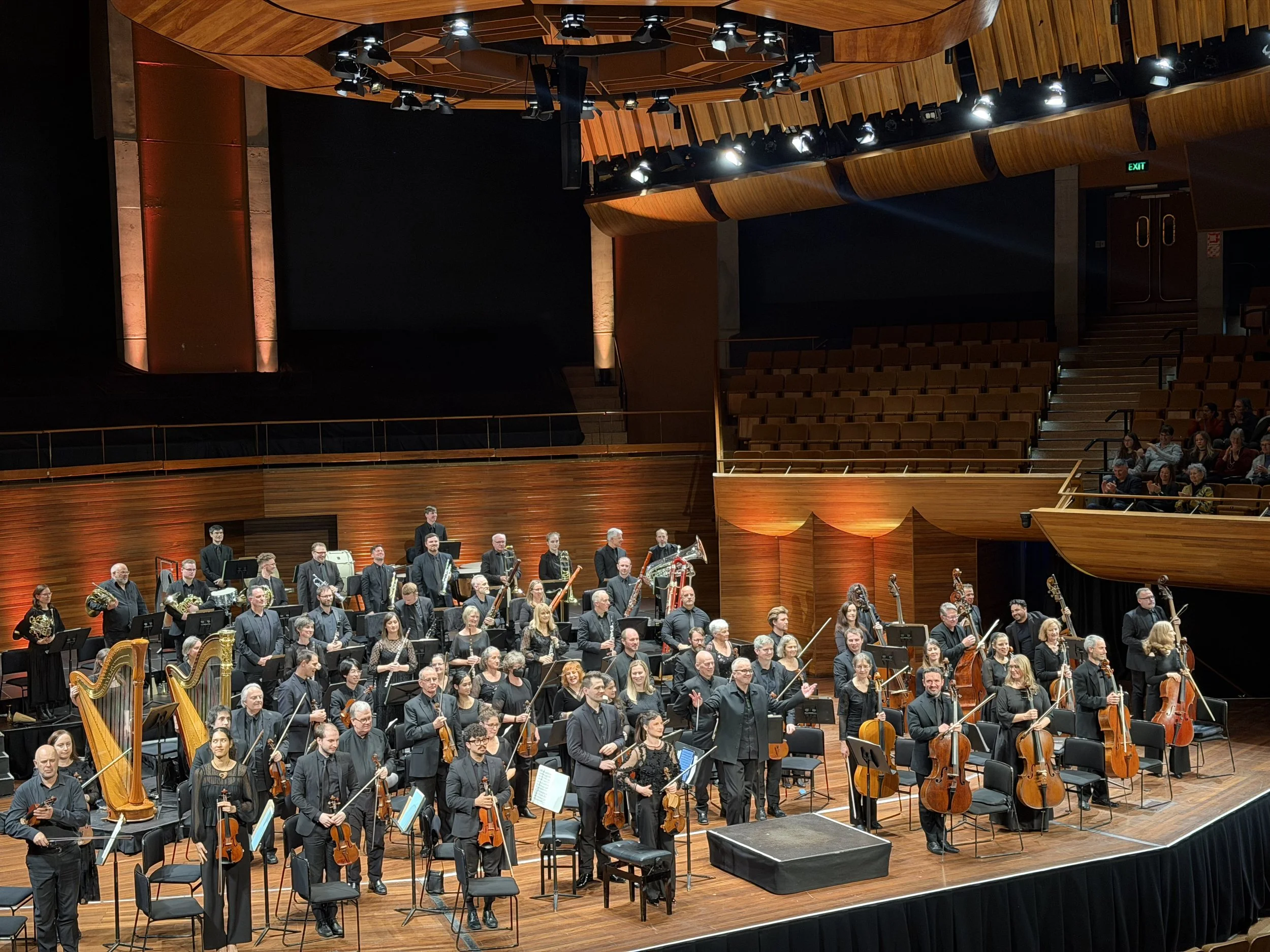
Orchestra Wellington and conductor Marc Taddei receive applause at the end of their ‘Virtuosi’ concert.
Image credit: Elizabeth Kerr
Orchestra Wellington “Virtuosi” with Marc Taddei (conductor), Inbal Meggido (cello) and the New Zealand String Quartet, playing music by Elgar and Bartók. Wellington 27 June 2026