
Pianist Jian Liu: vivid pianism and intriguing curation across cultures
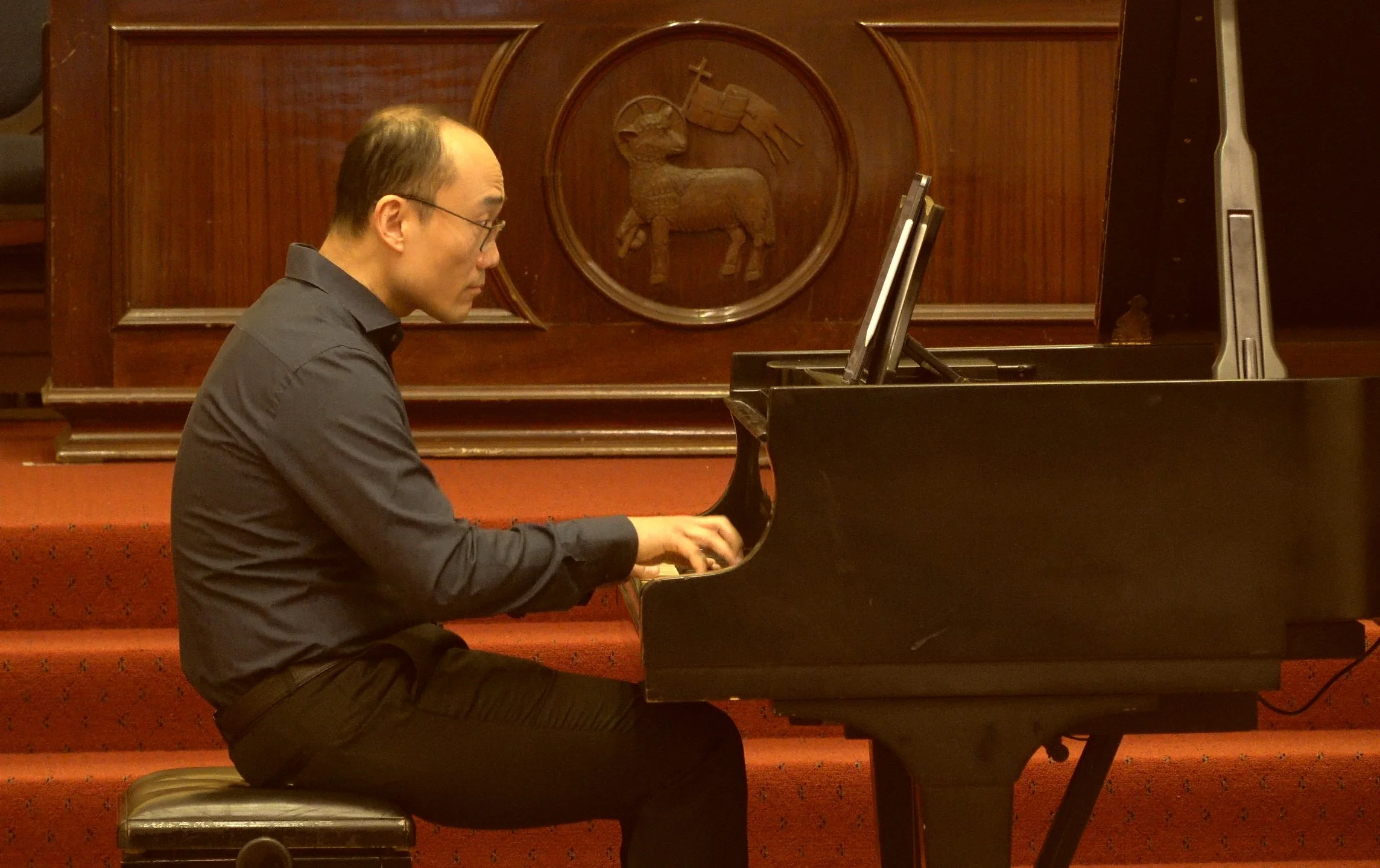
Pianist Jian Liu
Photo credit: Chris Watson/SOUNZ
Pianist Jian Liu has just completed a piano recital tour to seven New Zealand centres, as part of the Chamber Music NZ "in partnership" series. I heard his programme in an afternoon concert in Wellington in the warm and responsive interior of St Andrews-on-the-Terrace church, fast becoming a favourite chamber music venue in the capital. Playing music by composers from China and Aotearoa, Liu’s "second home country", he brought us the most intriguingly curated programme I’ve heard for some time.
Last century, piano recitals were a "thing" - local or visiting international pianists attracted large audiences to marvel at their virtuosity in great works by well-known composers, often playing music with dazzling technical as well as musical demands.
Liu's programme was very different. Offering twelve short works in six pairs, each pair combining a work by a New Zealand composer with one on a similar theme by a Chinese composer, the pianist invited us to enjoy music he loved, and experience the similarities and differences between work from two cultural backgrounds. The recital was all about the music itself, which was carefully chosen and very beautifully played.
Since his arrival in Aotearoa some 16 years ago, Liu has shown great willingness to play the music of our composers and in 2024 he released, with Rattle Records, an acclaimed three-disc album, Where Fairburn Walked, 37 compositions by 24 New Zealand composers, for which he won the Tui for Best Classical Artist in the New Zealand Music Awards. You can read a Five Lines review of that album here.
As I noted in that review, though Douglas Lilburn’s music was not included in the album, his love of walking in nature and influence on younger generations of composers meant he was present in the music. This recital programme opened with his early work, From the Port Hills, composed in Christchurch soon after Lilburn returned from studies in England.
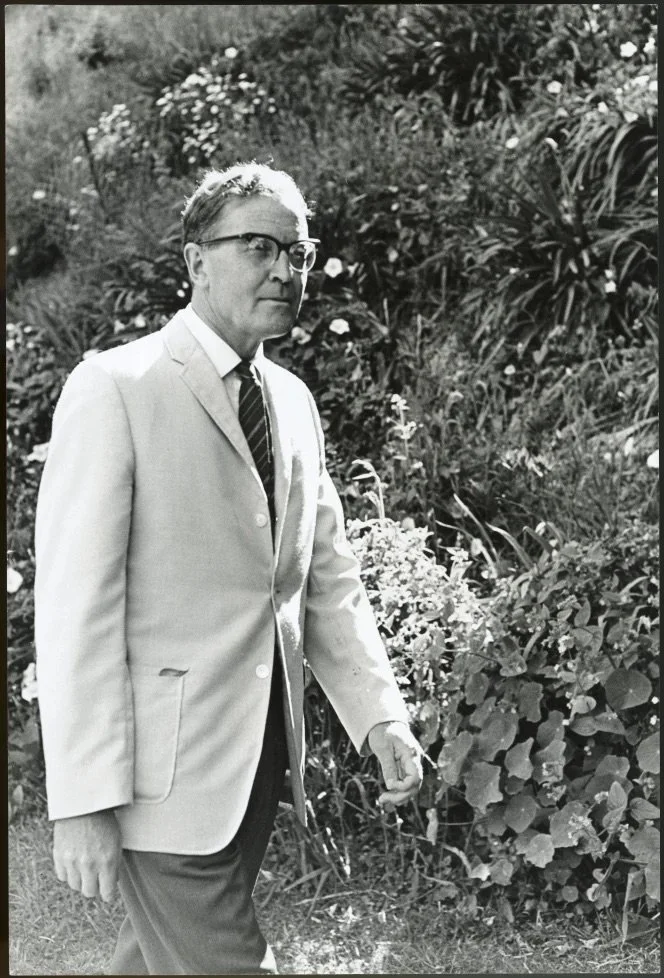
Composer Douglas Lilburn
“…Jian Liu’s recital opened with his early work, From the Port Hills.”
Characteristic Lilburnian features – a quasi-modal language, gentle use of dissonance, and distinctive rhythmic figures with repeated notes – shone forth in Liu’s thoughtful, measured performance, dynamics developing organically and the piano tone filled with light. He paired the work with another early piece by a composer working in the mid-20th century, Huang Hu Wei, four miniatures from his Pictures from Bashu, the language based on a pentatonic scale, little gentle flourishes and Liu’s rippling pianism creating a lovely sense of natural surroundings in a Chinese landscape.
Most of the programmed works were written when their composers were early in their careers. It’s engaging music with lovely clarity, played with luminous beauty. New Zealander Salina Fisher was a young teenager when she composed her Three Short Pieces and Liu paired it with three pieces from well-known Chinese-American composer Tan Dun’s Opus 1, the suite Eight Memories in Watercolour, (originally called Eight Sketches in Hunan Accent), pieces he’d composed as a student at the Beijing Conservatory. Both compositions show young composers using simple means to create music of expressive sophistication.
Fisher’s “Raindrops on a misty pond” was played freely by Liu with brilliant repetitive flourishes. The fluttering “Moths in the light” maintained its lightness across the whole keyboard and skilful use of pedal enhanced the vast spaciousness of “Galaxy”. Dun’s sonic landscape was more populous, reflecting the rural memories of a composer who experienced the Cultural Revolution. “Staccato beans” is a scherzo-like depiction of a children’s chasing game, “Herdboy’s Song” drifts plaintively across the hills, evoking the plucked strings of the Chinese guzheng, and “Floating Clouds” is repetitious, gentle and light.
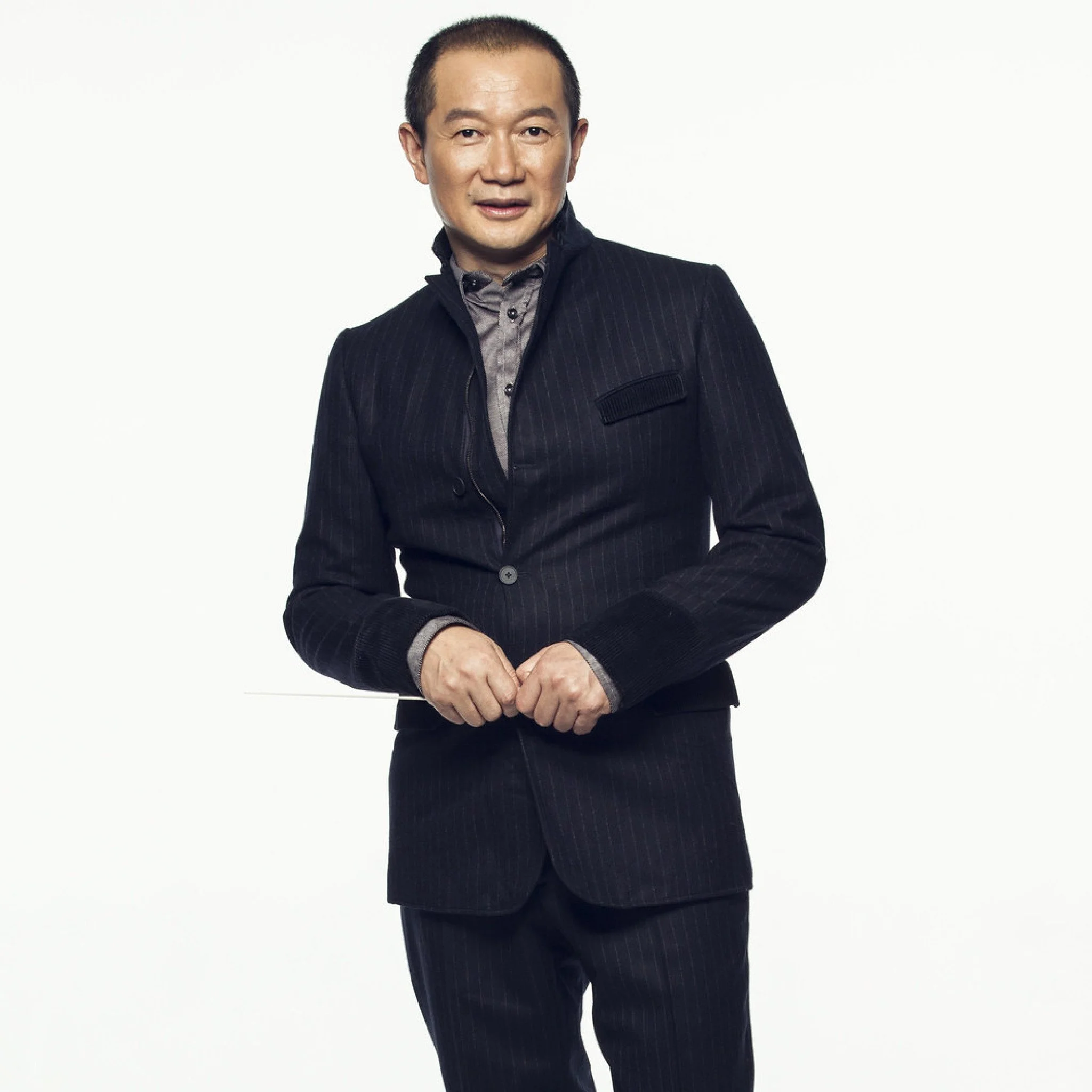
Composer Tan Dun
“…his early work, Eight Memories in Watercolour, reflects the rural memories of a composer who experienced the Cultural Revolution in China.
The pairing of works by two composers born in the 1960’s, New Zealand’s Gareth Farr and Chinese composer Zhang Zhao, offered more contrast in feeling and approach. Farr’s gentle Love Songs are tuneful and a little poignant, the language largely tonal. Liu played them with loving care. Three Songs from the Mountains of Southern Yunnan see Zhao drawing on ethnic Chinese sources, taking us into a different culture. His third Song, “Mountain Fire”, develops into a brilliant fantasia.
Lulling a child to sleep may be similar across cultures, as tender works by Gillian Whitehead and He Lü Ting suggested. Whitehead’s Lullaby for Matthew is one of her most often played works for piano and its gentle rocking has appealing charm. Liu’s rather assertive approach to the middle section might not have been as soothing as intended. Ting’s Lullaby was written before Whitehead was born, but shares the calm beauty of her work, the use of pentatonic scale in a melody and accompaniment texture locating it in its Chinese home.
Liu’s juxtaposition of these carefully chosen pairs made for a thought-provoking programme, and he combined this with themes of childhood and youth, including music for young pianists to explore. Anthony Ritchie’s Caroline Bay Suite was specifically commissioned for pianists of Grade 3 or 4 level and is a joyous celebration of childhood games and seaside play. The older Chinese composer Ding Shan De also wrote a Children’s Suite, calling it Happy Holidays, and his cheerful, carefree music matched Ritchie’s perfectly, both works played by Liu with bouncing pianism and exquisite timing.
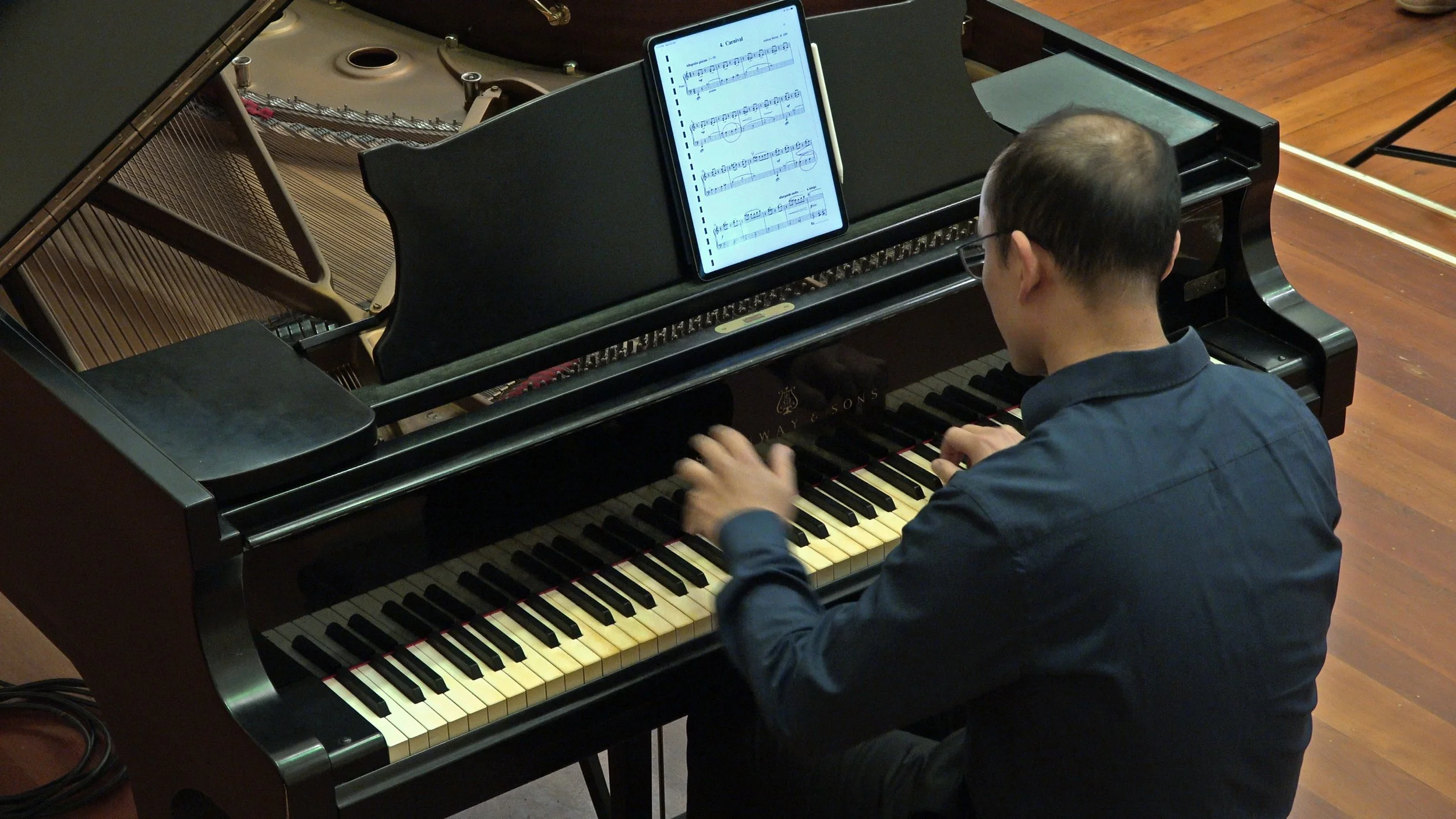
Pianist Jian Liu
“…his recital was all about the music itself, which was carefully chosen and very beautifully played.”
Photo credit: Chris Watson/SOUNZ
Most of the works played so far in this engaging recital were programmatic, with descriptive stories to tell. To end the afternoon’s pleasures, Liu chose two more substantial works that were about music itself, both written when their composers were students in the 1950’s, both called “Sonatina”. David Farquhar’s Sonatina is the work of a clever composer playing with musical elements, its sparkling rhythmic sophistication typical of his music, the three contrasting movements exploring complex textures. Wang Li San’s Sonatina blends western and Chinese elements, a virtuosic piece at times, the tonality a little ambiguous. Both composers were drawing on their different backgrounds, as were all composers in the recital. These two Sonatinas were the most technically demanding of the programme, Liu tossing off the virtuosity with élan and contrasting it beautifully with singing, poetic playing when required.
The good-sized audience for this Wellington Chamber Music Society concert was fascinated and delighted by the novel programme and its fine performance and left the church in a happy buzz of conversation.
Jian Liu piano recital: Wellington Chamber Music Society in association with Chamber Music New Zealand, Wellington, June 14, 2026
You can read a profile of Jian Liu in this Five Lines article: Pianist Jian Liu: a way of living through music