
SOUNDCATHEDRAL: sonic architecture across time and space
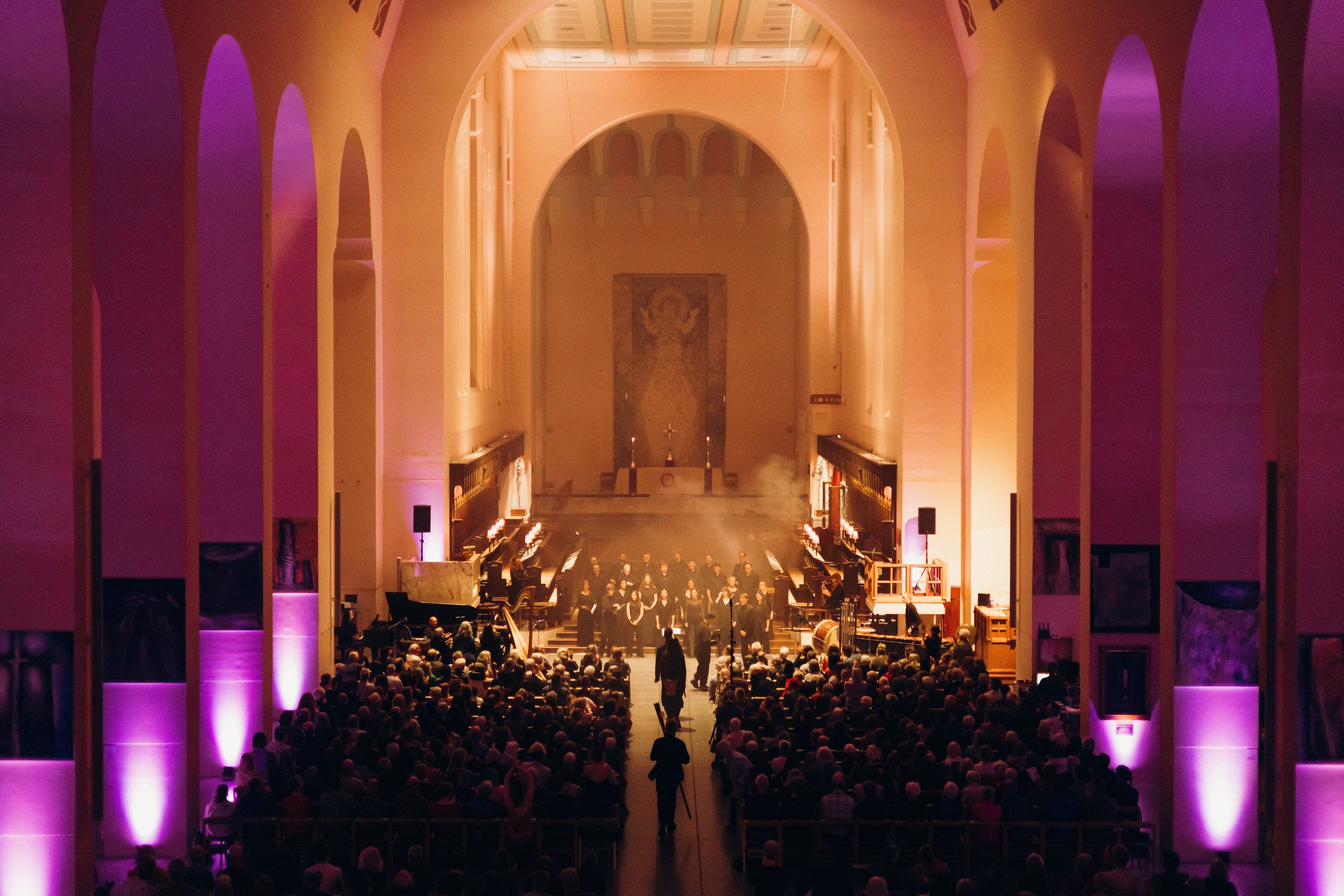
SOUNDCATHEDRAL: installed for its premiere in the Wellington Cathedral of St Paul
Image credit: Nick George
Composer Michael Norris describes his new work SoundCathedral as a performance installation. Creating the soundscapes of his dreams, Norris added both location and movement-in-space to the usual elements of music, pitch, duration, timbre, texture and dynamics. The result was a monumental sonic architecture in the highly resonant interior of the Wellington Cathedral of St Paul, where the work was installed recently for its premiere.
Norris’s objective in SoundCathedral was “an immersive, rich, spatio-sonic experience for the audience”. He has succeeded brilliantly. For many music fans in the packed audience during the Aotearoa Festival of the Arts, it was the artistic highlight of their Festival.
SoundCathedral was constructed to mark the 40th anniversary of Wellington’s specialist chamber choir, the Tudor Consort, and it was the choir’s music director, Michael Stewart, who suggested using motets known as the Sybilline Prophecies by 16th century Flemish composer Orlande de Lassus. Lassus was one of the big four of late Renaissance contrapuntists, alongside Palestrina, Victoria and William Byrd, and perhaps the most innovative of all in his use of strange, chromatic harmonies.
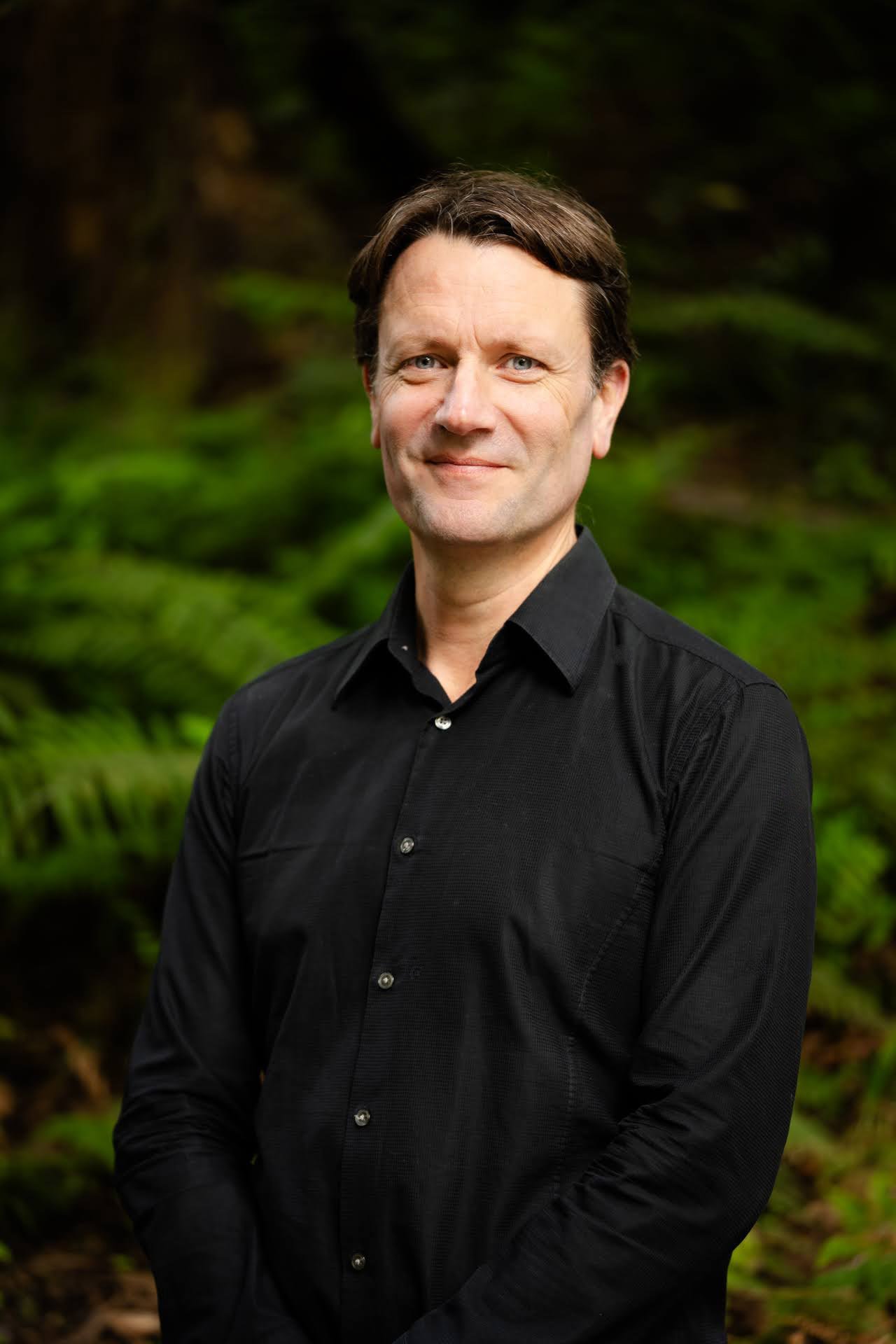
Composer Michael Norris
“…collaborating across time with the music of late Renaissance composer Orlande de Lassus.”
Image credit: Latitude Creative
Norris has “collaborated” across the centuries with Lassus’s music, using post-modern approaches of fragmentation and deconstruction. He has also introduced other sound worlds, scoring music for both the Tudor Consort and the fine contemporary instrumental ensemble Stroma, while offering more improvisatory freedom to the Rangatuone Ensemble, a group of six performers using voice and taonga pūoro (Māori traditional instruments), led by conductor Riki Pirihi. The performance also included the Cathedral’s organ and bellringers.
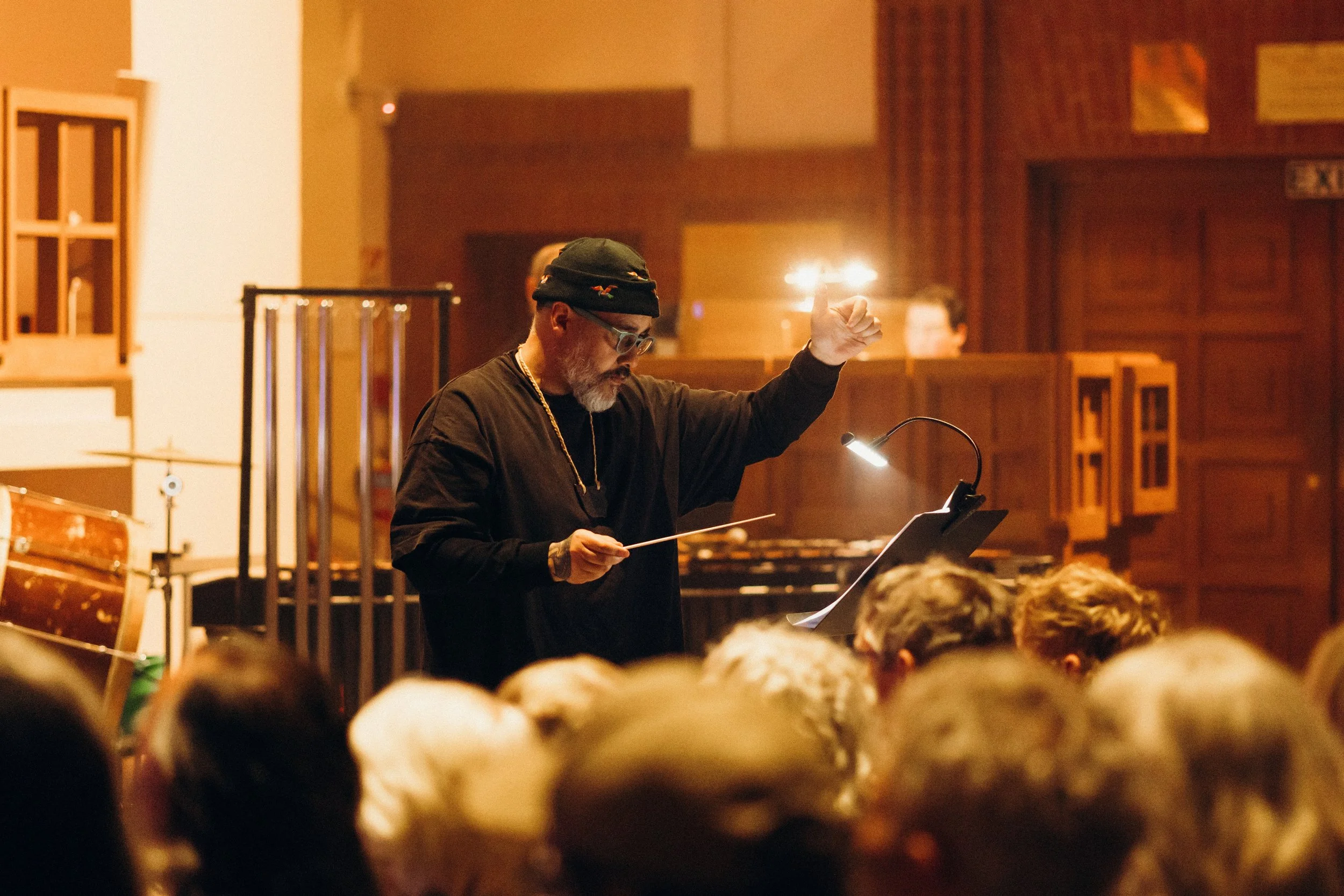
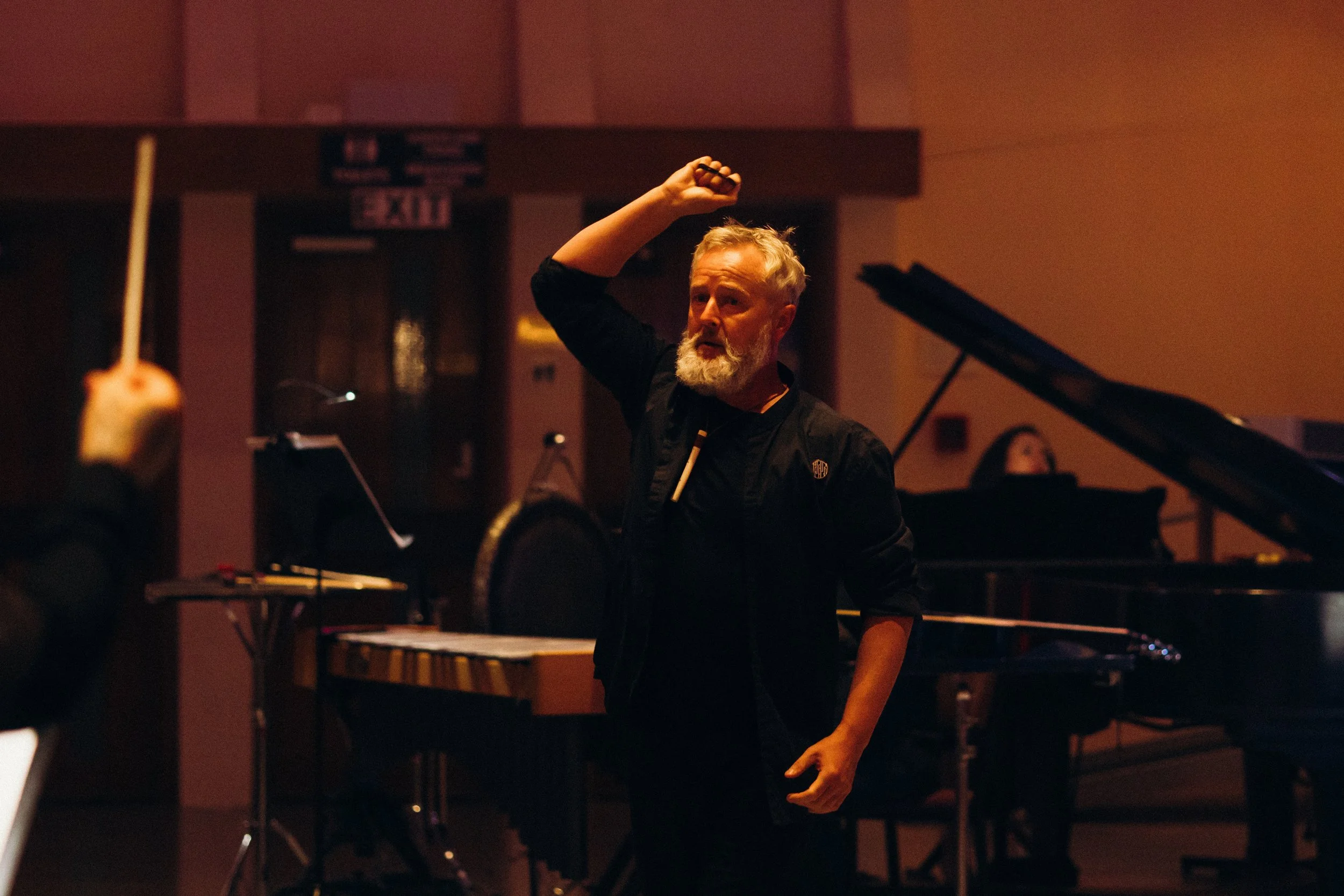
Conductor Dr. Riki Pirihi
“…directing the taonga pūoro musicians of the Rangatuone Ensemble.”
Image credit: Nick George
The Rangatuone Ensemble opened the performance with a Karakia, the first of 15 sections in SoundCathedral. It was accompanied by strong, trumpet-like pūkāea, and followed by a Karanga, sung by powerful female voices. The group processed down the centre aisle towards the back of the church (the Procession/Hīkoi) and we became aware of Stroma musicians located around the building, a French horn playing with the Māori group and moving down a side aisle, other brass behind us, percussion in front, flute and harp behind them.
The Arrival/Taenga introduced the singers of the Tudor Consort, holding little round lights as they processed singing up the centre aisle one at time, assembling as a choir at the front. Stewart was the last to arrive, taking up his position in front of the choir, who sang, a capella and in its original form, the lovely Prologue to the Sybilline Prophecies. This whole section was introduced by a gorgeous, organ-like chord seemingly played from all sides.
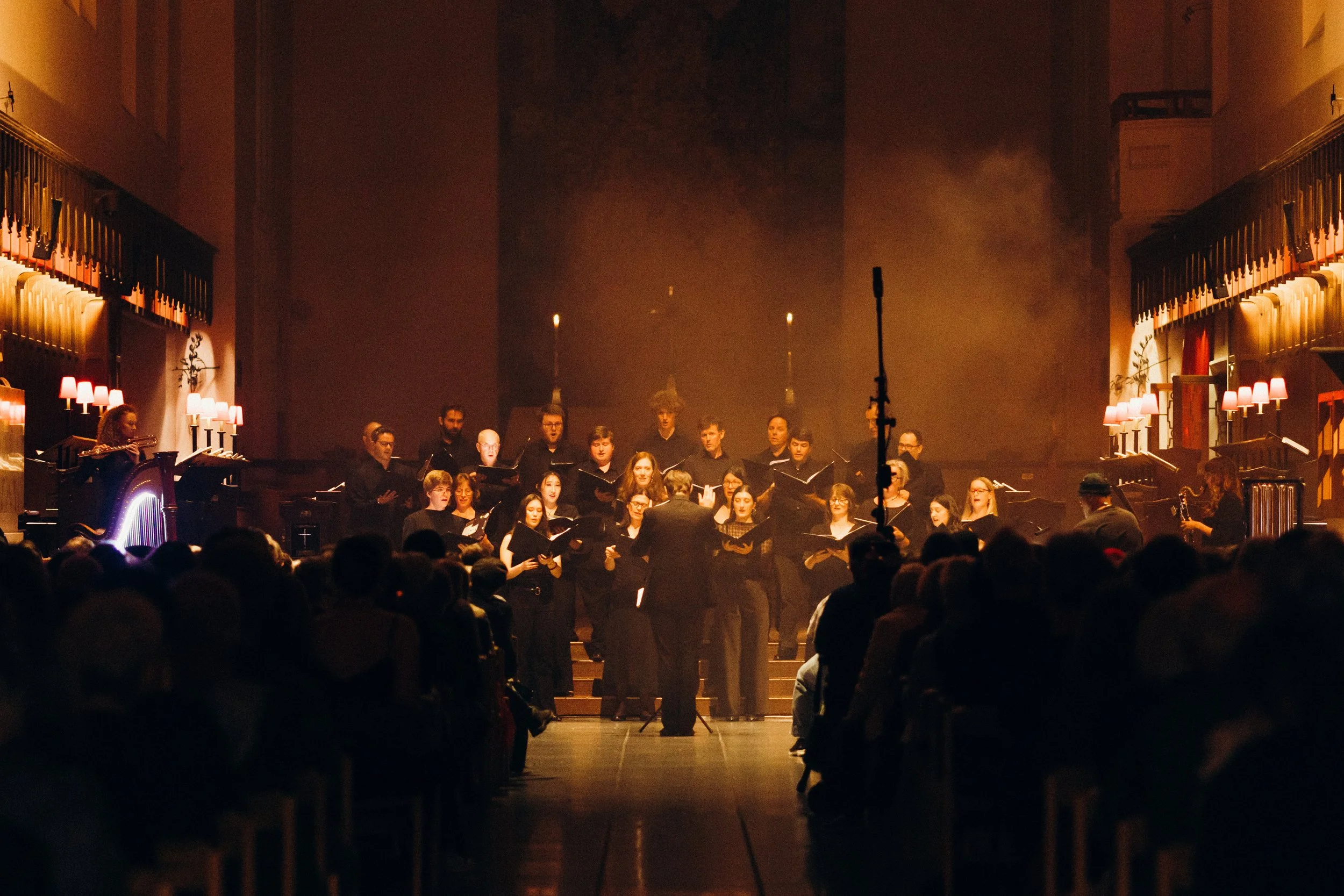
The Tudor Consort with Music Director Michael Stewart sang the Prologue to the Sybilline Prophecies a capella
Image credit: Nick George
From here the deconstruction of eight of Lassus’s motets began. Norris suggests that the effect is like listening to 16th century Renaissance polyphony “through the haze of a fever-dream.” Adding to the dream-like atmosphere were mists of dry ice, present in the sanctuary at the front of the cathedral since we took our seats and becoming more dense at climactic moments.
I’ve so far described how the work unfolded in time, but it was not a linear experience. The immersive intention had the audience surrounded by sounds, and for much of the work it was difficult to be sure where we were in the temporal structure, which motet was being sung, which of the sections we had reached. It didn’t matter. There were visual clues to descriptive sections with names like Clouds/Ngā Kapua, Shimmer/Kārohirohi and Whirl/Kōmiro, the latter with the pūrerehua, the whirling bull-roarer, dramatic in the hands of Alistair Fraser, while the women of Rangatuone whirled long poi. The structure was the composer’s guide, and perhaps the performers’ – the audience didn’t need to follow the order of events closely to experience the bath of extraordinary sonic effects that filled the space.
Alistair Fraser of the Rangatuone Ensemble
“…dramatic whirling of the pūrerehua.”
Image credit: Nick George
For those of us who like to keep a grip on what’s happening when, it was a lesson in letting go and experiencing a blurring of boundaries – between different sounds and timbres, between different cultures and centuries, and between the instruments and voices themselves. And in the echoing “cathedral acoustic” of the venue, it was a remarkable achievement by composer and performers to control, in time, the many moving parts of such a diverse and rich texture.
The magnificent, clear vocal timbres of the Tudor Consort were one of the great pleasures of the listening experience, and they were frequently combined in some way with other sounds, as if in conversation with the instruments of Stroma, taonga pūoro, or both ensembles. Fluttering and trembling effects painted the meanings of the text, and the celestial conversation happened across physical space as well as time, as when six bird-like pūtorino (Māori flutes) were antiphonally placed in trios in lectern and pulpit, responding to the singing of the Tudor Consort. The high side galleries of the cathedral were also used at times for taonga pūoro or women’s voices, adding to the sense of sounds floating in space.
Stroma’s musicians were widely spaced around the sides and in front and behind the audience. As far as I could tell, they had no conductor. The less portable instruments, the percussion, the Cathedral’s organ and the piano, remained at the front but as the work moved towards its big climax, deep brass and wind sounds from the back of the church, menacing big bass drum rolls from the front, deep organ chords and fragmented choral parts cascading like the pealing of bells together produced a sense for the audience of being inside an enormous sonorous organ.
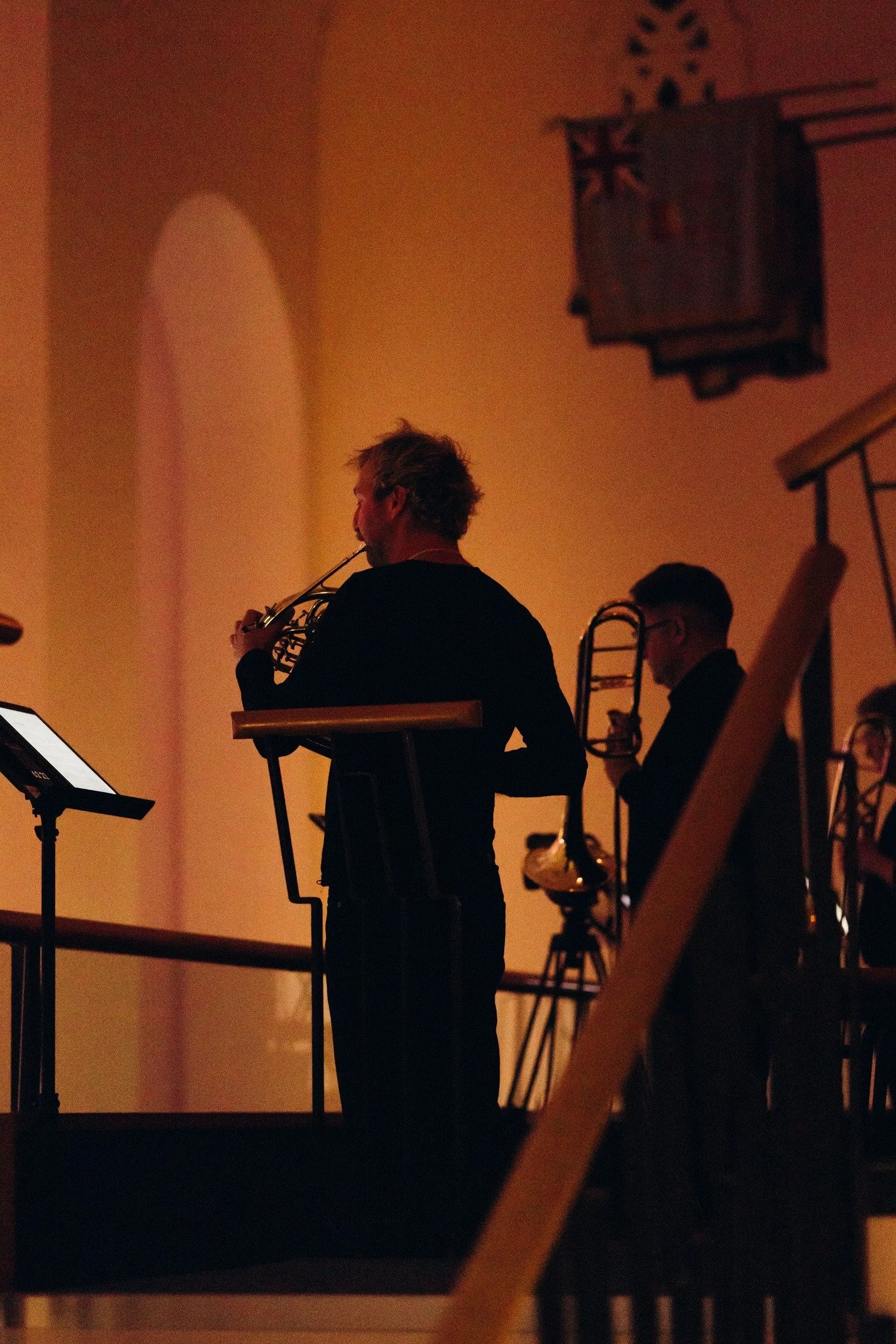
Stroma musicians in Wellington Cathedral
“…deep brass and wind sounds from the back of the church.”
Image credit: Nick George
The work’s climax came after extremes of fragmentation in the texture, bass drum ushering in the choir who sang text from the penultimate motet: Ipsa Deum vidi summum, punire volentem/ Mundi homines stupidos (I saw the high God wishing to punish/ The stupid men of the earth.) What a line for our times!
Architecturally, the timing of SoundCathedral’s summit reminded me of a big stretto in one of Bach’s huge fugues – a climactic gathering of forces, Lassus’s beautiful, daring and dissonant harmonies, mists intensifying, eerie sounds from bowed cymbal and electronic effects, pūkaea fierce and penetrating, choir in full voice, organ harmonies opening out grandly. Then resolution seemed to come quickly, and finally, the lights went out and the audience sat in the darkness, a little stunned, before rising to its feet for a long and joyous ovation.
SOUNDCATHEDRAL: Michael Norris (Composer & Artistic Director), The Tudor Consort & Michael Stewart (Music Director), Rangatuone Ensemble & Riki Pirihi (Conductor), Stroma New Music Ensemble, Max Toth (organ), Dylan Thomas & Jamie Ben (bellringers). At Wellington Cathedral of St Paul during the Aotearoa NZ Festival of the Arts, March 1, 2026.