
Bach’s Christmas Oratorio: delightful and uplifting
Wellington researcher, writer and musician Corrina Connor reviewed a recent performance of Bach’s Christmas Oratorio by the Bach Choir and Nota Bene for Five Lines.
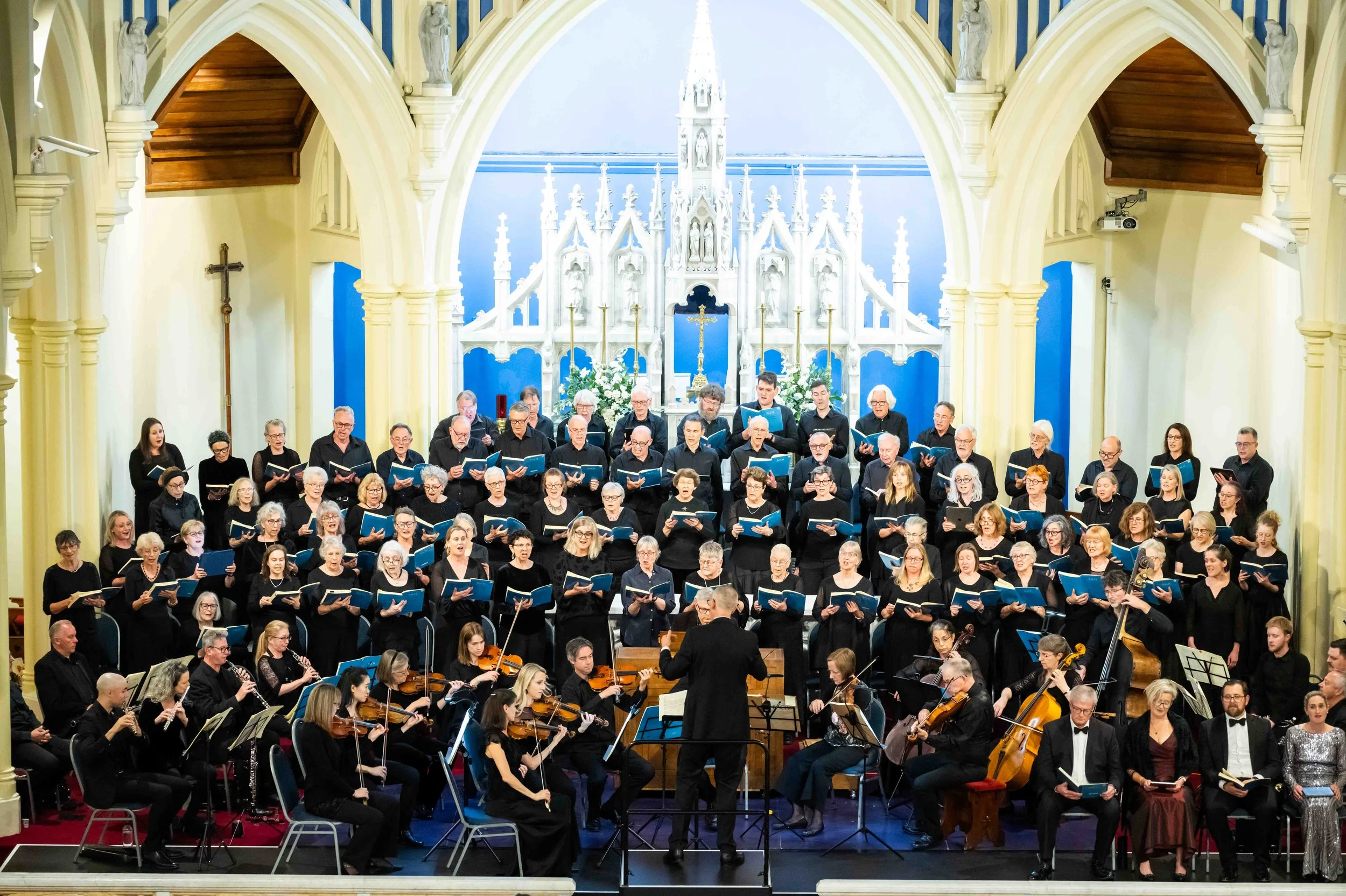
Bach’s Christmas Oratorio: the Bach Choir, Nota Bene, the Chiesa Ensemble and conductor Shawn Michael Condon in St Mary of the Angel’s Church
Photo credit: Colin McDiarmid
Two venerable Wellington vocal ensembles, the Bach Choir and Nota Bene, combined forces with the Chiesa Ensemble, four solo singers, and Bach Choir Musical Director Shawn Michael Condon, to present a rousing and reflective concert to conclude their 2025 seasons. This performance of four of the six cantatas forming J. S. Bach’s Christmas Oratorio gave the audience at St Mary of the Angels an account of the nativity story pared back to its essence.
In 1734, a decade after Bach took up his appointment as Cantor of Leipzig’s Thomasschule, with responsibility for music at St Thomas’s Church, he devised a grand new work for the Christmas season: a Christmas Oratorio. Six cantatas tell the Christmas story through a combination of texts from the Gospels of Matthew and Luke, Lutheran hymns, and religious poetry. The first, second, and third cantatas were performed in Leipzig’s churches of St Thomas and St Nicholas on 25, 26, and 27 December 1734, the fourth cantata on New Year’s Day,1735, the fifth on the first Sunday after New Year, and the sixth on Epiphany. While some of the music was newly composed, Bach also judiciously recycled music from several of his older works.
Members of the congregation at the first Leipzig performances were able to buy a slim booklet, titled Oratorio that was performed musically over the Christmas season in the two principal churches of Leipzig, containing the complete cantata texts. That this booklet was specially published for the occasion points to the devotional significance of those texts, which allowed the congregants to absorb and contemplate the sacred and poetic meaning of the oratorio, an example of how the eighteenth-century Lutheran church continued to follow Martin Luther’s prescription that the faithful should be able to understand the gospels in their own language.
The Bach Choir and Nota Bene honoured this tradition by including both the German text and an English translation in the concert programme, a practice that gives the audience a broader perspective on the work than including just the English translation. I quibble slightly with the assertion in the programme note that Bach created the oratorio not as a single dramatic arc, for this is a piece that does tell – in instalments – a compelling story across a long span of music.
There was much in Saturday’s performance to commend. Throughout the Christmas Oratorio Bach’s music places great demands on the choir, the soloists, and the instrumentalists. The gamut of moods – from the heartiest rejoicing to moments of exquisite reflection, pastoral mystery, and righteous defiance – requires all participants to remain alert to the intricacies of Bach’s music and text, and everybody proved willing to fulfil their roles.
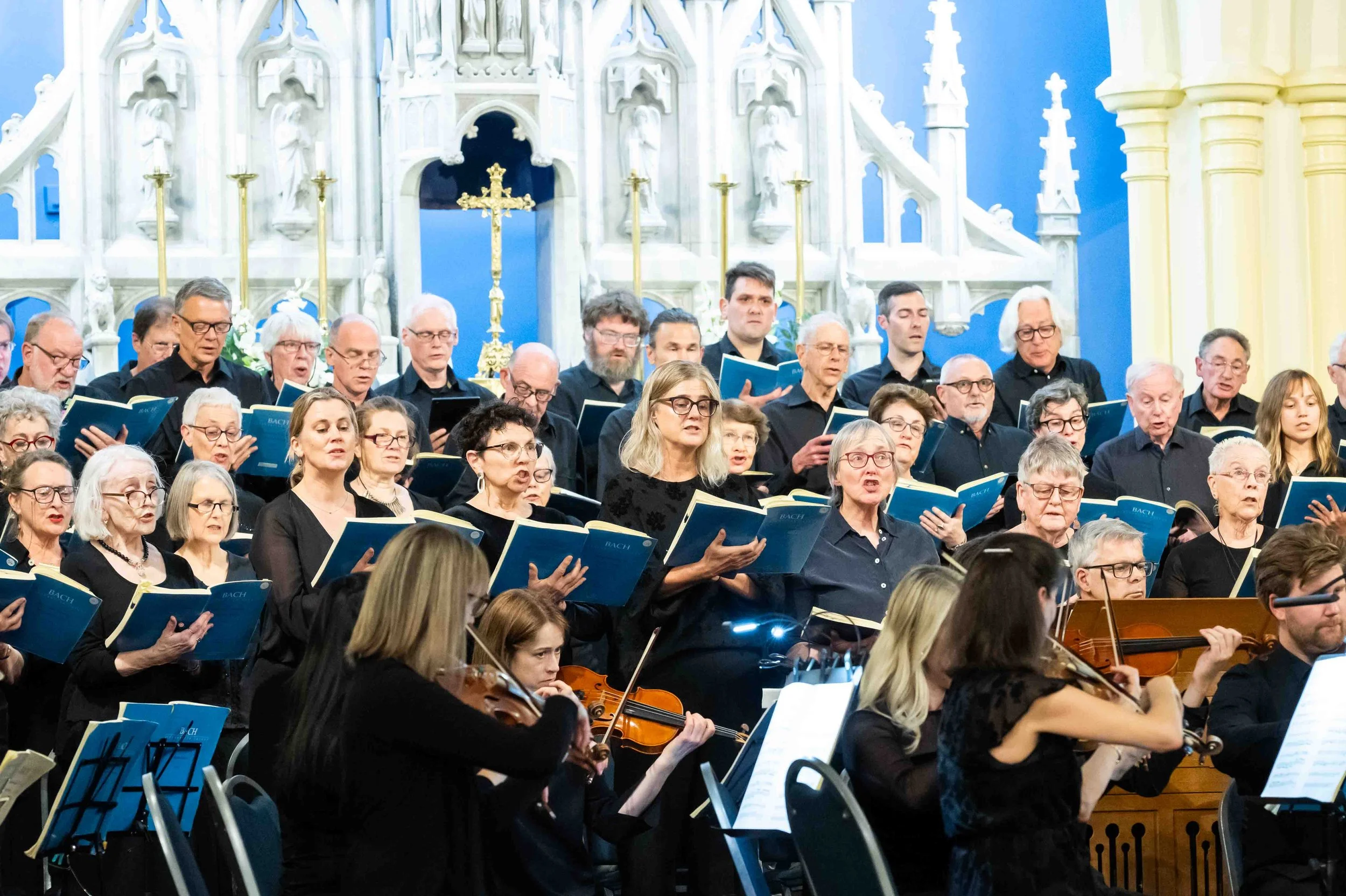
Members of the Bach Choir and Nota Bene
“…attacked their work in the choruses and chorales with gusto and commitment.”
Photo credit: Colin McDiarmid
The combined choirs attacked their work in the choruses and chorales with gusto and commitment. If their initial exclamations of ‘Jauchzet! frohlocket!’ (‘Shout for joy! Exult!’) at the outset of Part I sounded a shade tentative, they grew in confidence, encouraged by consistently splendid trumpets (Mark Carter, Matt Stein, David Johnson) and rousing timpani (Larry Reese). In this chorus, as with the fierce ‘Herr, wenn die stolzen Feinde schnauben’ (‘Lord, when our proud enemies snarl’) that opens Part VI, more distinct text declamation would have added to the impact – St Mary of the Angel’s acoustic is challenging in this regard, making sharp enunciation and crisp consonants more crucial than ever.
A similar issue also affected the strings: their playing was nuanced and cohesive, but the dynamic range and articulation required more piquancy, both to highlight the intricacies of interplay between instruments and to support the soloists with greater sensitivity. The acoustic does not favour the bass instruments at St Marys, requiring a crisper bowing style to avoid any impression of heaviness in this crucial department of Bach’s orchestra.

Alto Maaike Christie-Beekman
“…beautiful and thoughtfully-executed solos.”
Photo credit: Colin McDiarmid
At times, the ensemble and choir seemed slightly at odds in tempo, and somnolence crept into the mesmerising pastoral Sinfonia that opens the second cantata. Occasionally, the orchestra slightly overpowered the vocal soloists, particularly alto Maaike Christie-Beekman, whose beautiful and thoughtfully executed solos – the recitative ‘Nun wird mein liebster Bräutigam’ and aria ‘Bereite dich, Zion’ – were sometimes subsumed. Meanwhile, tenor Iain Tetley approached the difficult task of doubling the roles of solo tenor and Evangelist with courage; his recitation of the Gospel demonstrated clarity and a sense of drama. His demanding aria in Part II, ‘Frohe Hirten eilt, ach eilet’ in dialogue with a mellifluous flute and supported by pizzicato from the continuo strings, was delightful.
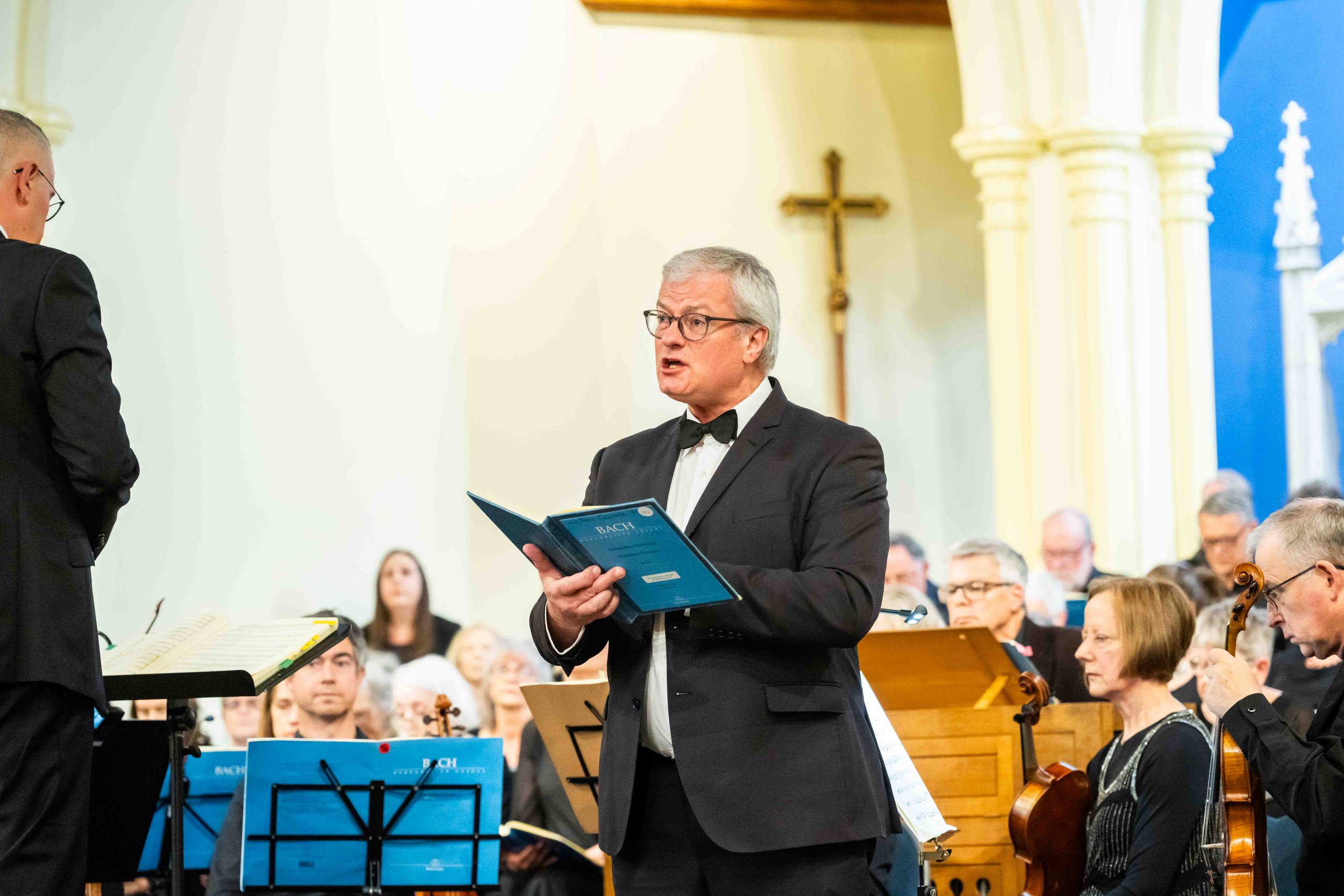
Tenor Iain Tetley
“…clarity and sense of drama.”
Photo credit: Colin McDiarmid
Bass Robert Tucker gave a robust, joyful account of his solos, especially the Part I aria ‘Großer Herr, o starker König’ (where again, crisper attack across the string sections would have emphasised the jaunty ‘kick’ of Bach’s syncopations). I admired his gesture towards characterising Herod in the recitative with tenor from Part VI, a moment that highlighted the importance of storytelling in all the recitatives: I would have loved to hear the soloists in more direct communication with the audience.
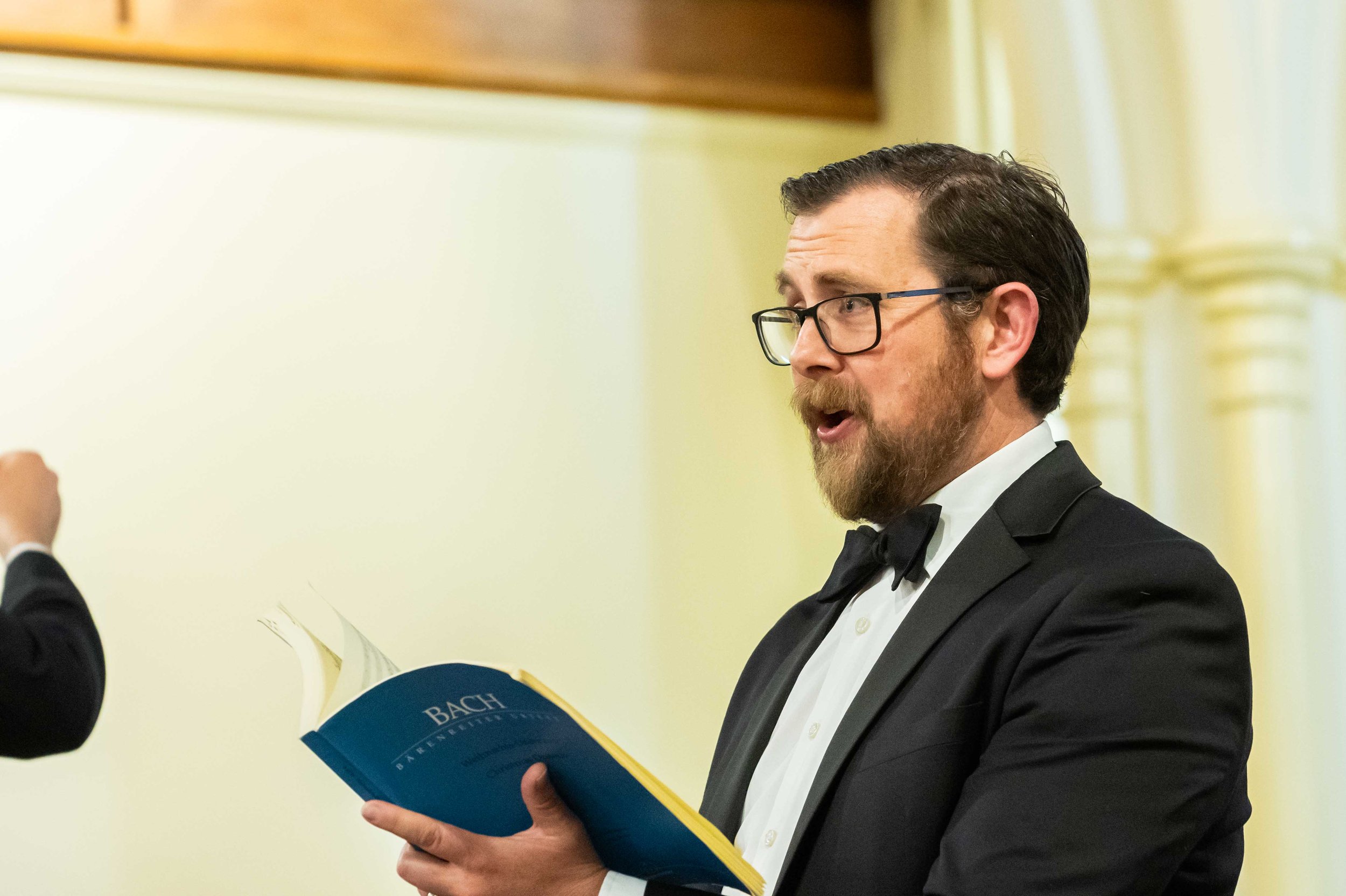
Bass Robert Tucker
“…a robust, joyful account of his solos.”
Photo credit: Colin McDiarmid
An example emerged in the subsequent soprano recitative ‘Du falscher, suche nur den Herrn zu fällen’ (‘Liar, you seek only to destroy the Lord’). This rebuke to Herod’s treachery also provided an opportunity for soprano soloist Georgia Jamieson-Emms to engage explicitly with the audience, rendering them almost complicit in Herod's evildoing. This quibble aside, Jamieson-Emms delivered her solos with fluency and sensitivity, the Part III duet with Tucker ‘Herr, dein Mittleid, dein Erbamen’ especially fine, and ably supported by the oboe section led by Robert Orr.
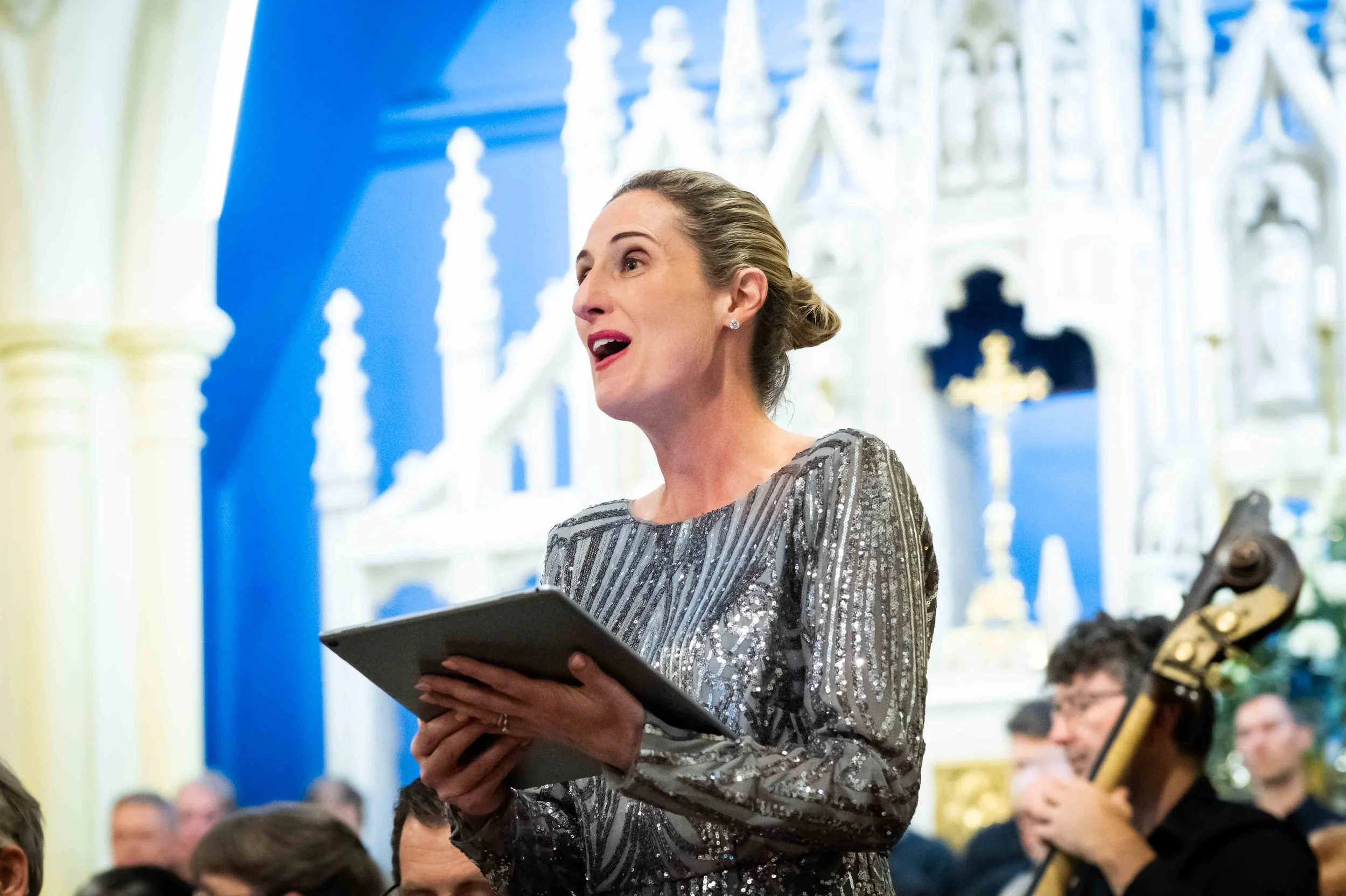
Soprano Georgia Jamieson-Emms
“…fluency and sensitivity.”
Photo credit: Colin McDiarmid
Limited rehearsal time, I suspect, lay behind lapses of ensemble between singers and orchestra, but Condon directed with confidence: it is no small task to guide such a large group of musicians through a such a complex work as Bach's Christmas Oratorio. If the momentum was occasionally lost in the transitions, and the ensemble faltered, the large and enthusiastic audience happily overlooked these mortal frailities as the magnificence of the final chorale, ‘Nun seid ihr wohl gerochen’ – that so triumphantly dispels all evil – uplifted and delighted every heart.
J. S. Bach, Christmas Oratorio BWV248, Parts I, II, III, and VI The Bach Choir of Wellington in collaboration with Nota Bene and The Chiesa Ensemble, Shawn Michael Condon (Conductor), Georgia Jamieson-Emms (Soprano), Maaike Christie-Beekman (Alto), Iain Tetley (Tenor and Evangelist), Robert Tucker (Bass) Douglas Mews (Organ), Anne Loeser (Chiesa Ensemble Concertmaster)
St Mary-of-the-Angels Church, Wellington 15 November 2025