
Eve de Castro-Robinson: exploring colours in a new album
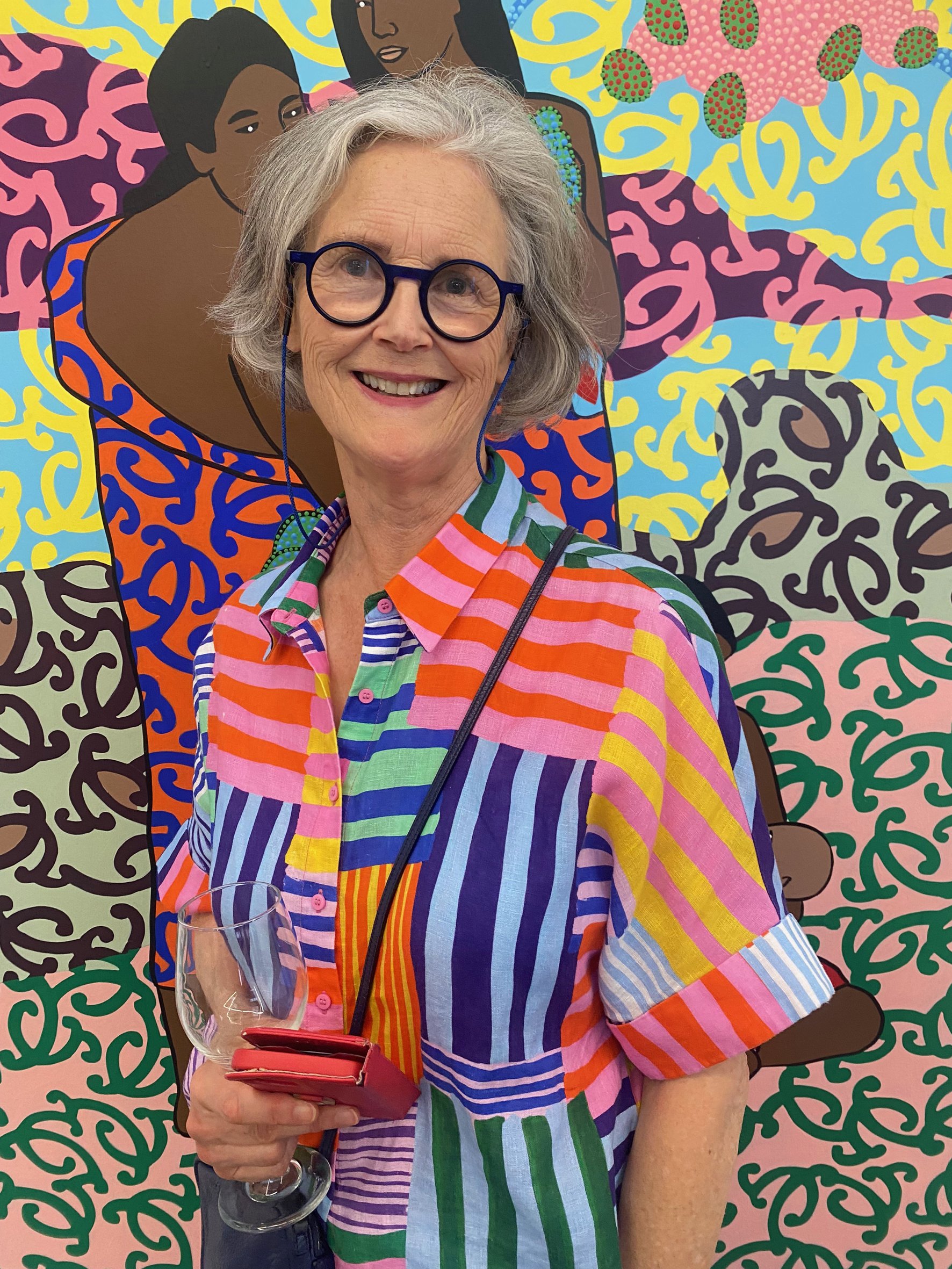
Composer Eve de Castro-Robinson
Photo credit: Celia Canning
Eve de Castro-Robinson is fond of bold colours, especially the striking ‘Klein Blue’ developed by her quasi-namesake, artist Yves Klein. Her new album “the willing air”, chamber works composed between 1988 and 2025 and performed by the musicians of NZTrio, reveals her as an explorer of musical colours. Her palette here, however, is sometimes more muted than bold in wistful works acknowledging people she describes as “those who have gone ahead.”
Shortly after the 2023 premiere of her six-movement the willing air, the album’s title work, I visited Mingary, The Quiet Place, in Melbourne, intrigued to discover the urban sanctuary that had inspired de Castro-Robinson’s quiet, introspective composition. Located in the centre of busy downtown intersections, it is a remarkable centre of calm and reflection.
In the willing air, gently shifting colours express emotions, at first yearning violin lines over static drone-like lower voices. Other timbres join the three instruments, whispering voices, whistling, a gong-like crystal glass that opens “Breathe”, the third movement. Sometimes musical effects hang as static objects in time and space, occasionally hinting at a human presence, as in a repetitive pizzicato heartbeat from the cello.
The title was taken from a poem by de Castro-Robinson’s mother: Were we to meet in unexpected places/A sudden warmth would fill the willing air. The work is dedicated to composer Jenny McLeod, who died in 2022. “Let there be silence”, the final movement, uses fragments of the 16th century Coventry Carol, “Bye bye, lully lullay”, with a sense of increasing distance as whispering voices end the work.
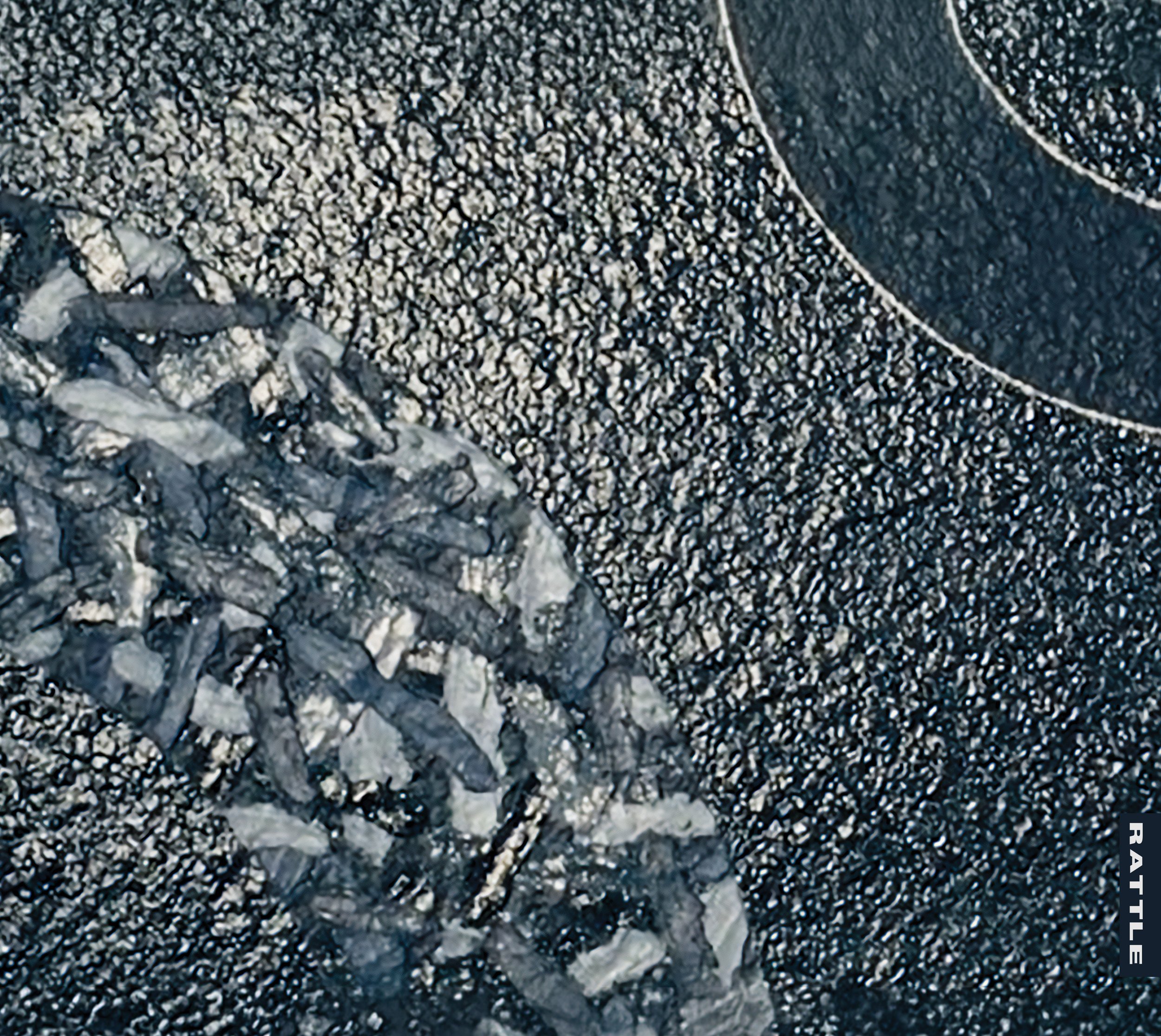
the willing air
…subtle musical hues in a new album from composer Eve de Castro-Robinson.
Two duets from 1991, Split the Lark and Tumbling Strains, provide energetic contrasts to the more meditative works on the new album.
Written for violin and piano, with a title from an Emily Dickinson poem, Split the Lark traverses a wide range of colours and moods, impulsive, dreamy meanderings set against determined and insistent percussive repetition. Gentle lyricism evaporates into emphatic double-stopped bowing from violin and crashes from the piano, and morphs again into a slower hymn-like melodic section before the pace picks up. This “quasi-fantasy”, played with effortless virtuosity by Somi Kim and Amalia Hall, ends with high-pitched, strong repetition.
It leads well into de Castro-Robinson’s Tumbling Strains, a turbulent and speedy work for violin and cello. Intense bowing, high-pitched, unrelenting and demanding, has the musicians virtually scrubbing their instruments. The pace occasionally relaxes, pizzicato providing punctuation, and then we’re off again, the anguished musical conversation between Ashley Brown and Hall a great exercise in musical unanimity. It’s a highly dramatic work in live performance.
In an earlier album of De Castro-Robinson’s music, “The Gristle of Knuckles”, a remix of Tumbling Strains, archly renamed Stumbling Trains,was played by Brown with such passionate brilliance it was, the composer suggested, “as if he’s sawing the cello in half.” The same ferocious energy characterises this performance of Tumbling Strains by Brown and Hall for the new album.
I suggested once to de Castro-Robinson that a new work of hers seemed “very Eve-like”. I was commenting that the work was not organized through melody and harmony. “I’ve always joked,” she replied, “that I’m not very good at the basics of melody, harmony and rhythm. I’m better at texture, colour, gesture and sculpting the music in time.”
Those strengths are especially evident in the piano trio At Water’s Birth. The composer’s colour-box includes prepared piano and vocalising musicians, whispering, speaking and whistling. The composer herself reads fragments of the poem by Denys Trussell: At water’s birth the light deluge, amen/ of stars losing energy earthwards…
It’s the texture that is “Eve-like”, the ensemble in layers with transparent harmonies, evoking watery depths, currents and undercurrents. Kim’s piano supplies the drama, and static sonic objects twist and repeat, the poem whispered as the work ends.
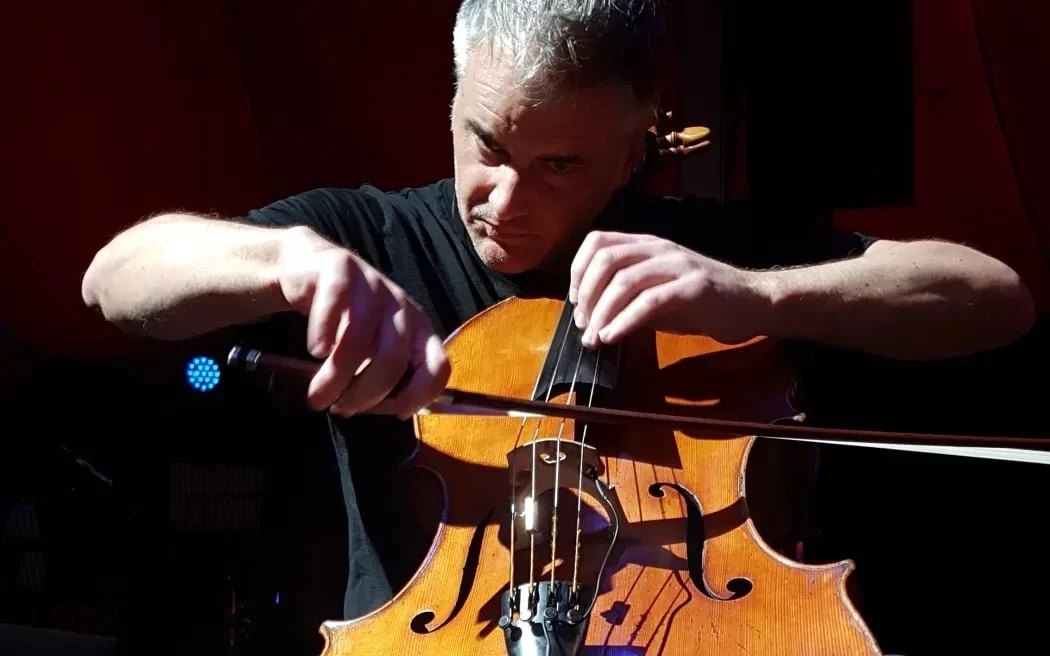
Cellist Ashley Brown
“..plays two commemorative cello solos by Eve de Castro-Robinson with moving expression.”
Image credit: Tim Dodd
Two cello solos, played with moving expression by Brown, honour friends of de Castro-Robinson who were taken too soon. Commemoration is an elegy for composer Gerard Crotty, just 30 in 1988 when he died of cancer. A sad little melody over stark, double-stopped harmonies eventually takes flight in singing style.
The other cello homage, the night-sea sobbing, took its title from a poem by Hone Tuwhare, and de Castro-Robinson has dedicated the work to composer Martin Lodge, who died in 2024. Brown’s cello is intense with pain and distress, emotions ranging through the desolation of an arch-shaped melody to raw double-stopped cries. A coda with touching, gentle ruru calls ends both the piece and this subtly-hued new album from one of our major composers.
“the willing air”, an album of chamber music by Eve de Castro-Robinson performed by NZTrio (Rattle) Purchase link here