
NZSO and Shostakovich’s 8th Symphony: howls of grief and rage
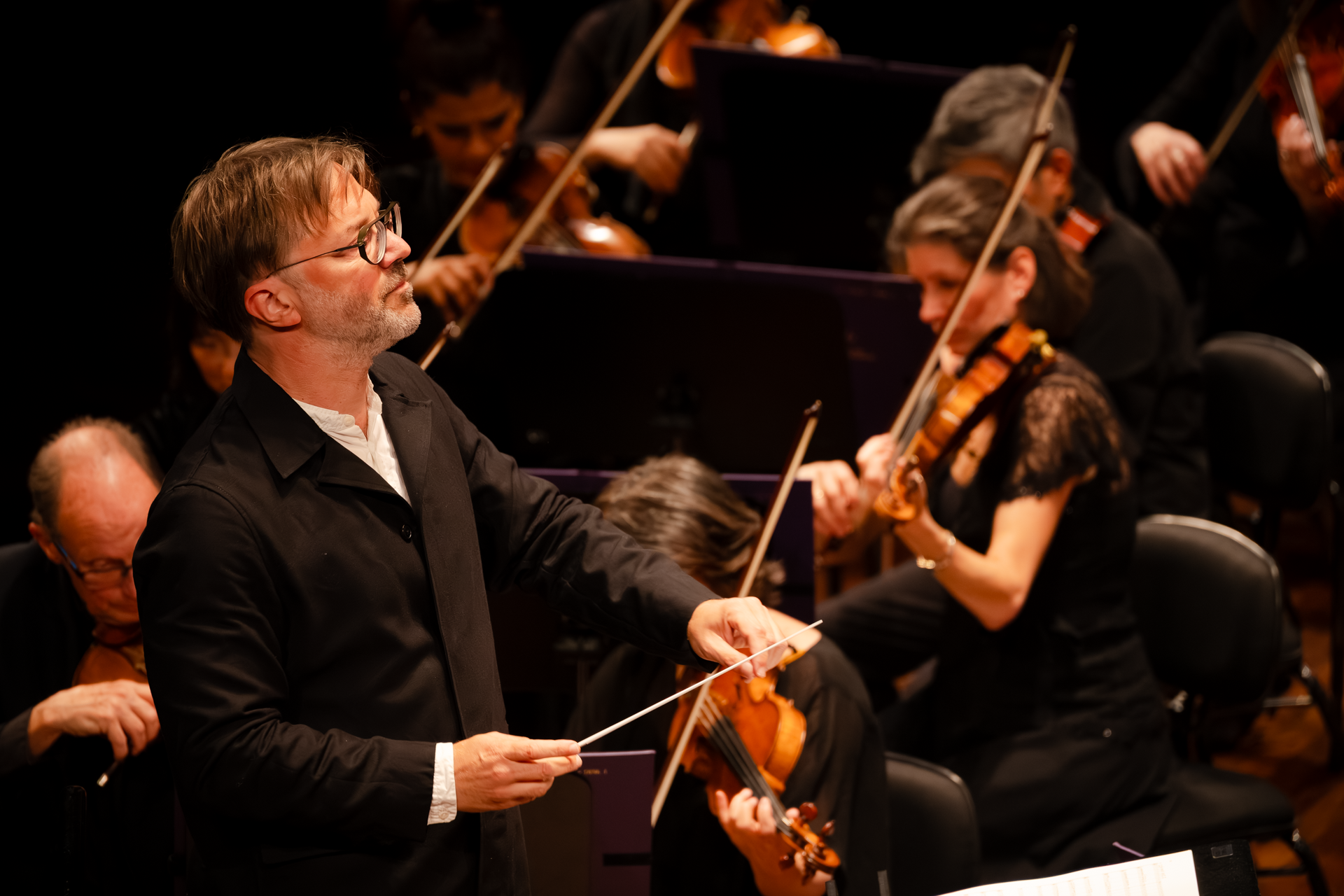
Conductor André de Ridder with the NZSO
Image credit: NZSO/Latitude Creative
Writing about Dmitri Shostakovich last year and previewing the many concerts scheduled to mark the 50th anniversary of his death, I called my article “Music for troubled times.” The world seems to be in even more perilous times now than we were in 2025. So although the NZSO’s decision to programme Shostakovich’s Symphony No. 8 in its recent “Resonance” concerts will have preceded current global crises, it fully captured the zeitgeist.
Shostakovich described his symphony as a "poem of suffering". Composed during the second world war in 1943 and dedicated to ‘the victims of fascism and war’, it is an orchestral masterpiece, expressing in powerful music Shostakovich's anguished sorrow for not only those liquidated in Stalinist purges but the staggering 27 million Soviet lives lost in World War 2.
The NZSO has not played the 8th Symphony in concert for over two decades. Memorably, in 2001, two days after the Twin Towers fell in New York, the Orchestra played the first two movements of the work to an apparently tough audience at Horowhenua College, explaining first why it chose the music. It seems unlikely that full orchestral forces were present for a school concert (the work requires some 94 musicians on stage) but the seconds-long awestruck silence in the school hall after the ferocious and ironic march of the second movement, followed by terrific applause and pleas to play it again, have been recorded in the NZSO’s entry on the Ministry of Culture and Heritage’s New Zealand History site.
For some reason the mighty 8th is less often played than some of Shostakovich’s 15 symphonies, and many in the Michael Fowler Centre would not have been familiar with the work. Conductor André de Ridder described it in his introduction as “profound, sincere, and honest”. It is all of these, but it is also furious, its opening, tragic Adagio movement a soaring and powerful lament that opens with low strings and builds and builds. A sense of dread and anguish rises to a terrific climax, almost cacophonic, galloping forwards with strident woodwinds, trombones, big drum rolls, Shostakovich howling with grief and rage. The climax is repeated and then, with stunning timing, drops away for an almost unbearably poignant cor anglais solo, very beautifully played by Michael Austin.
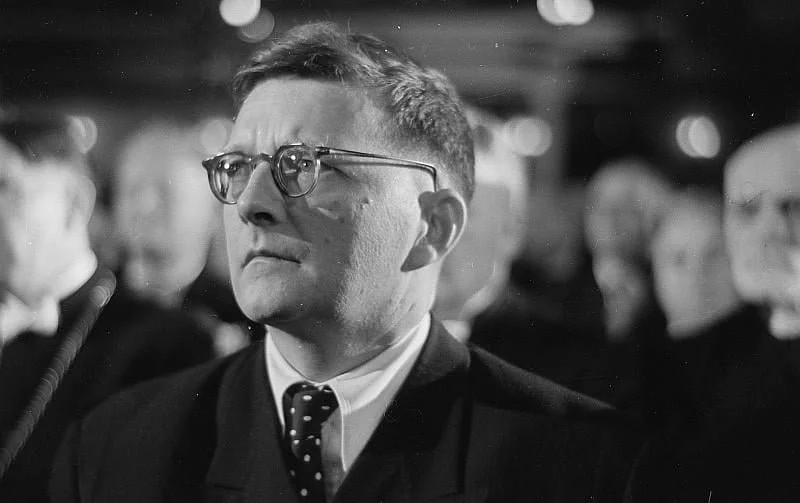
Composer Dmitri Shostakovich
“…he described his Eighth Symphony as a ‘poem of suffering’.”
The steely intensity of the long 1st movement took a little while to arrive in this NZSO performance, but the disjointed scherzo/march of the Allegretto that followed brought us the familiar mocking, sharp-edged Shostakovich instantly. It’s a parody of a military march, the long, strident piccolo solo leading the soldiers to their death, woodwinds following behind, the contrabassoon a lumbering Soviet bear and the whole witches’ sabbath, just six minutes long, a marvel of modernist invention.
The NZSO is at its best in these big symphonic works, section principals offering marvellous solos, a brilliant percussion section and strings capable of a huge sound. Fierce violas begin the 3rd movement, another march, cellos and basses underneath and violins joining, all playing strong unison lines. Wild cries from the wind sections lead to the military flavours of snare drum and brass, the string ostinato continuing as the work segues into the bleak passacaglia of the slow-moving fourth, before ghostly low clarinet and a beautiful, surprising C major chord as a bassoon solo takes us straight into the fifth movement.
Shostakovich described this final movement in terms clearly ironic and mocking, designed to please his political masters: “bright and gay, like a pastoral, with dance elements and folk motifs.” Although he privately considered the whole symphony his own requiem, he went on to say: "The philosophical conception of my new work [the 8th Symphony] can be summed up in these words: life is beautiful. All that is dark and evil rots away, and beauty triumphs."
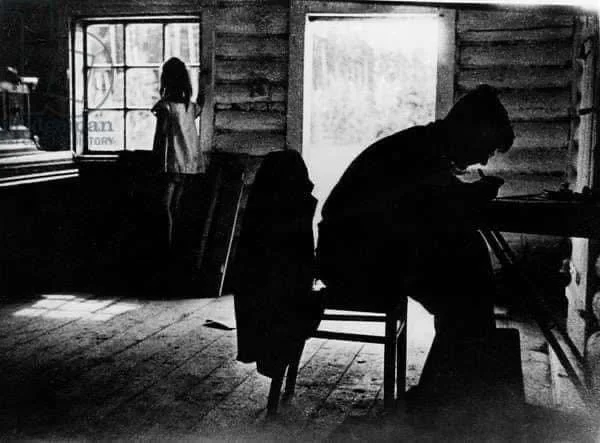
Shostakovich at work
…composing in his small “chicken coop” studio in the summer of 1943, the year of the 8th Symphony. His daughter looks out the window…
Soviet authorities and critics were mightily unimpressed by the premiere, condemning it with strong language, and the work was not performed in Russia till after the post-Stalinist thaw of the late 1950’s. But the symphony is magnificent, and although the relaxed de Ridder was not a consistently galvanising presence on the podium, the ambiguous final movement of this remarkable work was splendidly played. From lovely light flute solos, a fine cello line, and big strident climaxes with powerful drums and cymbal, plus a side-offering of an ironic little clarinet tune against pizzicato strings – a little “pastoral”? – it proceeds, in the final chords, to a possibly sarcastic C major and a genuine sense of resolution and peace.
Introducing the work, de Ridder asked the question, “why perform this symphony?”. The performance provided an emphatic answer. A better question might have been “what should be programmed with this symphony?” Shostakovich’s massive emotional and musical power will blow most works preceding it out of the water. The concert began gently with Ravel’s popular and lovely Pavane for a dead princess, a somewhat disappointing performance that took a while to warm into its beautiful flow.
The planned performance of Andrew Norman’s Slip: Concerto for Trombone and Orchestra was unfortunately postponed when the soloist, acclaimed Dutch virtuoso Jörgen van Rijen, withdrew because of injury. It was to be a world premiere, so it’s not easy to judge whether the work would have had the strength and compositional depth to withstand Shostakovich’s powerful onslaught.
Slip was replaced at short notice by another trombone concerto by American composer and guitarist Bryce Dessner, played by the NZSO’s outstanding principal trombonist David Bremner. He’s a great musician, and also a well-known bandsman, and his supporters from the brass band community were there to cheer his performance.
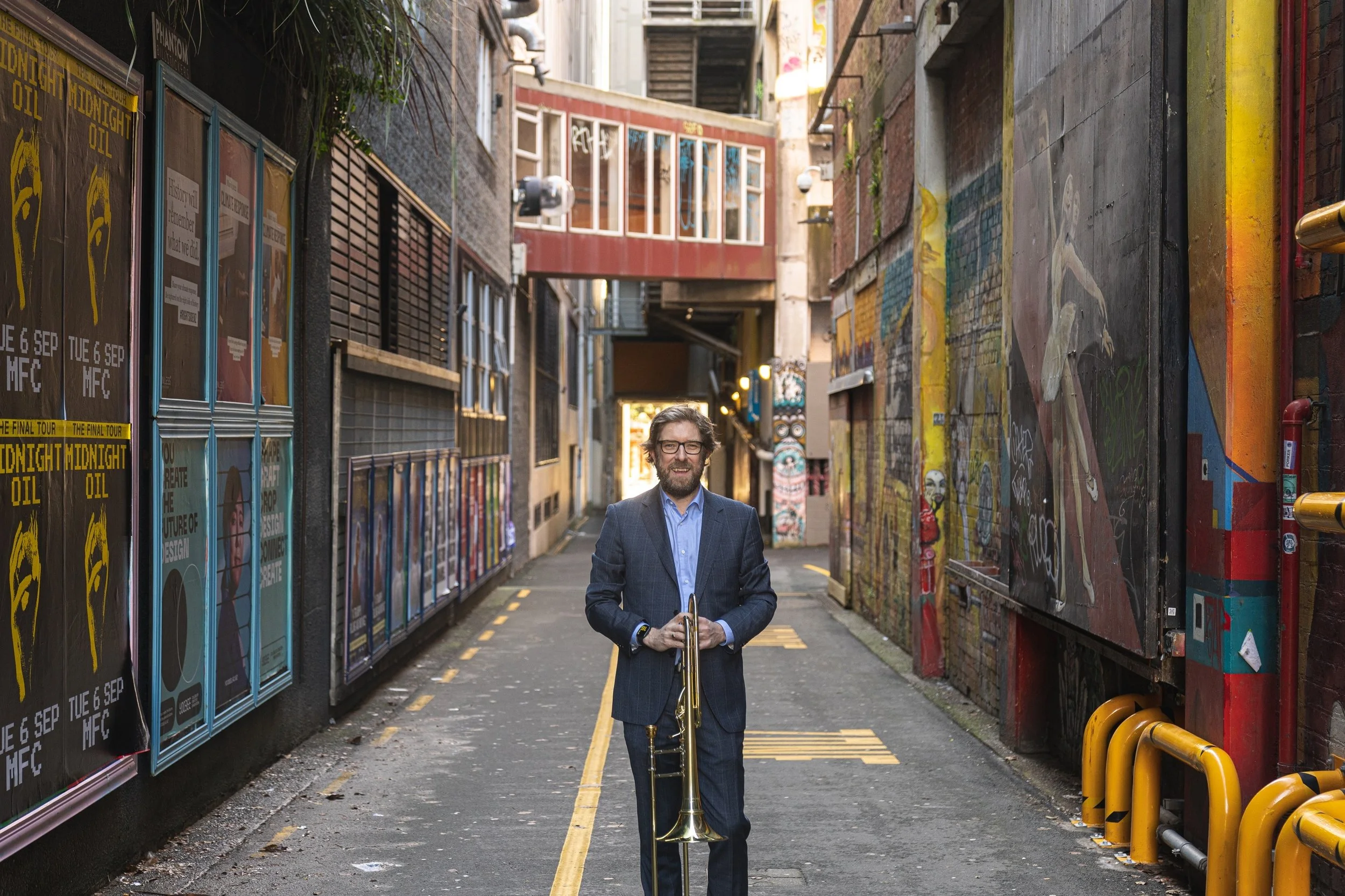
NZSO Principal Trombonist David Bremner
“..accomplished musicianship and a lovely sound.”
Photo credit: Latitude Creative
Dessner’s Trombone Concerto is minimalist with a jazzy feel, beginning with a repeated note from the soloist and getting into its groove with repetitive little figures and woodwind chirps. Bremner showed off his lovely sound and accomplished musicianship and the three-movement concerto works well as a conversation between soloist and orchestra, the tutti often echoing the soloist’s melodic fragments.
The third movement ramps up the action with bigger, more dramatic gestures, flutter-tonguing from the soloist and more lyrical trombone gestures against clippy clop percussion and pizzicato strings. Ultimately, the musical content of the concerto and its repetition became somewhat banal, and the big ovation after the work ended with a sustained note from Bremner was probably more for the soloist’s fine performance than the composition. After Shostakovich’s monumental symphony, Dessner’s Trombone Concerto was probably a distant memory for many by the end of the concert.
NZSO “Resonance” André de Ridder (conductor) David Bremner (trombone) music by Maurice Ravel, Bryce Dessner and Dmitri Shostakovich Wellington 9 April, 2026