
Orpheus Choir: fine singing in an ambitious programme
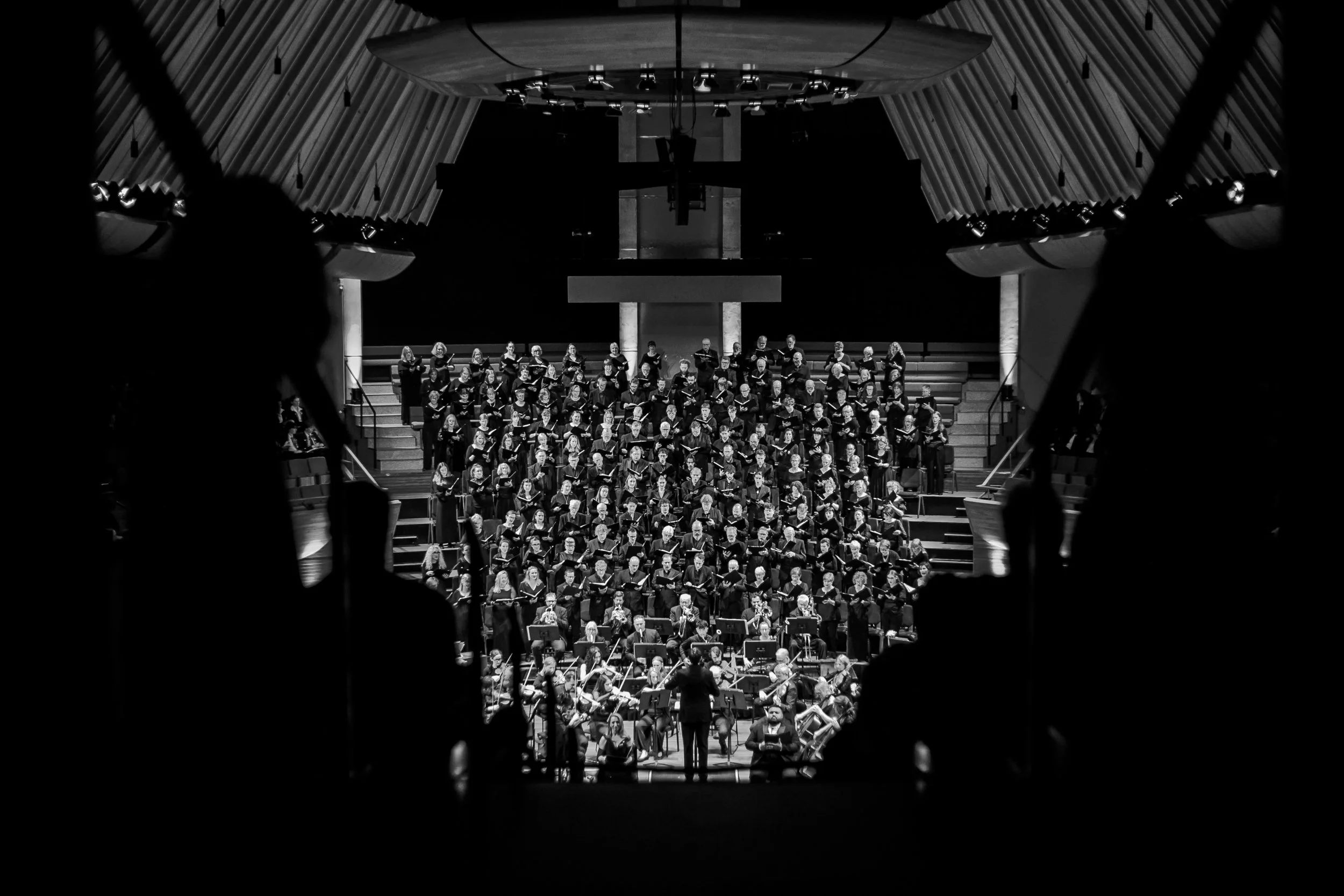
The Orpheus Choir Wellington performing Mozart’s Requiem
Image credit: Andy Snaps
Mozart’s final composition was his glorious Requiem in D minor, K.626. He died in Vienna in 1791, aged just 35, before finishing it, and his student Franz Xaver Süssmayr, working with the completed sections, sketches of others and detailed instructions from his master, completed the work after his death.
The Requiem, in spite of its apparently hybrid creation, is undoubtedly Mozart's, full of his dramatic genius and his humanity as he expresses the mysteries of death in marvellous music. His widow Constanze claimed that Mozart believed he was writing his own requiem, although it was written on commission for a patron whose young wife had died that year.
It has become a beloved work in the choral repertoire. English National Opera (ENO) chose the Requiem for its return to the Coliseum in London in 2020, after the disruptions of COVID lockdowns. They performed in an empty auditorium, the performance broadcast into British homes by the BBC.
ENO's Artistic Director Annilese Miskimmon wrote eloquently at the time about why they, an opera company, had chosen this composition. "Mozart’s Requiem was the piece that best embodied our responsibilities as artists to respond to the here and now. Fifty minutes of dramatic, ritualistic and hopeful beauty....it reminds us, as great art can, that both before and after death, we for ever belong to each other."
The Orpheus Choir of Wellington chose the Requiem to open its 2026 season, perhaps an acknowledgement that, in turbulent times, great art has an essential role to play. Under the baton of their music director, Brent Stewart, with Orchestra Wellington in accompaniment and a fine quartet of New Zealand singers as soloists, they offered a committed performance that, at its best, fully captured the spirit of this timeless work to the delight of a large audience.
The choral opening of the Introit was a little tentative but soprano Emma Pearson’s lovely solo was beautifully delivered and the performance then picked up markedly, gaining focus and energy. The fugal Kyrie that followed had a splendid bounce, leading directly into the Dies Irae, a “day of wrath” full of strong, fierce singing with confident, bold entries. The orchestra was also dramatic, string players incisive, radiant playing from the brass and Larry Reese on 18th century timpani impressive, as he was throughout the performance.
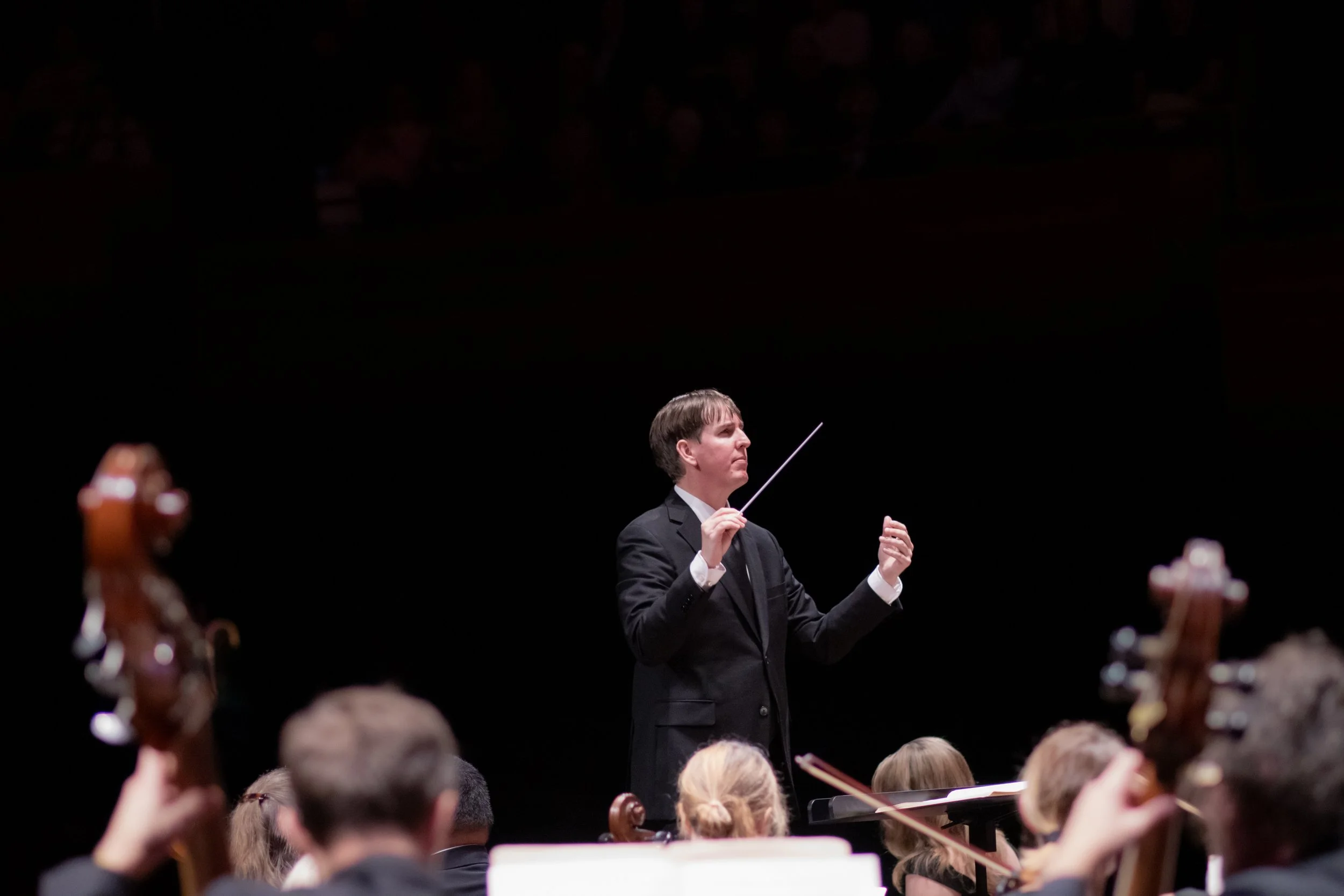
Conductor Brent Stewart
“…a nice conception of Mozart’s Requiem.”
Photo credit: Andy Snaps
Stewart was well in control of his diverse forces and had a nice conception of Mozart’s music. He has been a transformative director for the Orpheus Choir since his appointment over a decade ago, developing the choir’s vocal focus and musical facility and bringing in younger singers and a greater energy in performance. This was evident in the Rex Tremendae, from its first jubilant choral shouts to the well-managed counterpoint that followed. The women’s voices floated serenely as the movement came to its gentle conclusion.
In the Tuba mirum and Recordare sections of the Mass, Mozart features the quartet of solo singers, beginning with the bass in a famous duet with trombone. Robert Tucker’s baritone was only just big enough for the Michael Fowler Centre’s ungrateful acoustic but the duet came off well. It was followed by Ridge Ponin’s ringing tenor, rich-toned singing from mezzo-soprano Charlotte Secker in the alto part and Pearson soaring in with a lovely sound and great projection. In the Recordare the soloists worked particularly well together, in spite of a little untidiness from the orchestra.
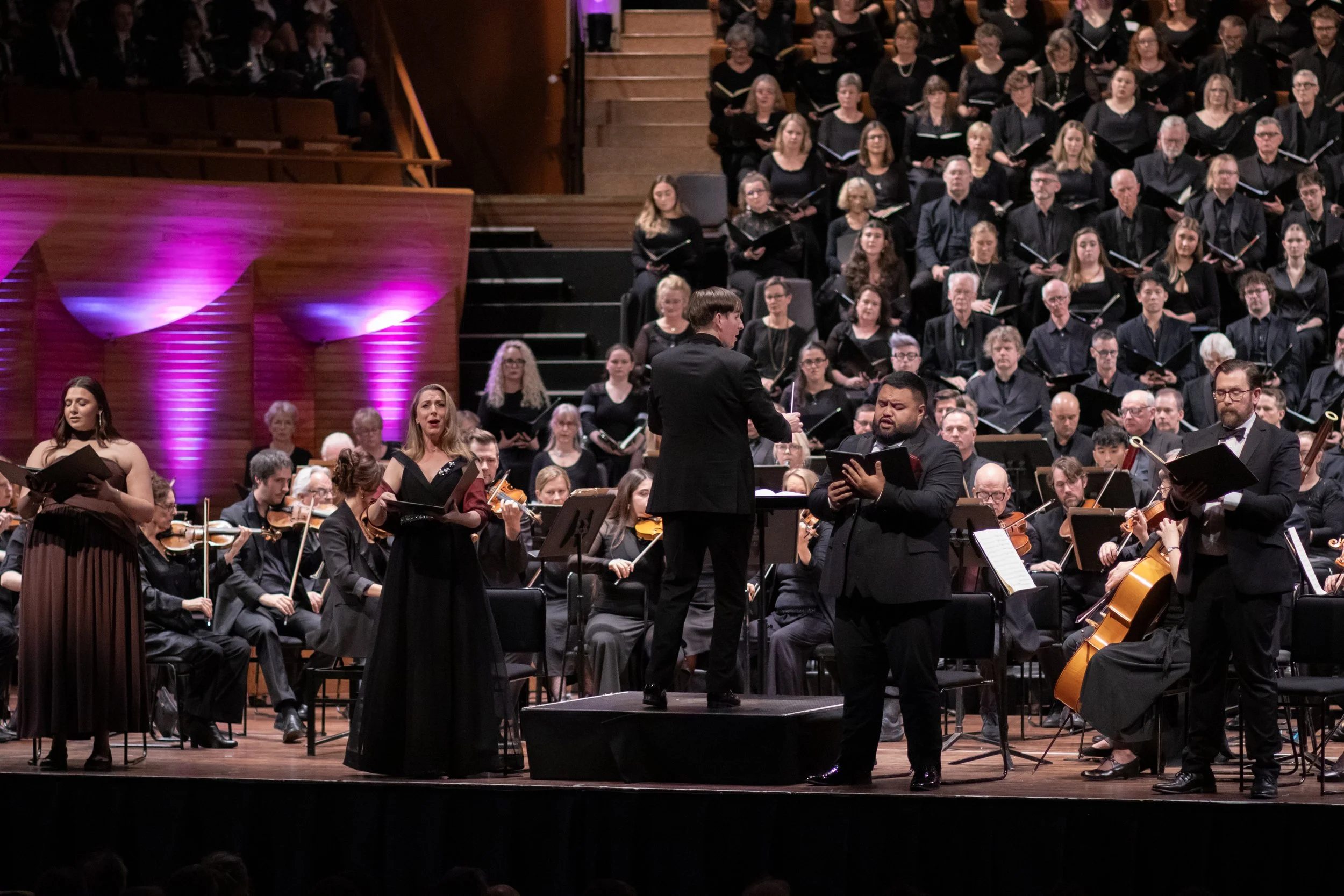
The Orpheus Choir performing Mozart’s Requiem
with soloists (from left) Charlotte Secker (alto), Emma Pearson (soprano), Ridge Ponini (tenor) and Robert Tucker (bass).
Photo credit: Andy Snaps
The Orpheus Choir has over 150 singers, which is a large group and sometimes unwieldy for Mozart’s contrapuntal textures.. The emotional Lacrimosa lacked vocal clarity at times, but this was beautifully offset by expressive string playing from Orchestra Wellington under the leadership of concertmaster Amalia Hall. In the Confutatis, Mozart makes a pointed contrast between men’s and women’s voices which was nicely managed, real drama from the male choir with women’s voices ethereal above.
From there the Requiem proceeded to its moving conclusion, the challenging counterpoint of the Hosanna in the Sanctus clear and elastic, more fine singing from the soloists and great brass playing in the Benedictus, and an Agnus Dei full of musicianly expression. Süssmayr, probably following Mozart’s intention, brought the grand fugue from the Kyrie back at the end of the Mass for Lux Aeterna, and with another emotionally rich solo from Pearson, the performance ended strongly to an enthusiastic ovation.
The second half of the programme brought to the stage a work less well-known by the classical music audience. The American composer Christopher Tin won his first Grammy for his song “Baba Yetu”, a Swahili setting of The Lord’s Prayer, which was used for the video game Civilisation IV. The classically-trained Tin, born in California to immigrant parents from Hong Kong, developed the oratorio To Shiver the Sky from its opening number, “Sogno di Volare”, music also composed for a video game, Civilisation VI. It became his third album, released in 2021 and this was its Wellington premiere.
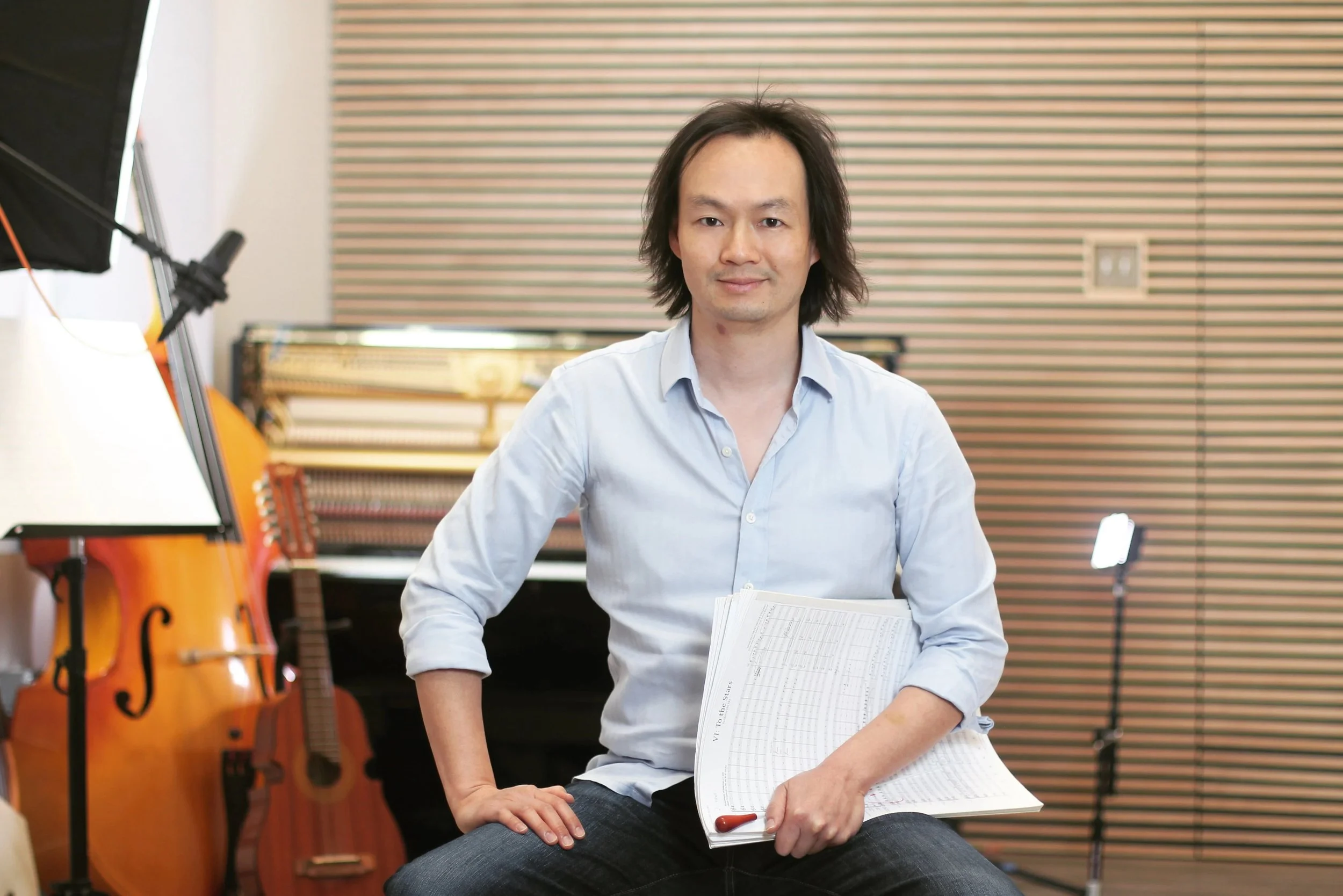
Composer Christopher Tin
“…his oratorio To Shiver the Sky was developed from his music for the video game Civilisation VI.”
Image supplied
The work is an ambitious conception. Sogno di Volare can be translated as “Dream of Flight” and each of the eleven sections of To Shiver the Sky – the title is from a Rudyard Kipling poem, the number of sections a reference to Apollo II – explore the history of flight, using texts from sources including Hildegard von Bingen, Ovid’s Metamorphosis, Dante, Copernicus, Jules Verne, Amelia Earhart and American President John F Kennedy. Each text is sung in its original language, eight in all, with helpful surtitles providing translations.
From the energetic and uplifting opening movement it was clear that the choir and its director were right into the work and its contemporary, somewhat minimalist idiom. The lines were well-written for voices, and the choral singing was joyous and engaging. The orchestra, with additional wind forces, and percussion including tubular bells, was strong in accompaniment.
The Latin lyrics of the second movement, The Heavenly Kingdon, written by 12th century Abbess Hildegard, introduced the Orpheus Choir Wellington Scholars, a group of young and talented singers from within the main choir who made a fine and focused contribution in several movements, including the third, Daedalus and Icarus. Here the tenor soloist Ponini revealed a strong voice in his upper register, finding real emotion and power in Ovid’s story, strings and bells accompanying with verve.
By this stage it was clear that Tin’s musical language, though skilfully scored, was, especially harmonically, vastly less elegant, imaginative and profound than that of Mozart. Well, it’s a tough comparison. This contemporary oratorio, using well-chosen texts, is determinedly conventionally tonal, at times in the well-worn idiom of stage musicals, sometimes evoking film music, the harmonies repetitive, cliché-ridden and often overly soulful and syrupy.
The text of the fifth movement, Astronomy, from the writings of Copernicus, was one of several deserving a more sophisticated treatment by the composer. The choir carried the music, laden with emotion – “there is nothing purer than the stars” – in a simplistic setting with the naïveté of Disney.
As the work proceeded, the highlights came from the performance rather than the composition, lovely women’s voices singing Verne’s text in French, against a well-orchestrated accompaniment including piccolo, nice percussion colours, and an energetic full orchestra. Lyrics from Ferdinand von Zeppelin, inventor of the airship, were set with force and drama, Ridge’s solo singing again lovely in his high range and military-sounding brass and drums illustrating German might and technology.
The work requires just two soloists, soprano and tenor, and Pearson’s delightful singing of Earhart’s poem Courage, accompanied by harp, was a standout moment, the English lyrics beautifully clear. It was followed by the most sombre mood of the work in a movement called Become Death, reflecting the darker sides of progress in air and space travel. Robert Oppenheimer, who oversaw the development of the atomic bomb, had translated the Sanskrit lyrics which Tin set with dramatic orchestral colours, the movement ending with bass drum, timpani and snarling trombones.
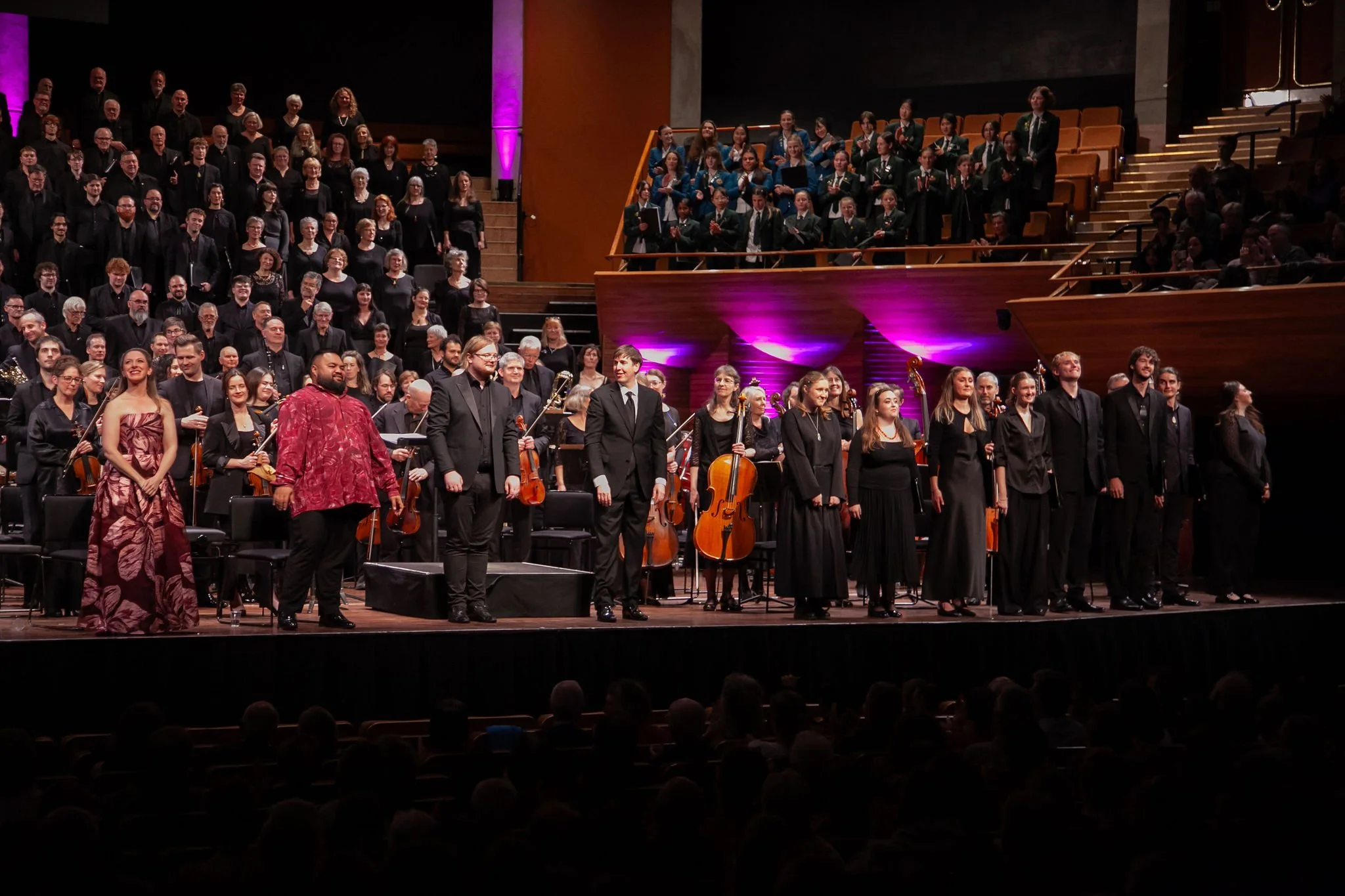
Choir, orchestra and soloists receive applause for their performance of Christopher Tin’s To Shiver the Sky
(from left) Emma Pearson (soprano), Ridge Ponini (tenor), Stephen Clothier (assistant conductor), Brent Stewart (conductor) and the young singers of the Orpheus Choir Wellington Scholars.
Image credit: Andy Snaps
The Wellington Scholars returned in this movement and, after more tediously repetitive harmonic progressions in the 10th, an excellent female children’s choir from several Wellington colleges sang with engaging clarity the words of JFK in the 11th and final movement, “We choose to go to the moon.”
The work ends with unashamed American sentimentality, a hymn of praise to US glory. Both the words of Kennedy’s speech about space travel and the musical setting are rousing but simplistic, with horns, a fanfare from trombones, dramatic blows on drums and timpani and a full-on orchestral conclusion. The musically banal ending was lifted by the seemingly genuine passion of Pearson’s final solo and by the professionalism and commitment of the whole performance.
Congratulations to the Orpheus Choir, Stewart and the orchestra and soloists for making the absolute best of Christopher Tin’s work, and for successful presentation of an ambitious programme.
Orpheus Choir Wellington with Orchestra Wellington, Brent Stewart (Conductor), Emma Pearson (Soprano), Charlotte Secker (Alto), Ridge Ponini (Tenor), Robert Tucker (Bass), Children’s Choir. Wellington 18 April, 2026