
XL: a brilliant celebration of 40 years of The Tudor Consort
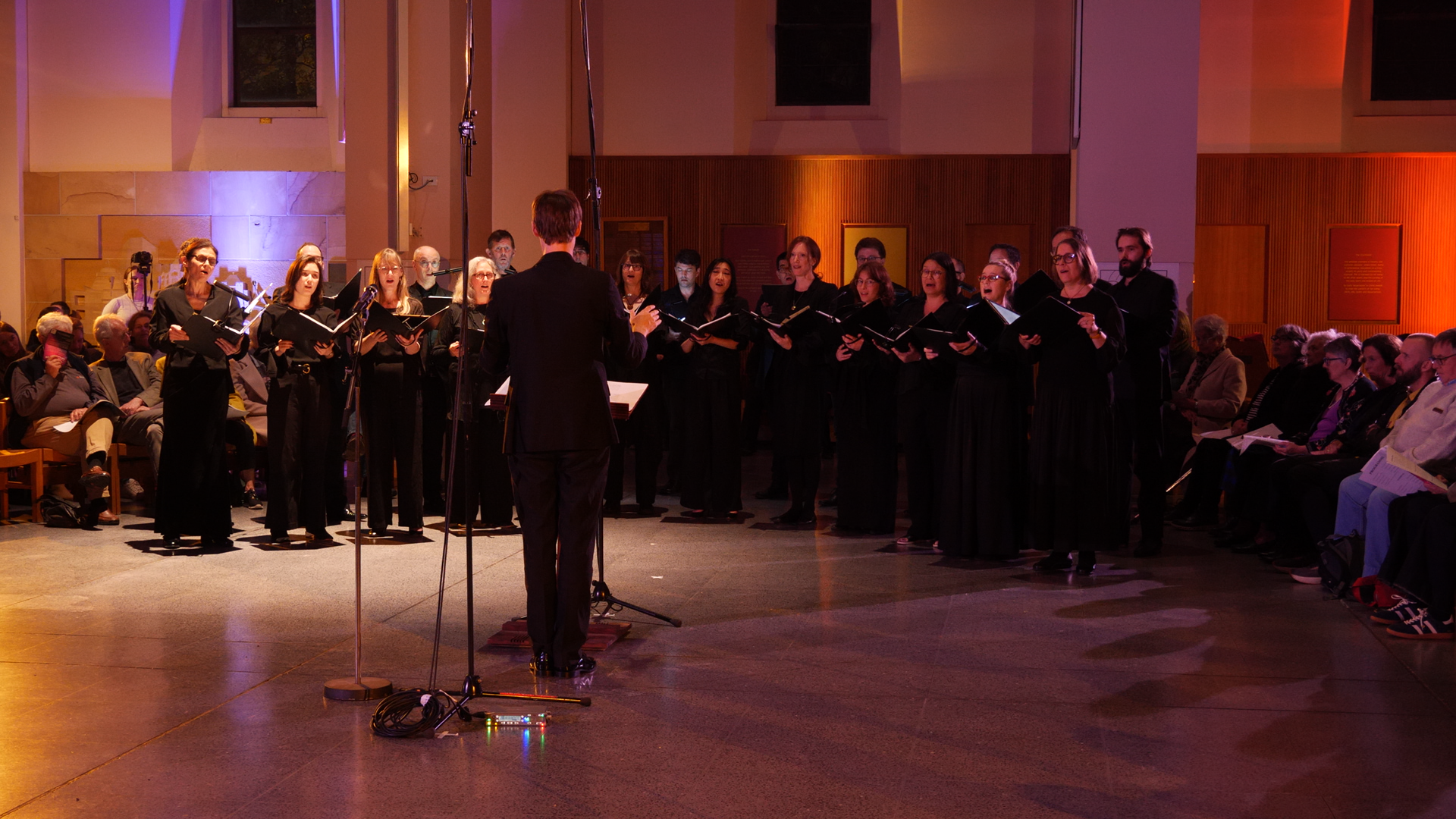
The Tudor Consort with Music Director Michael Stewart in Wellington Cathedral of St Paul
Image supplied
The Tudor Consort is a remarkable 40 years old. Established in 1986 as a Wellington-based specialist early music choir by its first director, Englishman Simon Ravens, it celebrated its birthday this week with a wittily named concert called “XL”, using the Roman numeral for forty, with the “extra-large” double entendre referring to additional singers included for several works.Their anniversary season in 2026 involves significant collaborations with orchestras and ensembles throughout the year (see below) but this beautifully curated concert was theirs alone.
Since its early beginnings, the Tudor Consort has had five fine directors, all of whom had written a greeting to the choir for the printed programme, referring to accomplishments during their tenure. Michael Stewart, the Consort’s current director, took over 19 years ago and under his leadership the group has presented some of its most high quality, high profile and memorable concerts, building a large and enthusiastic following. Wellington Cathedral, including its back gallery, was packed for this anniversary event.
The programme was presented “in the round”, some works performed in the centre of the space, others locating singers behind the concentric circles of audience. The evening began with the bright Venetian timbres of Giovanni Gabrieli’s 8-part Jubilate Deo, two 4-part choirs facing each other in an antiphonal arrangement, the composer’s clever counterpoint sometimes combining the women of one choir with the men’s voices of the other. From the beginning, the ensemble impressed with its beautiful tone, impeccable diction and contrapuntal clarity, hallmarks of the whole concert.
Revisiting an old favourite of their repertoire, the Consort next moved us to England and the English language with Orlando Gibbons’ O Lord, In Thy Wrath, a motet for Lent.Sung in a semicircular formation on the south side of the Cathedral, the performance had a smooth English quality very different from the Gabrieli, but maintaining a lovely open sound and beautiful tuning.
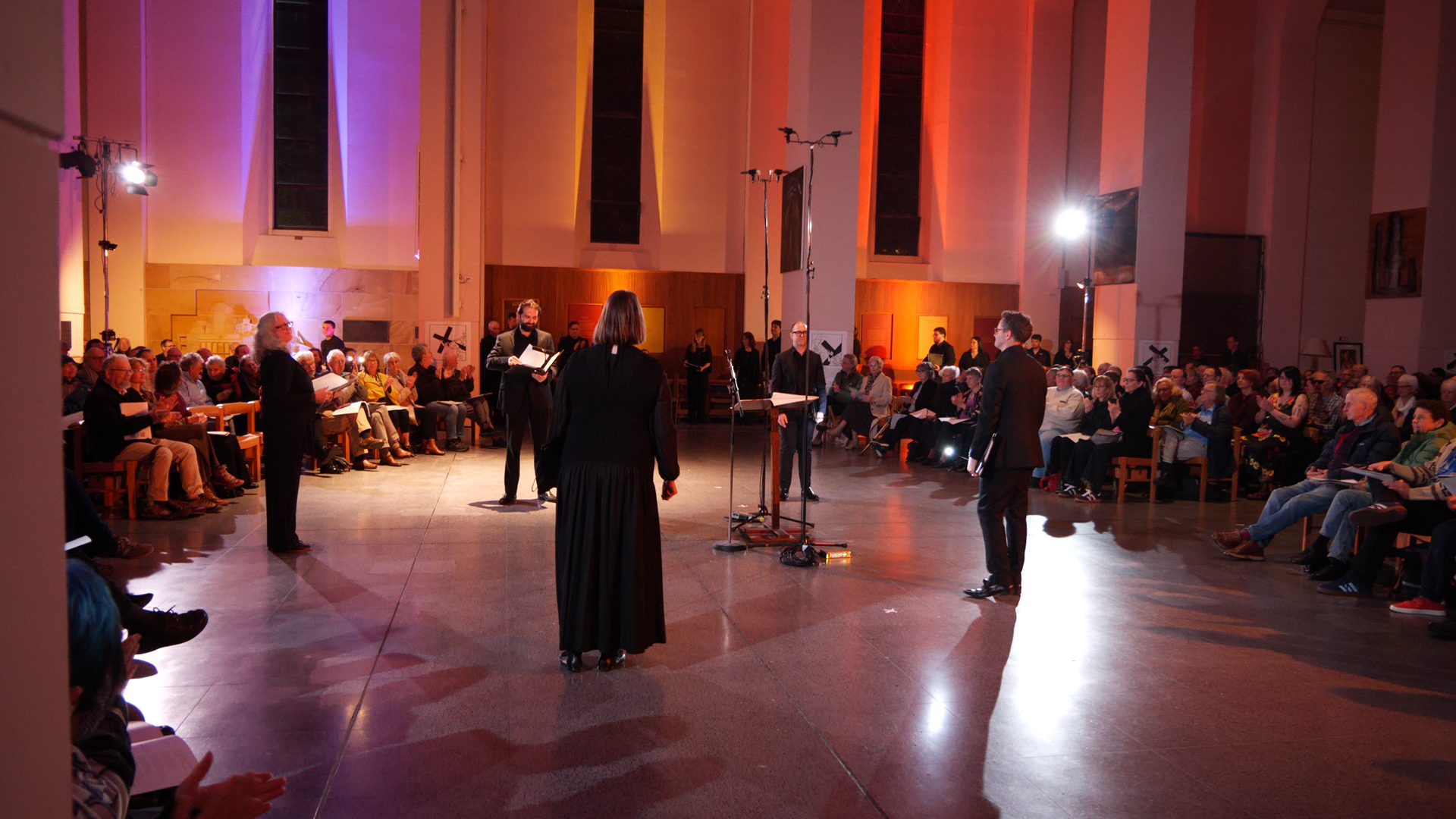
Five soloists from The Tudor Consort sing Orlando Gibbons’ madrigal The Silver Swan
Image supplied
The Tudor Consort is a small choir, twenty-three singers for most of this concert. All members are capable soloists, and this was demonstrated in Gibbons’ classic madrigal, The Silver Swan, sung here by just five solo voices and including some singers who had been part of the original choir 40 years ago. In a clever programming move, the setting was followed (as it was in a 2013 concert by the Consort) by a contemporary response to Gibbons’ 1612 setting. The work, subtitled Modern Madrigal No.2, is by Finnish composer Jaakko Mäntyjärvi. His Silver Swan refers to the melodic shapes of the Gibbons but heads off into a different tonality with appropriately wry and witty music for a text which ends "Farewell all joys! O death come close mine eyes. More geese than swans now live, more fools than wise."
The first half of the programme ended with a magnificent, staged performance of a work never before performed in New Zealand. In 2006 the Tallis Festival in England commissioned Mäntyjärvi to write a response to Tallis’s famous 40-part motet, Spem in alium. The Finn took for his text the story of Jesus facing temptation from the Devil after his fast in the wilderness of forty days and forty nights. In his Tentatio, he divided his 40 singers into four 8 part choirs (SSAATTBB) and a separate 8-voice baritone section, which represented Satan.
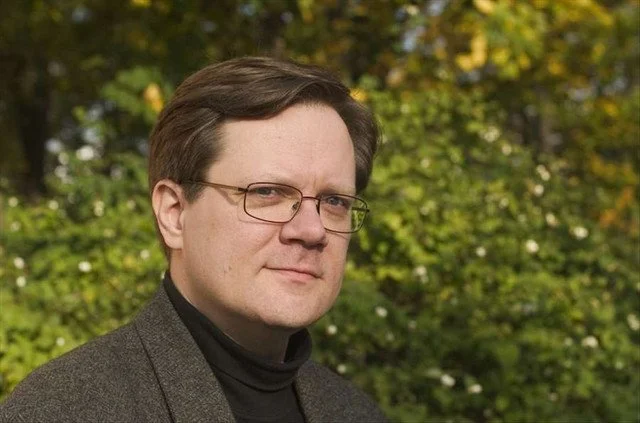
Finnish composer Jaakko Mäntyjärvi
“…his Tentatio was a highlight of The Tudor Consort’s programme.”
Photo credit: Maarit Kytöharju / Music Finland
For this dramatic and demanding composition, the Tudor Consort was enlarged by an additional 27 singers, including 11 baritone/basses. The four mixed choirs were located symmetrically behind the audience, the satanic choir of men located first at the back of the Cathedral, including for a time in the upper rear gallery, and later moving to the front, creating a sense of the devil prowling around his target. A soprano detached herself from one of the choirs at significant moments to sing a wordless solo from the nave, representing an angelic presence. The staging was directed by theatre professional Jacqueline Coats and special lighting effects by Janis Cheng of Yellow Lemon Creative added to the drama.
Both composition and performance were marvellously effective, with magical effects from the separated choirs, lovely exchanges like echoes between voices across the spaces of the church, and dramatic speech-like vocal effects and hissing. An atmospheric bell tolled occasionally, perhaps providing a pitch reference to the singers. Mäntyjärvi’s harmonic language, sitting over an ominous E flat pedal note, moves from intense dissonance to clearer sounds, reaching a climax with a huge 40-part cluster chord from the choir as the devil retreats. Tentatio was an ambitious programming choice and for many the highlight of the concert.
The second half opened with joyous peals of vocal sound in Byrd’s Sing Joyfully, followed by another 21st century work designed to respond to the music of Tallis. Composer Ross Harris wrote Vobiscum in aeternum (I will be with you always) in response to a Tudor Consort commission in 2011. Tallis wrote his short work, known as If ye love me, in English. Harris used the Latin translation for a kind of introduction to the Tallis version, his lines reverent and flowing, with lovely stripes of slow, sustained singing and less sense of forward momentum than the original. Harris’s modern, ambiguous harmonies give an impression of searching, which resolves when the language shifts to English and the music becomes closer to the Tallis original. With a beautiful balance between the vocal lines, it was a moving performance of a simple and effective work.
To acknowledge the 40 years of the Tudor Consort, the current ensemble invited alumni to join them for the next two hymns, Tallis’s O Nata Lux, which was sung at the very first concert four decades earlier and Byrd’s Ave Verum Corpus. In this “extra-large” form, the vocal lines were perhaps a little less meticulous, but the performances were nonetheless lovely and a nice gesture to the choir’s history.
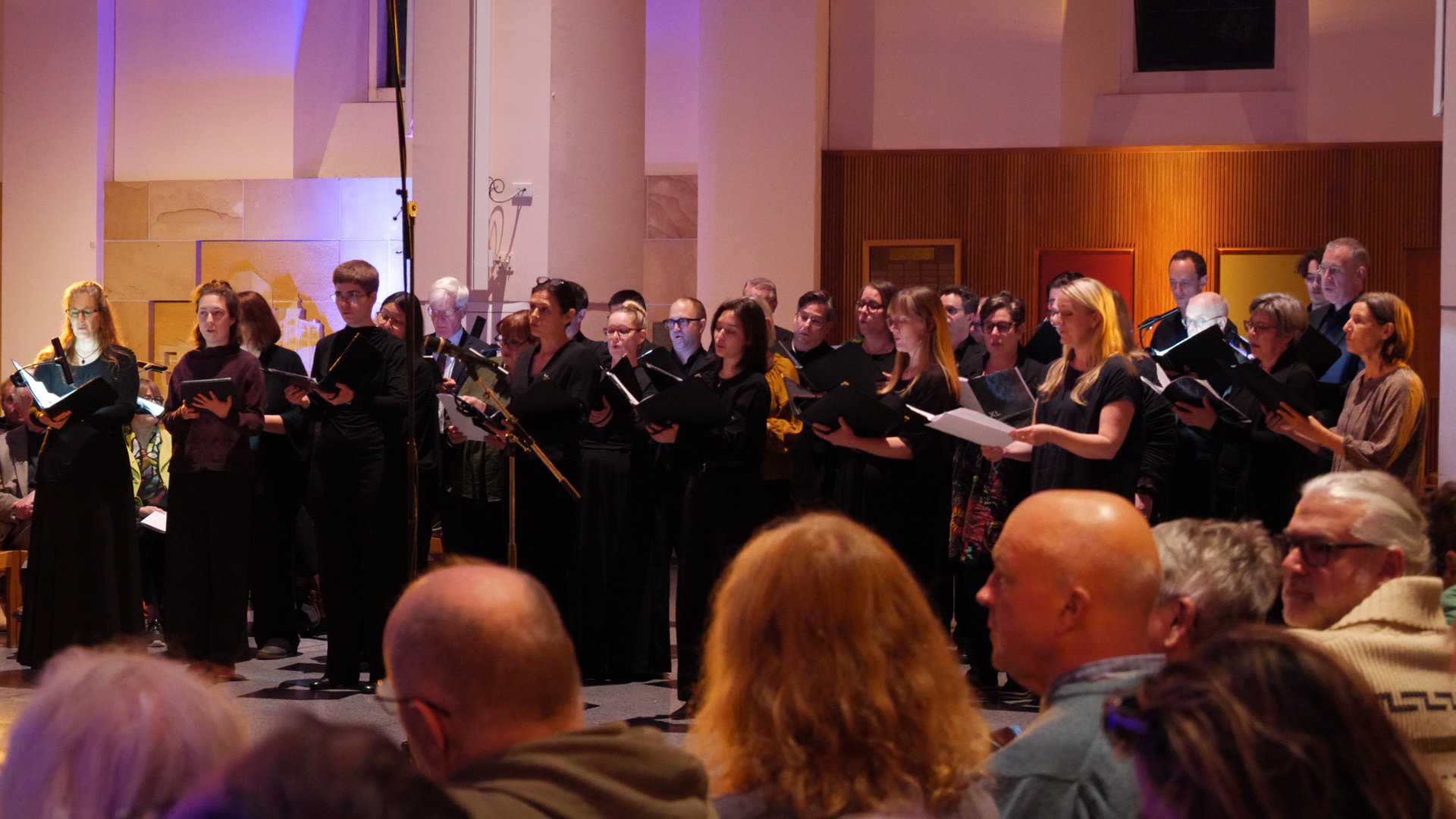
The Tudor Consort enlarged by choir alumni to acknowledge its 40th anniversary
Image supplied
The programme ended with Tallis’s famous 40-part motet, Spem in alium. Conductor Michael Stewart noted that the choir has sung this much-loved work five times in its history. There could not have been a more significant choice for a choir called the Tudor Consort to sing on its 40th anniversary – it is the most famous work by the most central and significant Tudor composer.
Tallis clearly had numbers in mind in his construction of Spem in alium. There are 40 voices for Christ’s 40 days in the desert, and 69 “longs” or measures which roughly outline the spelling of T A L L I S in Latin letters. Often performed with the singers in a horseshoe arrangement, for this performance the eight choirs were spaced widely around the Cathedral, which probably has a much more resonant acoustic than Tallis experienced for the work’s earliest performances.
Some years ago, I had two unforgettable visits to British artist Janet Cardiff’s internationally acclaimed installation, Forty Part Motet, in galleries in both Melbourne and Wellington. The sculpturally conceived work uses recordings of 40 singers from the Salisbury Cathedral Choir singing Spem in alium, each voice recorded individually and played back through forty speakers placed in a circular arrangement. Visitors to the work can move around listening to individual voices or locate themselves where they can hear all eight choirs together. The installation offers greater clarity than any live performance can.
The Tudor Consort’s fine performance of the work affectionately known as Spem on Saturday, however, had a different and perhaps much more moving human quality. From the solo line that opens the counterpoint through to the thrilling effect of all 40 voices together at significant moments in Tallis’s construction, the experienced singers of this marvellous choir overcame the acoustic challenges to envelop the audience in music that seemed to flow around us. Passing soaring melodic lines back and forth across the echoing space, they proved that no technological surround-sound can replace the beauty of the human voice in unaccompanied and concerted splendour.
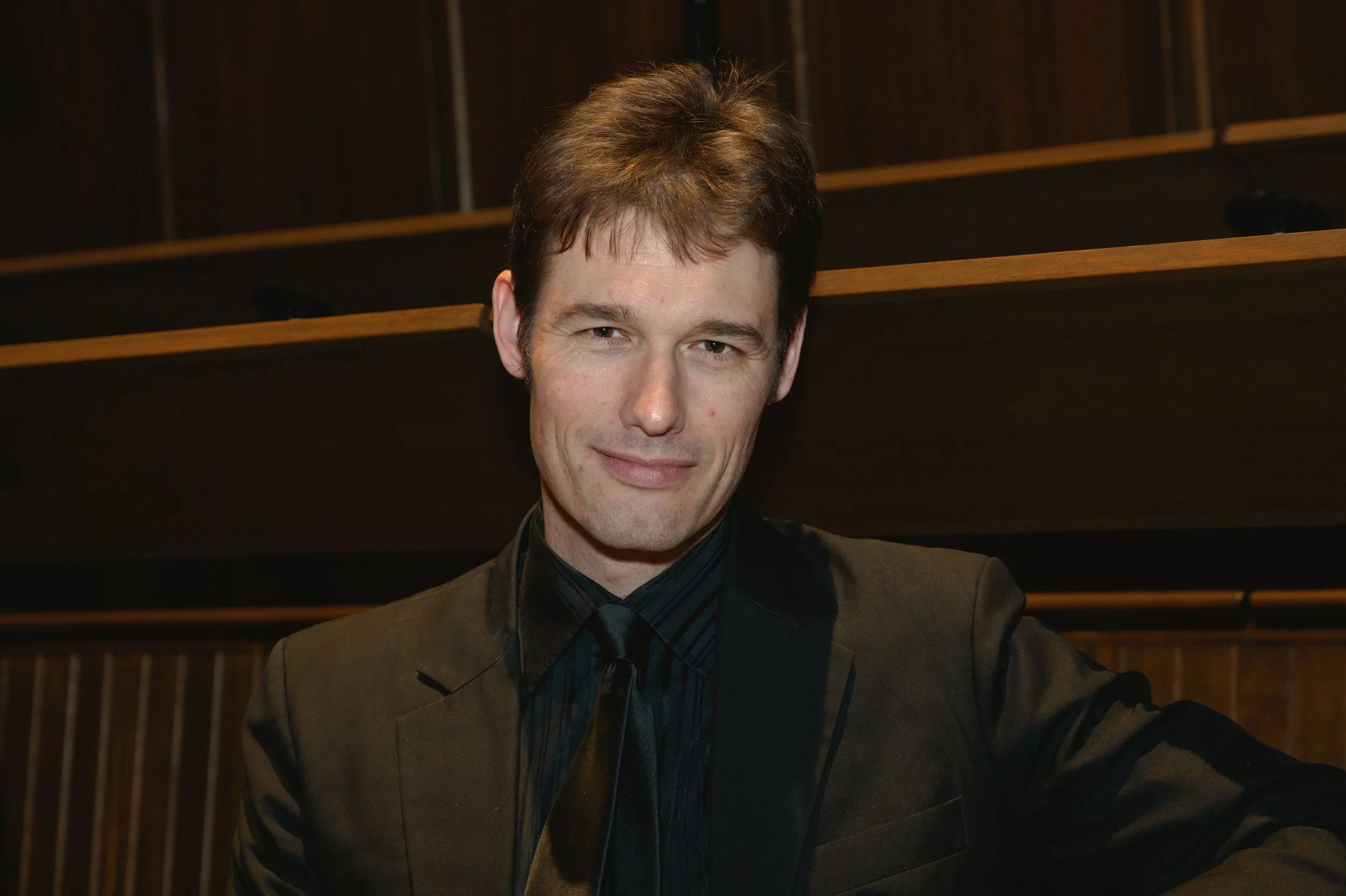
Michael Stewart, Music Director of The Tudor Consort
“…under his leadership the choir has presented some of its most high quality, high profile and memorable concerts, building a large and enthusiastic following.”
Image supplied
As Music Director Michael Stewart ended his celebratory programme note, here’s to another forty years of the Tudor Consort!
XL: 40 years of The Tudor Consort Michael Stewart (Music director) Wellington Cathedral of St Paul 2 May, 2026
You can read a review of SOUNDCATHEDRAL in March 2026 by composer Michael Norris, with The Tudor Consort & Michael Stewart, Rangatuone Ensemble & Riki Pirihi, and Stroma New Music Ensemble here
More information about other performances by The Tudor Consort in its 40th anniversary season can be found here