
Joyce DiDonato with the NZSO: great artistry from a generous spirit
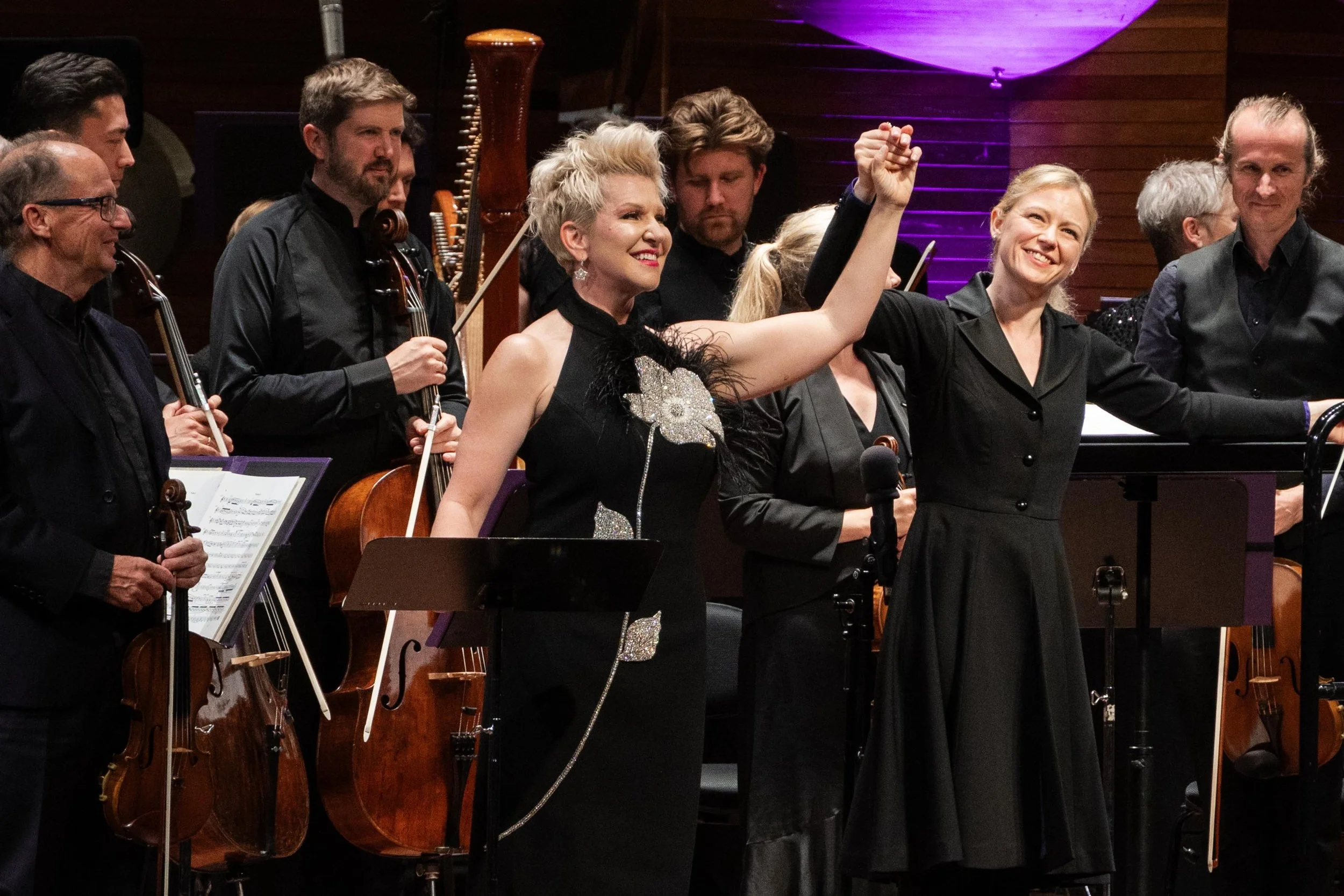
Mezzo soprano Joyce DiDonato with conductor Gemma New and members of the NZSO after her performance of Berlioz’s song cycle Nuits d’éte
Photo credit: NZSO/Phoebe Tuxford
Mezzo soprano Joyce DiDonato combines her magnificent voice with a big, generous personality. In her concerts and masterclasses in New Zealand at the end of November, she gave unstintingly from the stage, and her audiences responded, embracing her joyously. It was a wonderful affirmation of the power of music to move and connect us, something DiDonato understands and lives by.
Yes, she is a great opera star with all the glitter and glamour that goes with that role. But she is also a warm and generous communicator as both singer and teacher. And her unfailingly positive, constructive and inspiring work with four exciting young singers from Te Pae Kōkako – The Aotearoa New Zealand Opera Studio (TANZOS) surely won the hearts of all present in the audience or watching the live-stream.
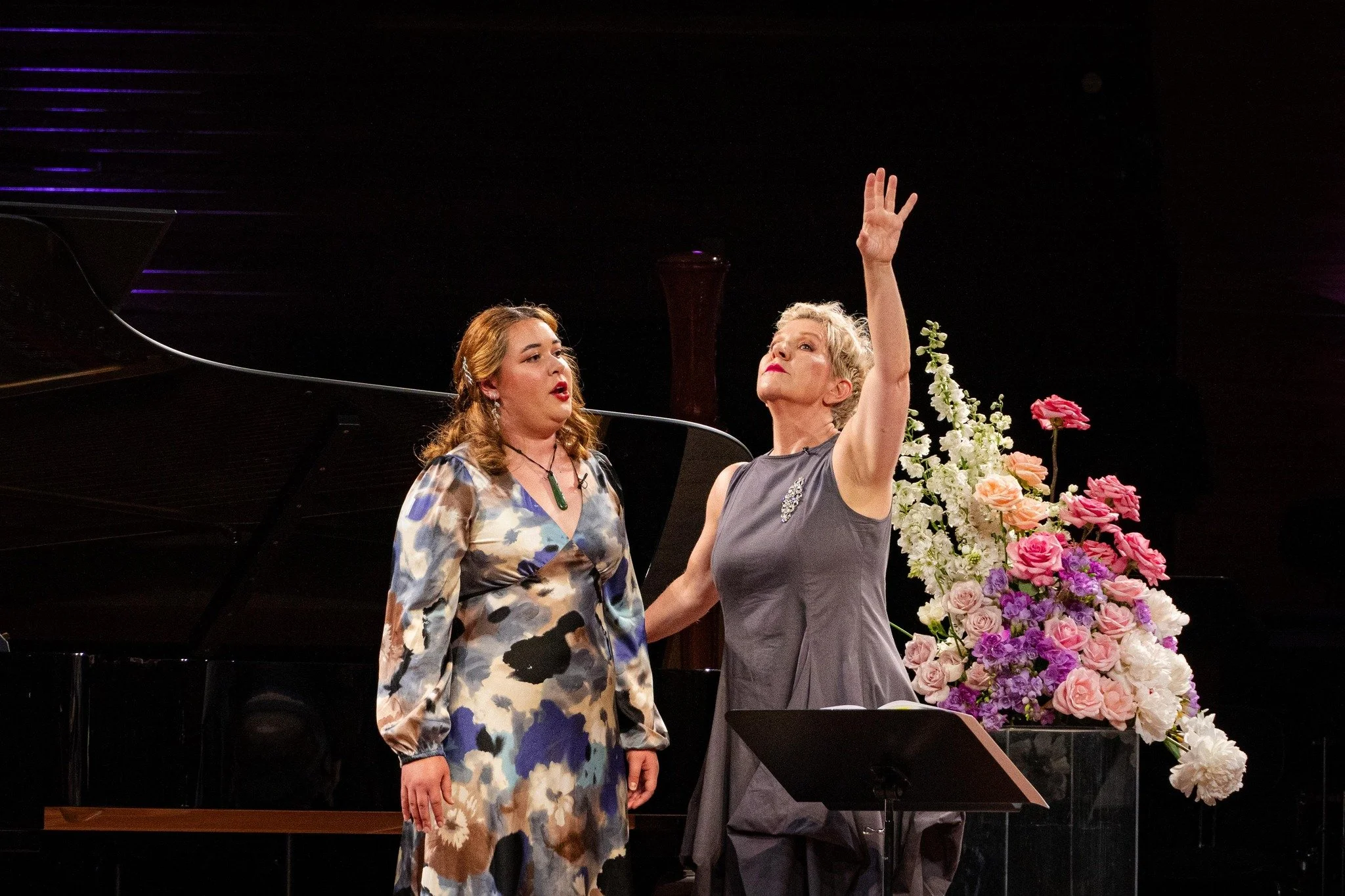
Joyce DiDonato (right) working with soprano Jasmine Jessen in a masterclass with TANZOS singers.
“…unfailingly positive, constructive and inspiring.”
Photo credit: NZSO/Phoebe Tuxford
With the New Zealand Symphony Orchestra under the baton of Gemma New, DiDonato performed Hector Berlioz's song cycle Les Nuit d'étes (Summer Nights), in Wellington and Auckland. These gorgeous and moving songs of love and loss run the emotional gamut. DiDonato's fame is linked to her operatic roles but this beautiful song cycle revealed her consummate understanding of both how the human voice can express a huge range of emotion and the range of vocal skills required.
The cycle, six settings of romantic poetry by Berlioz's friend Théophile Gautier from his collection La Comédie de la mort, began life as songs with piano, for different voice types, later orchestrated. It has become a beautifully shaped cycle, beginning and ending with lighter settings around four deeper songs expressing grief and yearning for lost love.
From the first song, Villanelle, DiDonato brought both charm and control, her singing smooth and effortless, yet full of character and colour. We heard the lovely deeper mezzo quality of her voice at times, her quietest singing easily heard above the orchestra. Maestra New showed her skills as accompanist. Berlioz indulges in a little word-painting with birdsong for the text “Et l’oiseau, satinant son aile…”(And the bird, preening its wings…) and DiDonato, her singing slow and expressive, opened up with a bigger sound to celebrate the joyous lovers.
Berlioz required a smallish orchestra for the cycle, just strings with small numbers of wind and brass, the single harp used mostly in the second song, Le spectre de la rose, often regarded as the masterpiece of the cycle. It is full of intoxicating perfume and sensuality, as the ghost of a rose that died – so a young woman could wear it to a ball – sings of its enviable destiny. Here DiDonato, glamorous in black with a glittering appliqued rose, showed her great musical artistry, her singing amazingly subtle, her rich lower register darkly coloured, a hushed quality in her voice used with great expressivity.
In Sur les lagunes the poet is distraught, his lover dead. At the end of each stanza he repeats the refrain “Que mon sort est amer!/Ah! sans amour, s’en aller sur la mer!” (How bitter is my fate! Ah! without love, to go to sea!). DiDonato gave this deeply emotional song her all with both voice and demeanour, every repetition a different vocal colour, her sad and poignant singing opening out for moments of passion.
The anguish continues in the fourth and fifth songs, the singer addressing the audience directly in Absence, “Reviens, reviens…” (Come back!), DiDonato singing with a lovely French quality, arch and seductive, her timbres a little nasal in the fifth, Au cimetiere (At the cemetery). The orchestra and New matched DiDonato’s subtlety, with beautiful woodwind solos and lovely string lines.
The enthusiastic applause after the touching fifth song, some thinking it was the end, was an awkward interruption, but New and DiDonato acknowledged it briefly and launched into the flirtatious and ironic final song, L’île inconnu. DiDonato became the boatman, a brash and seductive character, with full-voiced singing and a naughty twinkle. “Say, young beauty, where do you want to go?” he sings, and when the naïve young woman requests “a faithful shore where one loves forever”, he dashes her hopes, though they set sail anyway.
The rapturous applause at the end of the cycle was rewarded with two encores, confirming this extraordinary diva can sing anything with brilliant style. DiDonato completely inhabited the femme fatale heroine in the Habanẽra from Bizet’s Carmen, flirting with the musicians and audience with provocative menace before bringing some schmaltz to the stage with a song from her Kansas hometown, “Somewhere over the Rainbow”. Eat your heart out, Vera Lynn!
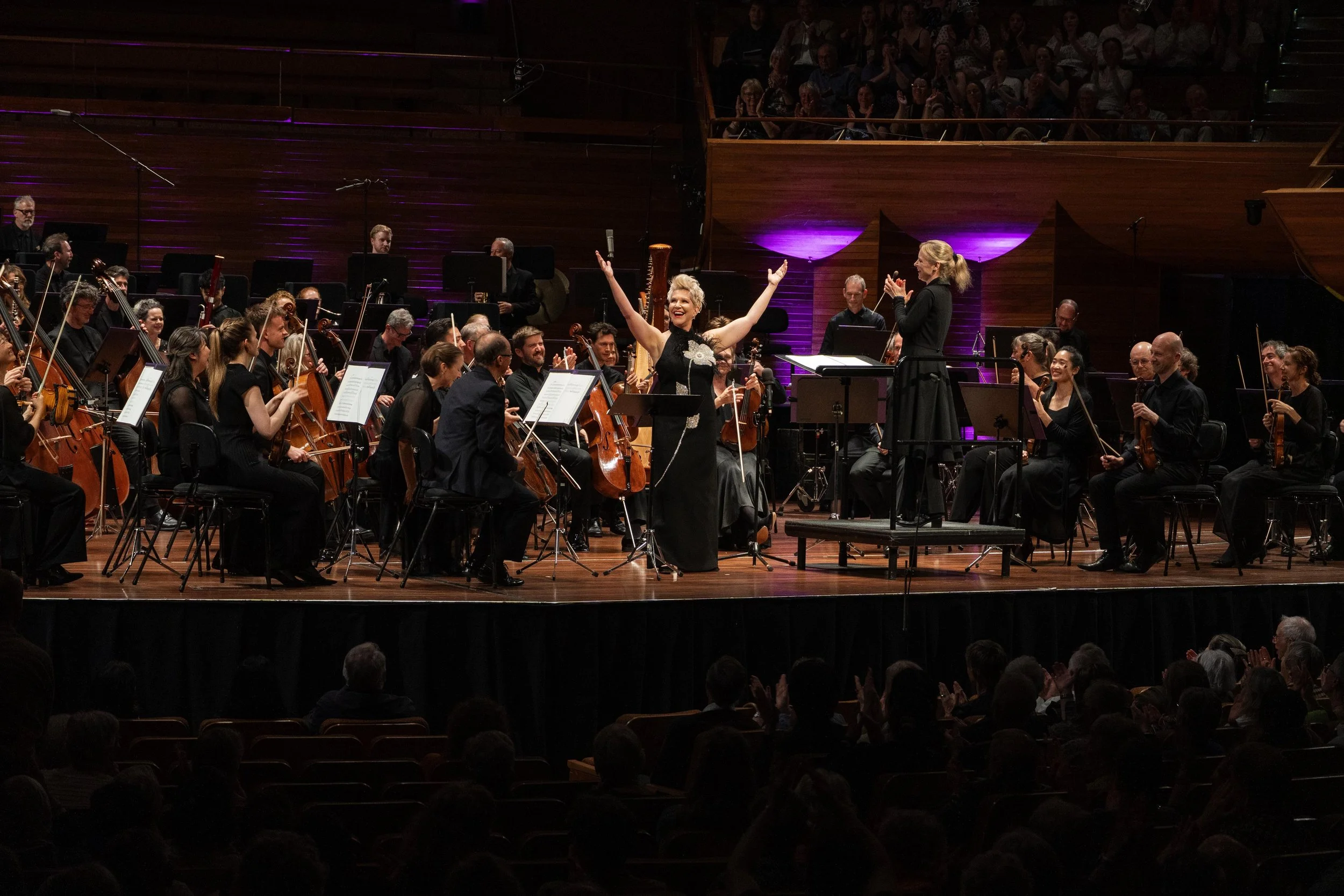
Soprano Joyce DiDonato acknowledges rapturous applause from the audience after singing two encores with the NZSO.
Photo credit: NZSO/Phoebe Tuxford
The interval was essential for everyone to change musical and emotional gear. Remarkably, after all the star-induced excitement, New and the NZSO found the composure for a splendid performance of Anton Bruckner’s Symphony No. 7 in E major, a majestic work over 60 minutes long, full of a rather solemn late Romanticism.
Traditionally, in Bruckner’s Vienna, the orchestral arrangement had the 1st and 2nd violins facing each other across the stage, with the cellos beside the 1st violins and the violas beside the 2nds. The basses were arranged behind the 1st violins and cellos. This front-facing position worked particularly well for this symphony’s string-saturated first movement, the cellos and violas singing forth magnificently with violins in tremolo above.
The Orchestra always plays well for New, and the 7th Symphony sounded splendid, bringing a lovely melodic flow and a heroic quality to Bruckner’s music. The work is often referred to as a tribute to Richard Wagner, Bruckner’s greatly-admired idol, who died in 1883 while it was being composed. The influence of Wagner on Bruckner’s music includes his harmonies and approach to chromaticism, the size of the orchestra and the use of Wagner tubas, which appear in this symphony’s 2nd and 4th movements.

Maestra Gemma New
“…the NZSO always plays well under her baton.”
Photo credit: NZSO/Phoebe Tuxford
The use of these instruments, originally commissioned by Wagner for operatic use, brings a solemn grandeur to the Adagio 2nd movement. Using big gestures, New drew huge full orchestral sonorities from the ensemble, with telling fanfare-like effects from the Wagner tubas, then contrasting moments when the texture thins to reveal magical flute solos and pizzicato strings. The emotional temperature descends to something a little wistful before a quiet and solemn ending.
Scherzo can mean “a joke”, but in Bruckner’s hands the 3rd movement is positive in tone without evident humour. A trumpet call becomes a thematic element, cleverly developed by the composer and used right through to the rousing ending.
The final movement, marked Bewegt, doch nicht schnell (Animated, but not fast), again features Wagner tubas, with strong, harmonically driven counterpoint for the string instruments, big brassy effects, occasional punctuating silences and finally a big crescendo from the whole orchestra through a coda to a final E major chord. Bruckner’s great 7th Symphony proved a fine ending to the NZSO’s season, showing off the strengths of all sections of this fine orchestra.
New Zealand Symphony Orchestra JOYCE DIDONATO Summer Nights Gemma New (conductor) Joyce DiDonato (mezzo soprano) Music by Berlioz and Bruckner Wellington 28 November 2025