
Shostakovich: the musical legacy of a humanitarian artist
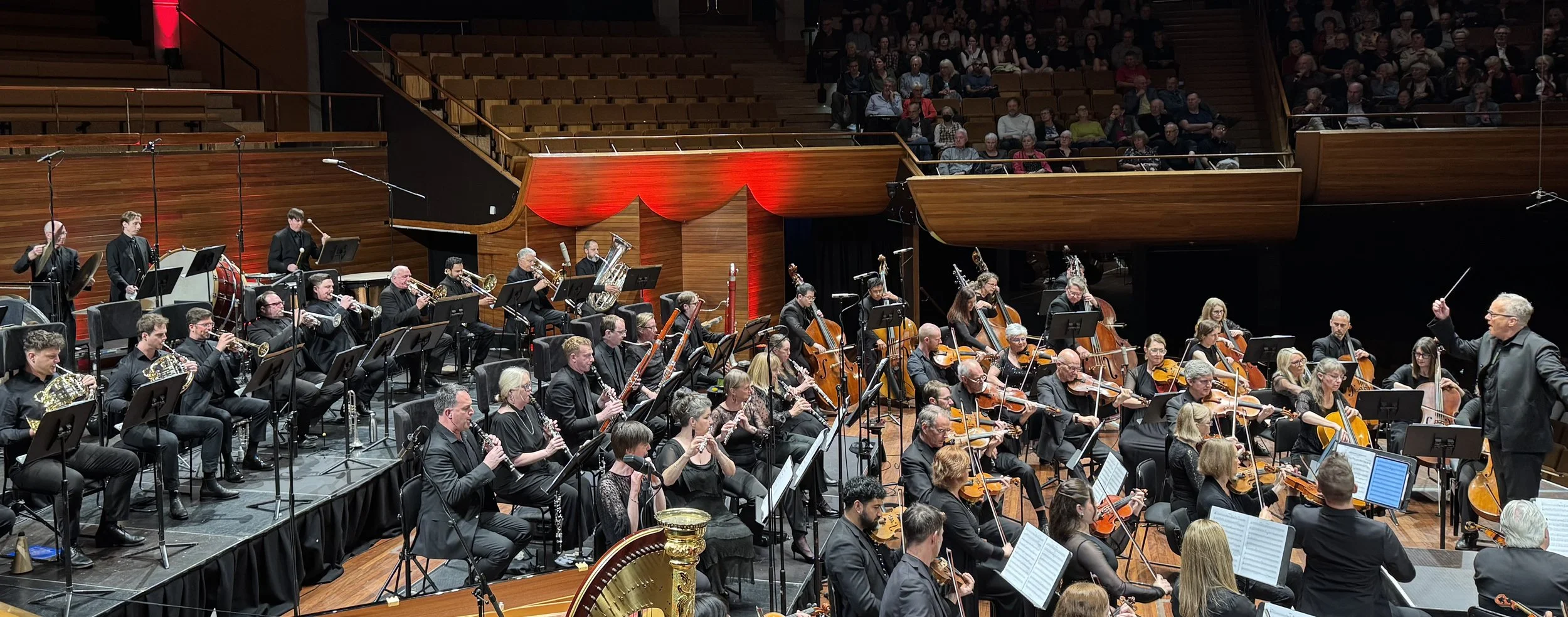
Orchestra Wellington performs Shostakovich’s Fifth Symphony under the baton of Music Director Marc Taddei in their series “The Dictator’s Shadow”
Photo credit: Andy Best
During 2025, several New Zealand music organisations and ensembles marked 50 years since the death of Dmitri Shostakovich with substantial tributes to the Russian composer. Earlier in the year, I previewed some of these concert series with my account of the composer’s life and times and his musical significance in the article Shostakovich: Music for Troubled Times.
As the year comes to an end, I look back at what we’ve heard and consider what insights into this towering figure of the 20th century have been offered by his music. In my earlier article I wrote about the “Shostakovich Wars”, the heated discussions amongst scholars and commentators about the composer’s true role. I ended with a question: “was Shostakovich a dissident within the Soviet state, writing ironic music with secret meanings, or a compliant and loyal member of the Party who survived because he wisely toed the line in his music?”
After the feast of concerts of Shostakovich’s music and musical tributes from other composers offered half a century after his death, in New Zealand and elsewhere, my own answer to this question seems clearer. Below are my reviews of six Shostakovich-themed concerts by a string quartet and an orchestra, concerts which have revealed much about the composer and his music.
I am now convinced that the music itself tells Shostakovich’s story and reveals his artistic intentions with both striking clarity and subtle complexity.
New Zealand String Quartet “Shostakovich Unpacked”

New Zealand String Quartet perform Shostakovich’s Third String Quartet (from left) Monique Lapins, Peter Clark, Gillian Ansell and Dominic Lee
Photo credit: Maeve O’Connell
In July this year the New Zealand String Quartet opened its four-concert series "Shostakovich Unpacked" with music by Alfred Schnittke, Shostakovich's younger compatriot. Violinists Monique Lapins and Peter Clark began the concert in unconventional fashion, playing Schnittke's moving duet Praeludium in memoriam D Schostakowitsch as they moved down the aisles through the audience to the stage.
In the carefully curated hour-long programme that followed, no words were spoken, no spaces allowed for applause. The beautiful playing and the music itself possessed eloquence enough to amplify the context around Shostakovich the composer and the spiritual struggles of a creative individual in a totalitarian society.
Of course, any performance of Shostakovich's music is accompanied, explicitly or implicitly, with commentary on the pressures he faced under the political and dangerous Soviet regime. Much has been written about how he survived those pressures, and the ways in which he expressed his own truths in his music.
In Schnittke's poignant memorial tribute duet, he acknowledged Shostakovich's private musical world through the famous cryptogram the older composer had created for his most personal music. DSCH, from the initials of Dimitri Shostakovich, becomes D,Eb,C, B natural, and this motif appears no fewer than 12 times in Schnittke's Praeludium.
Next, violist Gillian Ansell and cellist Dominic Lee quietly joined the violinists as Schnittke’s duet ended and the four musicians embarked without pause on Shostakovich’s Third String Quartet in F major. It’s a brilliant example of the composer’s quartet writing, written in the terrible post-war year 1946, a time of drought and famine for Russians.
The clarity of Shostakovich’s textures ensures his massive range of moods is accessible, from the apparently playful melody of the opening, through the fierce viola line with wild violin dancing above in the second movement, the raging battlefield of the third, the compelling and expressive passacaglia of the Adagio fourth movement and the ambiguities and musical references of the fifth.
Each NZSQ “Unpacked” concert included a contemporary work, this first one a string quartet with the title No War. It was written in 2022 by Tatiana Riabinkina, a Russian immigrant to New Zealand, as the Russian invasion of Ukraine began. The work, which quotes an old Ukrainian song, expresses the composer’s opposition to that war and her grief that she is unable to return to her homeland. Musically and thematically, it fitted well into the programme.
For the final work in the programme, Shostakovich’s Chamber Symphony for Strings, a dozen musicians from Orchestra Wellington unobtrusively took up their positions around the Quartet. This work is an arrangement of his famous Eighth String Quartet, and is threaded through with the DSCH motif, dedicated to “the memory of the victims of fascism and war”, and perhaps the most played of Shostakovich’s 15 string quartets.

Musicians from Orchestra Wellington joined the New Zealand String Quartet for Shostakovich’s Chamber Symphony, arranged from his Eight Quartet
Photo credit: Maeve O’Connell
I’ve heard the Chamber Symphony live in Wellington before, but this performance, in the intimate surroundings and bright, direct acoustic of Prefab Hall, had much more of the searing quality of the original Eighth Quartet. Led by Clark, it was a tight, incisive and astonishingly intense performance and the audience response was equally emotional and powerful.
In this first “Unpacked” concert, the New Zealand String Quartet broke with presentation conventions to enhance the emotional impact of the music. The seamless programme, unbroken by applause, had a great impact, the audience raptly attentive throughout. For the second “Shostakovich: Unpacked” in August, a similar approach was followed, perhaps a little less successfully in view of the greater length of the 90-minute programme.
The Quartet was joined for “Unpacked” no 2 by the Antipodes Quartet, who opened the programme with a mostly fine, dramatic performance of Shostakovich’s short String Quartet No 7 in F# minor. The young ensemble’s playing was, however, occasionally tentative, lacking the consistent intensity Shostakovich’s music demands even in quiet, muted passages.
The New Zealand String Quartet has presented their Shostakovich series in what has been a challenging transitional year for the ensemble, after the sudden loss of two longstanding members, violinist Helene Pohl and cellist Rolf Gjelsten, at the end of 2024. For this second concert the Quartet included guest musicians Arna Morton, violinist, and Lavinia Rae, cellist.
The contemporary work in this programme was Gao Ping’s A Lingering Echo – homage to Dmitri Shostakovich. Ping, a Chinese composer with close New Zealand associations, pointed out in his programme note that Shostakovich was a hero for whole generations of Chinese musicians. “Like a lingering echo, he exists in our musical memory, but more than that, he holds a special symbolism in our consciousness. In his life’s struggle and compromises, and in the fierce and defiant expression in his music, we witness a human condition that resonates with us regardless of era or space. A Lingering Echo is my personal response to the man and the musician.”
Ping’s work is in three movements, the first spare, delicate and beautiful. In the second, marked Restless, desperate, the expressive power of rapid dance sections is fierce and edgy, while the third returns to a more static approach, meandering melodies passed between violins over dissonant underpinning from lower strings. The language is less accessible than Shostakovich’s distinctive quasi-tonality, and the audience flagged a little in Ping’s uncompromisingly modernist world.
The curation of this programme pulled in many links and references, including to Shostakovich’s personal life. Four well-chosen poems by New Zealand writers, read before each musical work, underlined the themes. Katherine Mansfield’s “The Meeting” referenced Shostakovich’s ongoing grief after the loss of his first wife Nina, to whom the Seventh Quartet was dedicated. Hone Tuwhare’s “Friend”, read before Gao Ping’s work, subtly referred to the Chinese composer’s memories of Shostakovich’s music.
Before the graceful, neo-classic charm of the third work, Shostakovich’s Sixth Quartet, Clark read Denis Glover’s short, colourful and ironic poem “Death of a Dictator”. The composition dates from 1956, three years after Stalin’s death, and its mood could be interpreted as one of hope and optimism. But both Glover and Shostakovich hint that all is not forgotten, Glover in his final line “…all the angels and gargoyles were exulting” and Shostakovich with a passacaglia of lament in the third movement and menacing, martial interruptions of the dancing violin of the fourth.
In an effective programming arc, the final performance of the evening looked back to offer real optimism for the future. The musicians of both the New Zealand and Antipodes Quartets joined forces for a work by the 19-year-old Shostakovich, Two Pieces for String Octet, composed around the time of his enormously successful First Symphony and full of exhilarating drama. It was preceded by Ruth Gilbert’s poem “Given: A Log of Wood; Make: A Fiddle” from her book The Luthier. I’d never heard this Octet, which was splendidly played and a hopeful conclusion to the concert.
Much of the third Shostakovich Unpacked concert in early October was unfortunately less compelling for a range of reasons. Shostakovich’s Fourth Quartet in D major opened the programme, and the ensemble, for which Quartet members Gillian Ansell and Peter Clark were joined by Morton and cellist Callum Hall, seemed less than meticulous, perhaps because travel delays had disrupted rehearsal time. Hall and pianist Gabriela Glapska then presented An Essay to the Memory of Dmitri Shostakovich for cello and piano by the late Robert Burch, a New Zealand composer from the generation that followed Douglas Lilburn. It was a fine performance of a less than appealing piece, its language a little dry and disjointed without the rhythmic bite of Shostakovich himself.
Next came a set of Five Pieces for Two Violins and Piano, arranged by Lev Atovmian from Shostakovich’s film and operatic scores. These light offerings, frivolous encore pieces at best, were played with zest and an arch sense of fun, but there was little of the Shostakovich we revere and they served only to illustrate the composer’s versatility and facility.
The highlight of the evening was Shostakovich’s Piano Trio in E minor, played with great character and finely unified ensemble work by the musicians of the Ghost Trio, violinist Monique Lapins, cellist Ken Ichinose and pianist Glapska,. From the beginning their performance was vivid and dramatic, maintaining the intensity through to the wit and fierce determination of the final Allegretto with its Jewish melody. Glapska was born and grew up in Poland and captured the paradox of Shostakovich in her programme note: “beauty carved from despair, joy tainted with sorrow.”
For their fourth and final Shostakovich Unpacked concert the NZSQ was joined by pianist Jian Liu. The programme opened with a world premiere for string quartet, Estella Wallace’s Of Sorrows, a tribute to Shostakovich and a reflection on his final composition, the Sonata for Viola and Piano which ended the programme. This new work by a young composer was supported by The Finlayson Prize, with prize money and professional development generously sponsored by Christopher Finlayson.
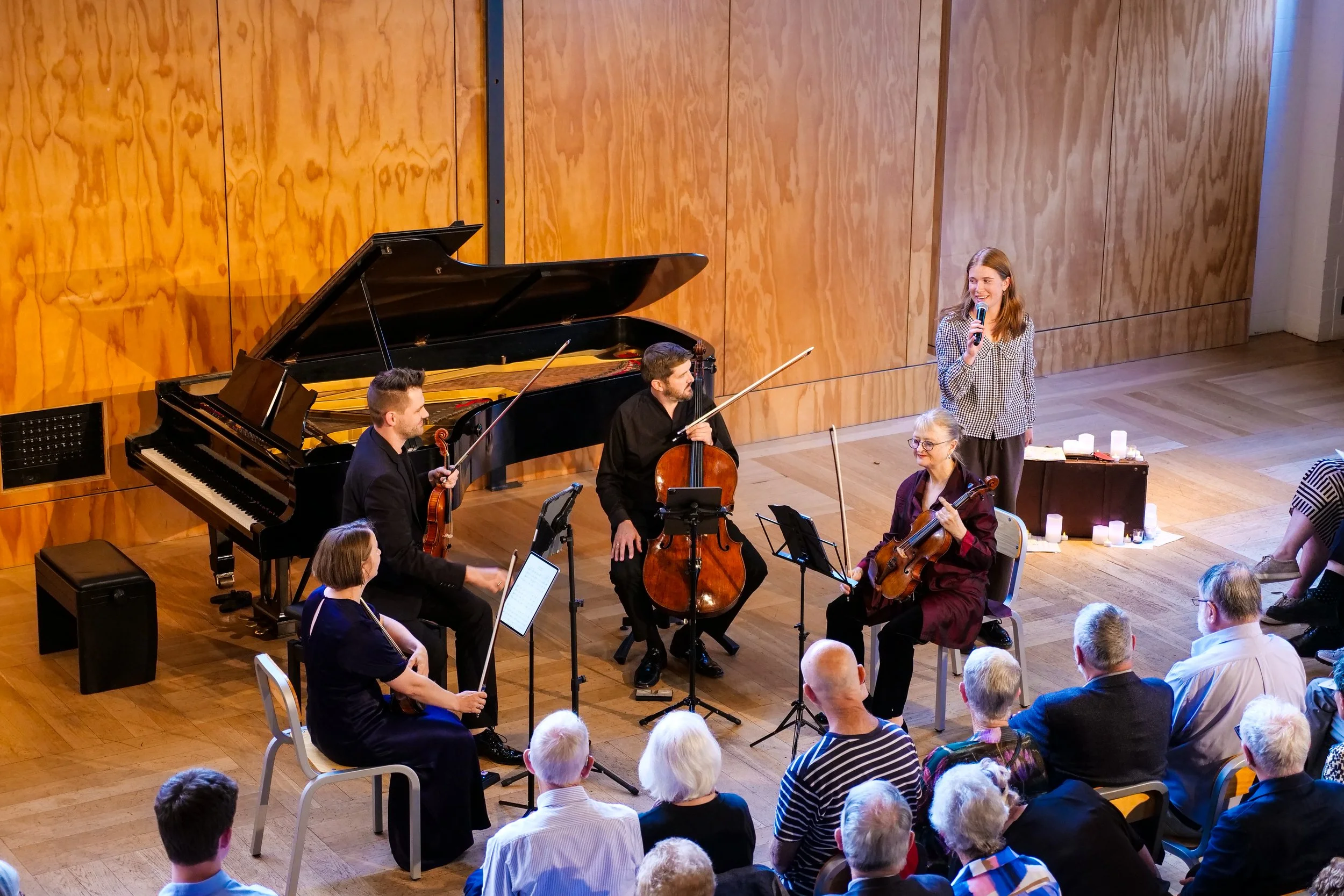
Composer Estella Wallace introduces her tribute to Shostakovich, a string quartet called Of Sorrows
“…a work full of lonely sadness and poignancy.”
NZSQ musicians (from left) Anna van der Zee, Peter Clark, Andrew Joyce and Gillian Ansell.
Photo credit: Maeve O’Connell
Wallace’s new quartet is very effective, full of lonely sadness and poignancy. With one instrument in solitary melody against others in edgy accompaniment, she acknowledges Shostakovich’s characteristic use of texture to illustrate the isolated individual. Of Sorrows also makes direct reference to Shostakovich’s music and ends with symbolic use of the famous DSCH cryptogram.
For this concert the Quartet played with two guest musicians from the NZSO, experienced chamber players Anna van der Zee and Andrew Joyce. The centre of the programme was Shostakovich’s Piano Quintet in G minor, composed in 1940 after the success of his Fifth Symphony and his apparent rehabilitation in the eyes of the Soviet authorities after the disastrous reception for his opera Lady Macbeth of Mtsensk.
This Piano Quintet won the Stalin Prize a year later, suggesting he had composed his way back into favour. As in all his work, however, musical ambiguity and witty asides suggest we need to look below the surface for the source of Shostakovich’s expression.
The Piano Quintet looks back first to the Baroque, the first two movements a Prelude and Fugue that clearly acknowledge the counterpoint of Johann Sebastian Bach. Slow tempi reveal Shostakovich’s own contrapuntal mastery, and while Bach focussed on architectural creations, Shostakovich uses these structures and the melodic lines within them to express his passionate feelings, sometimes in language that is bleak, dark and solemn. The ironic 3rd movement is a telling contrast, reminding us that scherzo means a joke, the music almost cartoonish in its simplistic, mocking, folk-flavoured wit as it marches to a repetitive conclusion.
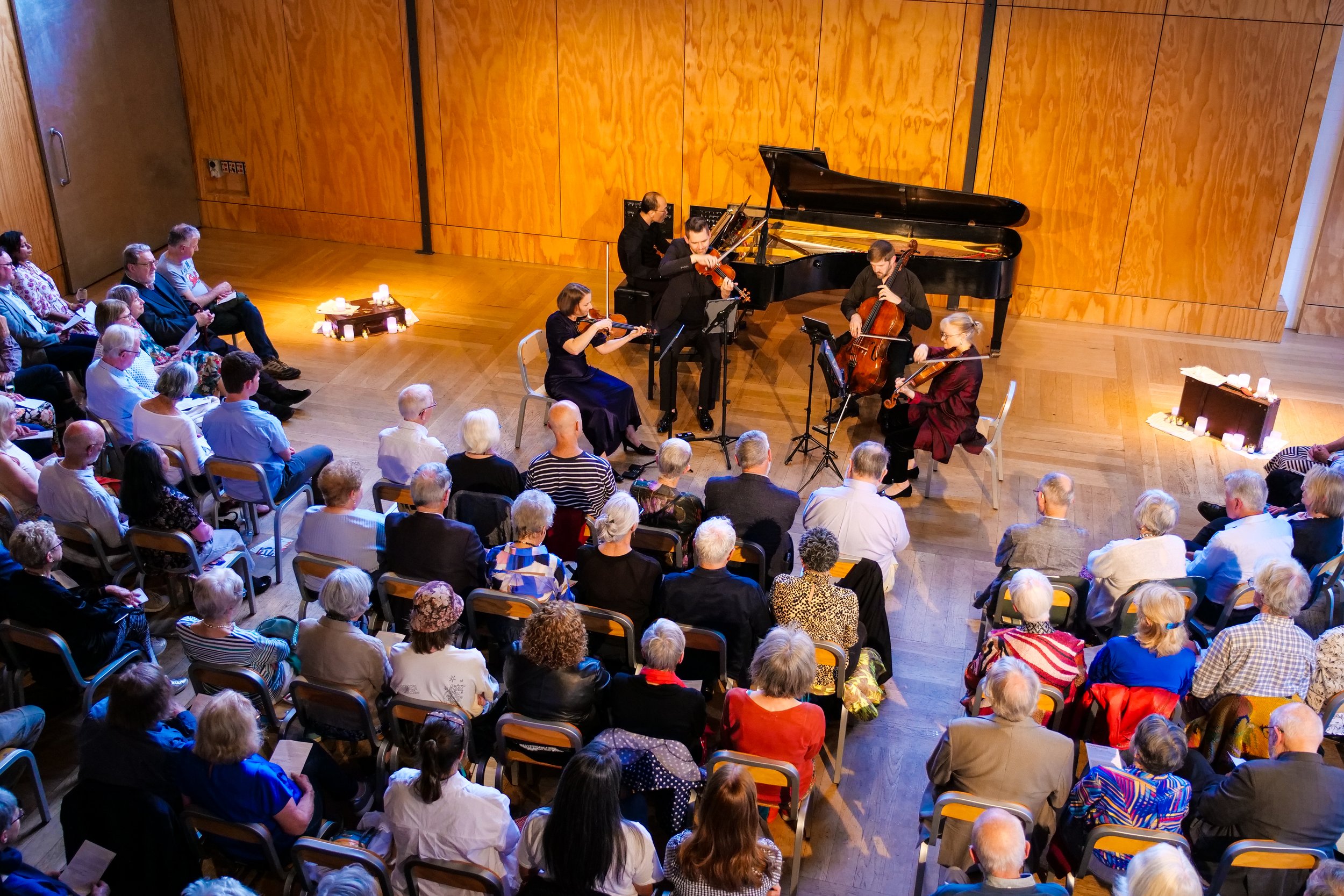
The New Zealand String Quartet performs Shostakovich’s Piano Quintet in G minor with pianist Jian Liu to a full house at Prefab Hall in Wellington
“…a wonderful performance of a work with a bitter-sweet ending.”
Photo credit: Maeve O’Connell
The five musicians gave a wonderful performance, with beautifully balanced ensemble work and great individual performances as different voices took centre stage in the drama. The slow 4th movement begins with a pizzicato “walking bass” in the cello with a violin melody floating above, eventually joined by viola in almost romantic two-part harmony. Jian Liu’s lovely piano playing found the perfect gentle bounce in accompaniment, and the whole ensemble held many threads together before the piano takes us over the bridge into the final Allegretto. Are we back to the circus in this apparently light-hearted finale? Maybe not all is cheerful – the tonality seems a little “off”, Shostakovich unable to resist sardonic allusions as the work heads to a bitter-sweet conclusion.
The final work of the Shostakovich Unpacked series is what became a final farewell from the master. Shostakovich completed his Sonata for Viola and Piano just a day before he was admitted to hospital for the last time, dying five weeks later. In spite of his poor health, his musical brain was clearly hard at work, incorporating both farewell messages and homage to his musical heroes in this astonishing and affecting composition.
With Ansell’s beautiful viola playing and Jian Liu’s wonderfully sensitive presence at the piano, it was a deeply moving performance. Shostakovich acknowledged Alban Berg at first, the open strings of the viola referencing Berg’s Violin Concerto. His own music makes an appearance, the 2nd movement using motives from his abandoned opera The Gamblers, and in fact he managed to quote all of his symphonies as he farewelled his own musical life.
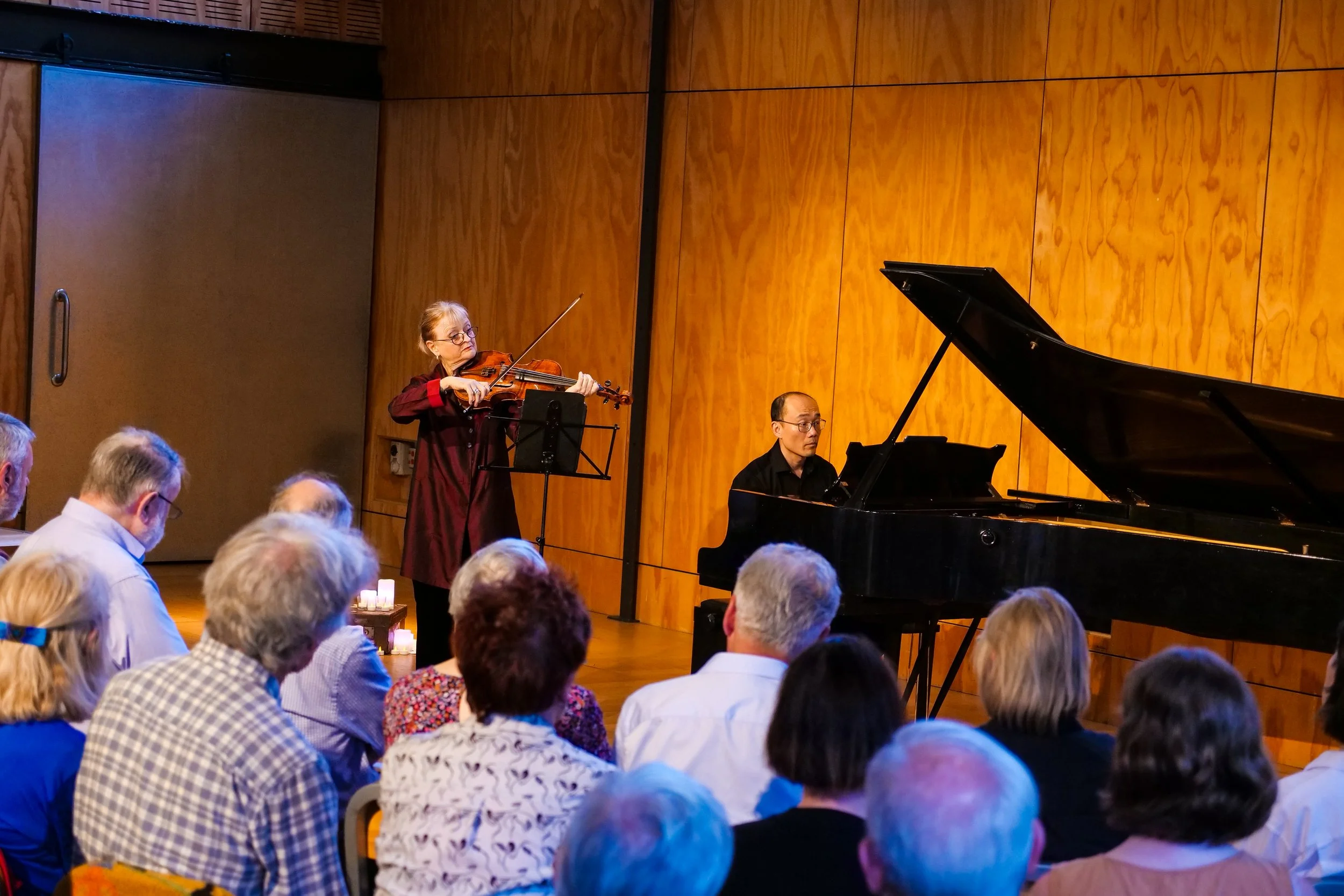
Pianist Jian Liu and violist Gillian Ansell perform Shostakovich’s Sonata for Viola and Piano
“…a deeply moving performnace of the master’s final work, in which Shostakovich included an Adagio in memory of Beethoven.”
Photo credit: Maeve O’Connell
Perhaps most touching is his overtly recognisable use of the “Moonlight” Sonata in the long final movement, which he said was “an Adagio in memory of Beethoven”. Extended viola lines soar above the “moonlight” accompaniment in the piano, the long-short-long rhythm from Beethoven’s sonata slipping in, ghost-like, again and again. The anguished solo viola cadenza is searingly beautiful, and the work ends on a radiant C major chord.
The NZ String Quartet’s thoughtfully curated series has drawn its audiences deeply into Shostakovich’s challenging life and his troubled world, providing unforgettable insights and connections. His chamber music is deeply personal, each note, chord, melody, motif and harmony imbued with meaning and symbol. In this final work, as in all of Shostakovich’s music, the composer’s presence is palpable, his individual voice communicating directly with the audience.
Orchestra Wellington “The Dictator’s Shadow”
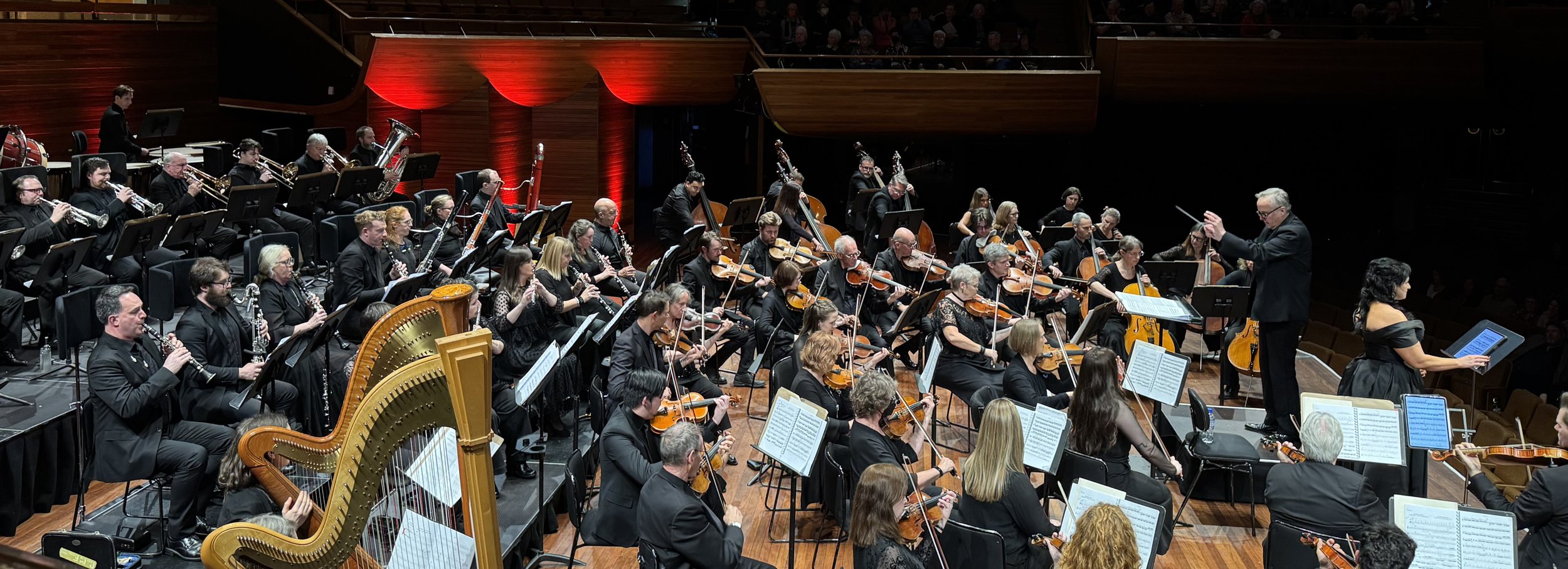
Orchestra Wellington performs a suite based on Shostakovich’s opera, Lady Macbeth of Mtsensk, with soprano Madeleine Pierard (right) as the heroine Katerina.
Photo credit: Andy Best
Shostakovich wrote 15 symphonies during his lifetime. In devising a tribute to the composer, conductor Marc Taddei and Orchestra Wellington selected the first five of these symphonic works, the first written when Shostakovich was 19, the fifth in 1937 when he was 31.
Calling their series “The Dictator’s Shadow”, the Orchestra also included a suite devised by Taddei from Shostakovich’s opera Lady Macbeth of Mtsensk, the work that provoked in 1936 an alarming article from the Stalinist authorities that threatened not only Shostakovich’s career but his life, causing him to withdraw the 4th Symphony from performance until after the death of Stalin.
I wrote about the first concerts of this series in my earlier article and was away from New Zealand for Orchestra Wellington’s performance of that 4th Symphony of Shostakovich. But in October this year the fifth concert of the series “The Dictator’s Shadow”, called “Enemy of the State”, had a big impact.
Preceded by a beautifully crafted orchestral work by John Psathas, Next Planet, and a lyrical, virtuosic account by violinist Benjamin Baker of the Concerto for Violin in A minor by Russian composer Alexander Glazunov, a supporter of Shostakovich at the Petrograd Conservatory, the main event of the evening was the suite of arias and orchestral interludes from the opera Lady Macbeth of Mtsensk.
Soprano Madeleine Pierard sang the role of Katerina, her rich and powerful voice soaring over the orchestral forces. Shostakovich’s opera, which enjoyed significant international success for two years before Stalin’s condemnation, is dark, gorgeous and bold. As well as the sumptuous orchestration, the large orchestra is joined at times by a brass band, in this performance the Hutt City Brass.
At times we can almost understand Stalin’s reaction, as the brass band joins the spiky, fierce playing of the orchestra, everyone playing like the clappers, on the edge of cacophony. But Shostakovich judges it perfectly, dancing ironically, dramatic, fabulous, not quite melodramatic. And this was Orchestra Wellington at its absolute best, offering huge orchestral effects from brass reinforced by brass band, six percussionists and timpani, two harps and dark low strings underlining the horrors of the story.
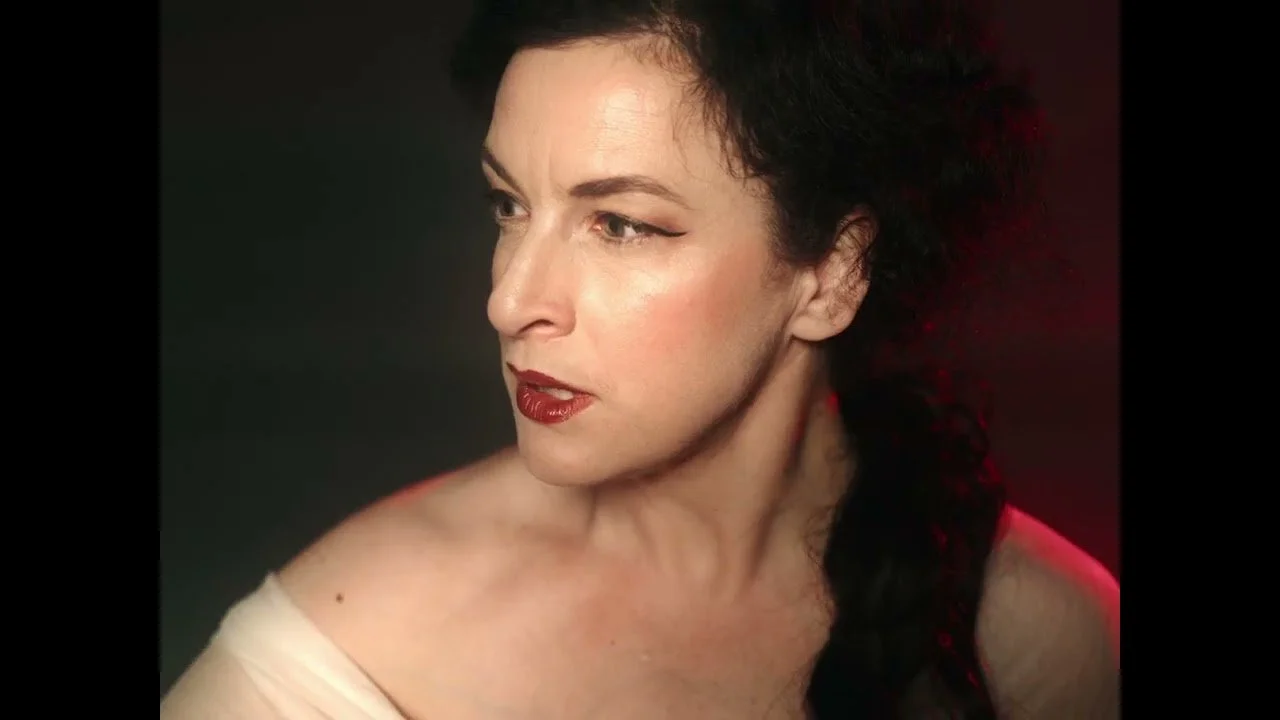
Soprano Madeleine Pierard
“…the dramatic anguish of the role of Katerina in Shostakovich’s Lady Macbeth of Mtsensk is perfect for her.”
The dramatic anguish of the lead role is perfect for Pierard. As the end, approaches we hear the heavy grief in her voice, accompanied by poignant cor anglais, lovely oboe and a subtle pianissimo bass drum roll. In the final section a big crescendo leads to a brass entry, including the band, and a final march with col legno strings and a closing enormous blast from all forces.
In the original staged version the curtain fell on an empty stage. After this concert performance, the audience sat momentarily stunned. We were acutely aware of the drama in spite of its being sung in Russian without surtitles – the music said it all. How sad that the reaction of a repressive regime meant Shostakovich composed no more operas.
The final Shostakovich-themed concert from Orchestra Wellington was titled “The Artist Repents.” The composer’s Fifth Symphony, composed after the disastrous official reaction to Lady Macbeth, was undoubtedly written with a return to political favour in mind, though Shostakovich himself may not have penned the work’s subtitle “a Soviet artist’s reply to just criticism.”
The concert began with another major work, New Zealand composer Victoria Kelly’s Requiem, orchestral settings of New Zealand poetry alongside the Latin Requiem Mass, which had its triumphant premiere in 2023 at the Auckland Arts Festival. I attended that Auckland performance after writing about the work and its composer here, and was excited to hear the work again.
This Wellington premiere was a fine performance but lacked a little of the impact of the Auckland performance. There were a number of factors – the acoustic in the Michael Fowler Centre is not as responsive to singers as the Auckland Town Hall, and there were times when it was difficult to hear the words of the soloists Alexander Lewis, tenor and Barbara Paterson, soprano. Paterson’s diction was clear and lovely but her vocal part was occasionally lost inside the orchestral sound.
Kelly has described the work as “tidal, rising and falling”. It’s a requiem, so not full of urgency and speed, but the slow unfolding of the orchestral effects was almost too deliberate to maintain tension at the slow tempi Taddei chose. The singers of the Tudor Consort, placed against the back wall behind the orchestra, gave a fine account of the choral sections.
Requiem is a work full of stunning orchestral effects, ethereal bowed metal percussion and lovely wind colours. The ending, the soprano repeating “forever” as the whole ensemble drifts to a quiet conclusion, was wonderfully effective and moving, and Taddei and the orchestra held the tension for some time before the warm audience response.
Shostakovich’s Fifth Symphony brought the concert and the season to a close with an outstanding performance. I have never heard Orchestra Wellington play better than in this work and the Lady Macbeth suite of the previous concert. From the first of the four movements, the playing had power, clarity and a fine sense of Shostakovich’s style and rhythm, with lovely solos from concertmaster Amalia Hall in this movement and the next and a great climax.
Was Shostakovich genuinely repenting of his artistic crimes? The acidic harmonies of the second movement, an ironic and witty waltz, could be poking fun at the requirements of the authorities. The cellos and basses were fierce and fine, the woodwinds stylish and even the harp finds a tinge of irony as the dance theme is passed around the orchestra.
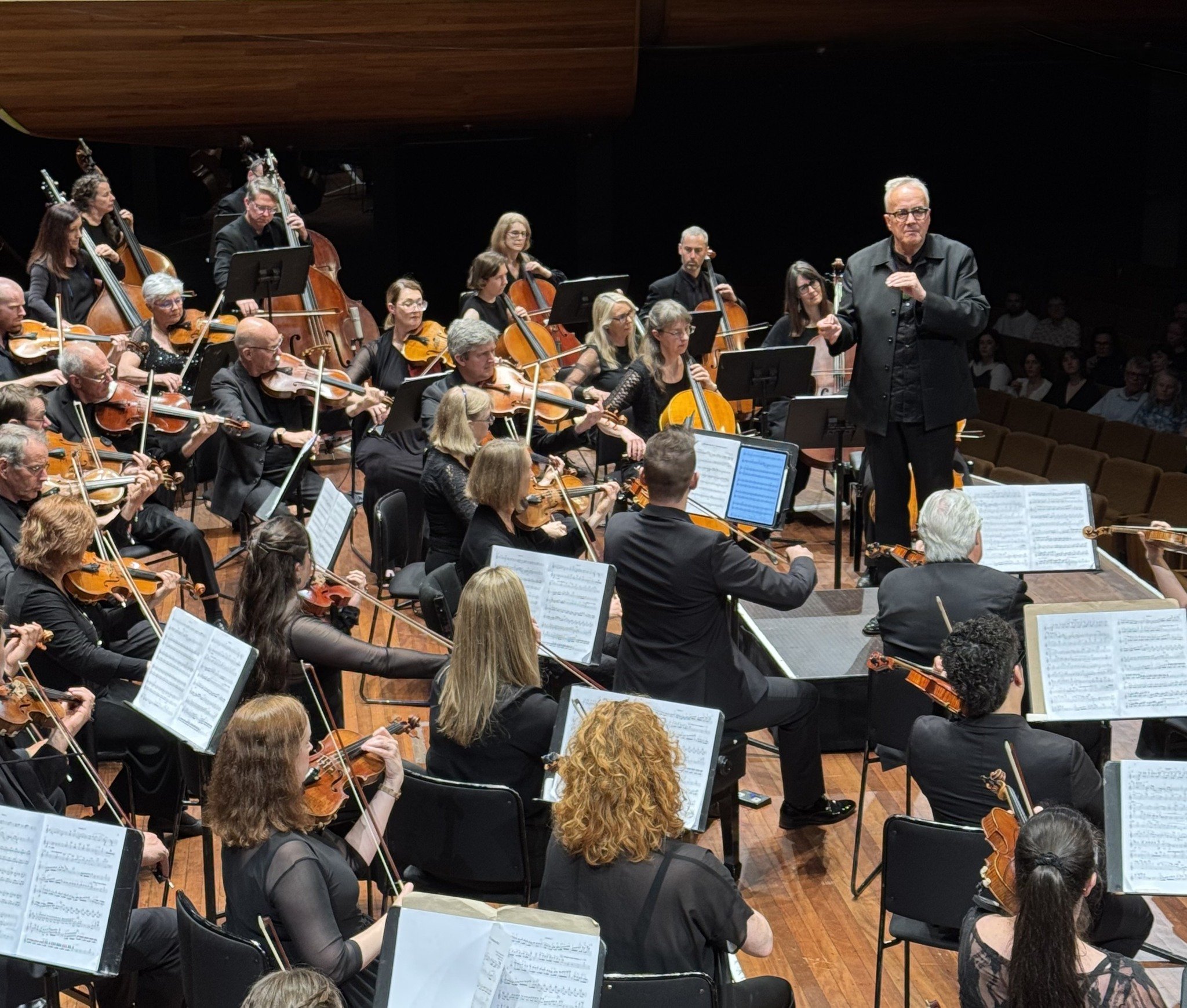
Orchestra Wellington performs the tragic Largo from Shostakovich’s Fifth Symphony
Photo credit: Andy Best
This fine performance revealed the layers of the work, strings grief-laden in the tragic Largo, with touching solos from oboe, flute and clarinet. At the first performance, some members of the audience wept during this movement, and surely Shostakovich is here expressing sorrow for those lost in the Stalinist purges and the less tangible but nonetheless tragic loss of artistic freedom under the repressive regime.
He eventually delivers the triumphant ending to the symphony required by his political masters, but the final Allegro comes close to parody as he wrings maximum drama, tension and excitement from a martial tune, pausing for a poignant horn solo before charging to the finish with driving, unrelenting repeated notes.
With story-telling and music, Taddei and the orchestra have taken a deep dive into a turbulent and significant period of Shostakovich’s composing career and troubled life. The Fifth Symphony was received with enthusiasm by both the audience and the official critics, his reputation was somewhat restored and he soon afterwards began writing the chamber music that proved a less risky medium for expressing his true feelings.
Resolving the debate about Shostakovich
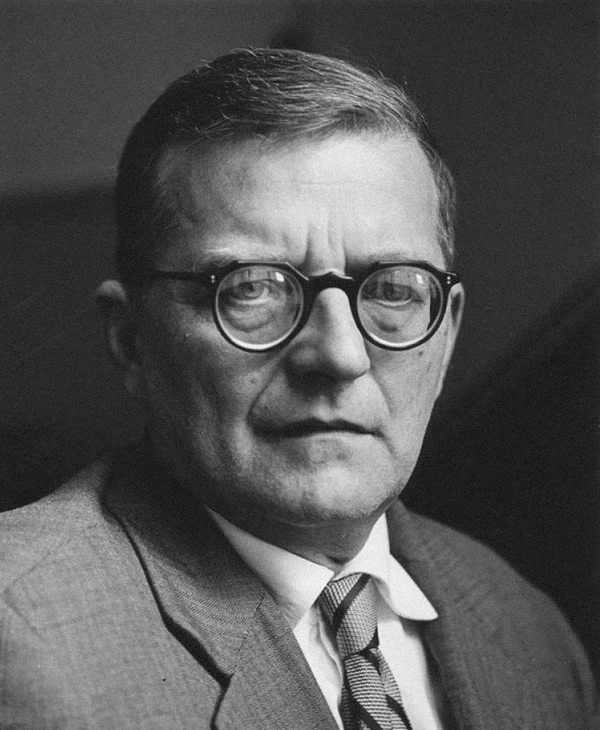
Dmitri Shostakovich
“…a dissident within the Soviet state, writing ironic music with secret meanings, or a compliant and loyal member of the Party who survived because he wisely toed the line in his music?”
And what of Shostakovich’s role? In the New Zealand String Quartet’s “Shostakovich Unpacked” and Orchestra Wellington’s series “The Dictator’s Shadow”, the musicians and the music have revealed Shostakovich in all his emotional, political and musical complexity.
Listening to the ambiguities of the Third Quartet, the searing emotions of the Eighth Quartet amplified as the Chamber Symphony, the angry determination of the final movement of that marvellous Piano Trio, the mocking cartoonish Scherzo of the Piano Quintet and the parodic, ironic moments amongst the triumph of the Fifth Symphony, it is impossible to view Shostakovich as merely a cynical puppet of the Stalinist regime.
Finally, the deep emotions of his farewell in the Viola Sonata reveal a composer astonishingly in control of his message to the audience, even as he was dying. Reaching back to Beethoven in the final movement, he was acknowledging that he, like the composer of the “Moonlight Sonata’, was composing music for “the people”. Shostakovich was, through his music, a great humanitarian artist who cared deeply about others, and his legacy in his music reminds us, finally, that oppression must always be resisted.
New Zealand String Quartet Shostakovich Unpacked July – November 2025
Orchestra Wellington “The Dictator’s Shadow” April – November, 2025