
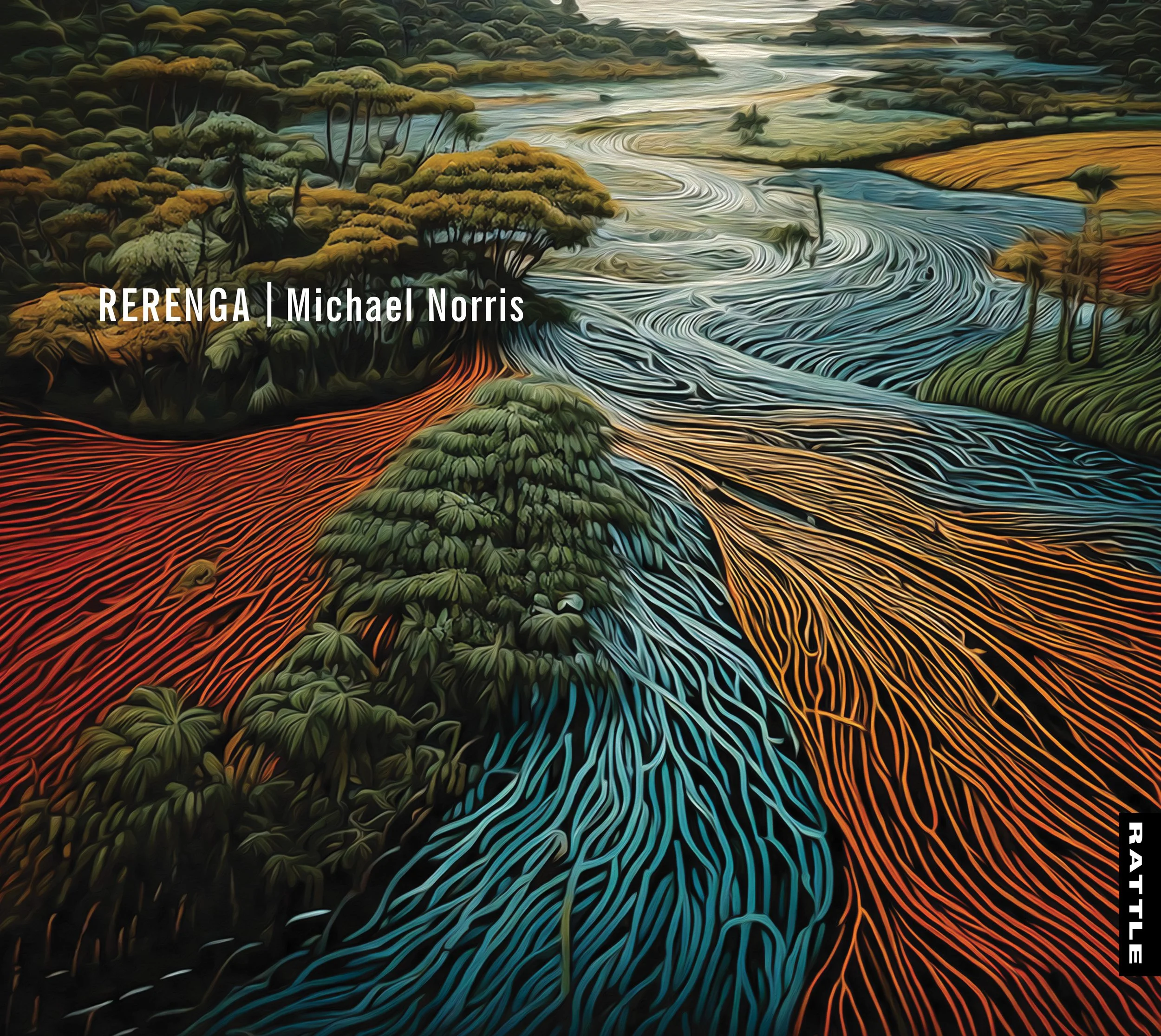
Michael Norris and “Rerenga”: an extraordinary journey
Composer Michael Norris is a thinker, a big-brained, highly skilled creator who writes and talks eloquently about his own music and that of others. As well as a multi-award-winning composer, he's a university teacher of composition, a software developer and a music theorist.
And yet, there’s nothing dauntingly cerebral about his music, which has the visceral impact of a gut-punch. Norris’s musical landscapes are vast, his textures ranging from dark, menacing power to ethereal, stratospheric beauties. Seeking words to describe his new album Rerenga, released in December 2025, I find myself again and again wanting to describe it as "astonishing" and "extraordinary". The five masterpieces on this new album confirm Michael Norris as one of New Zealand’s most significant living composers.
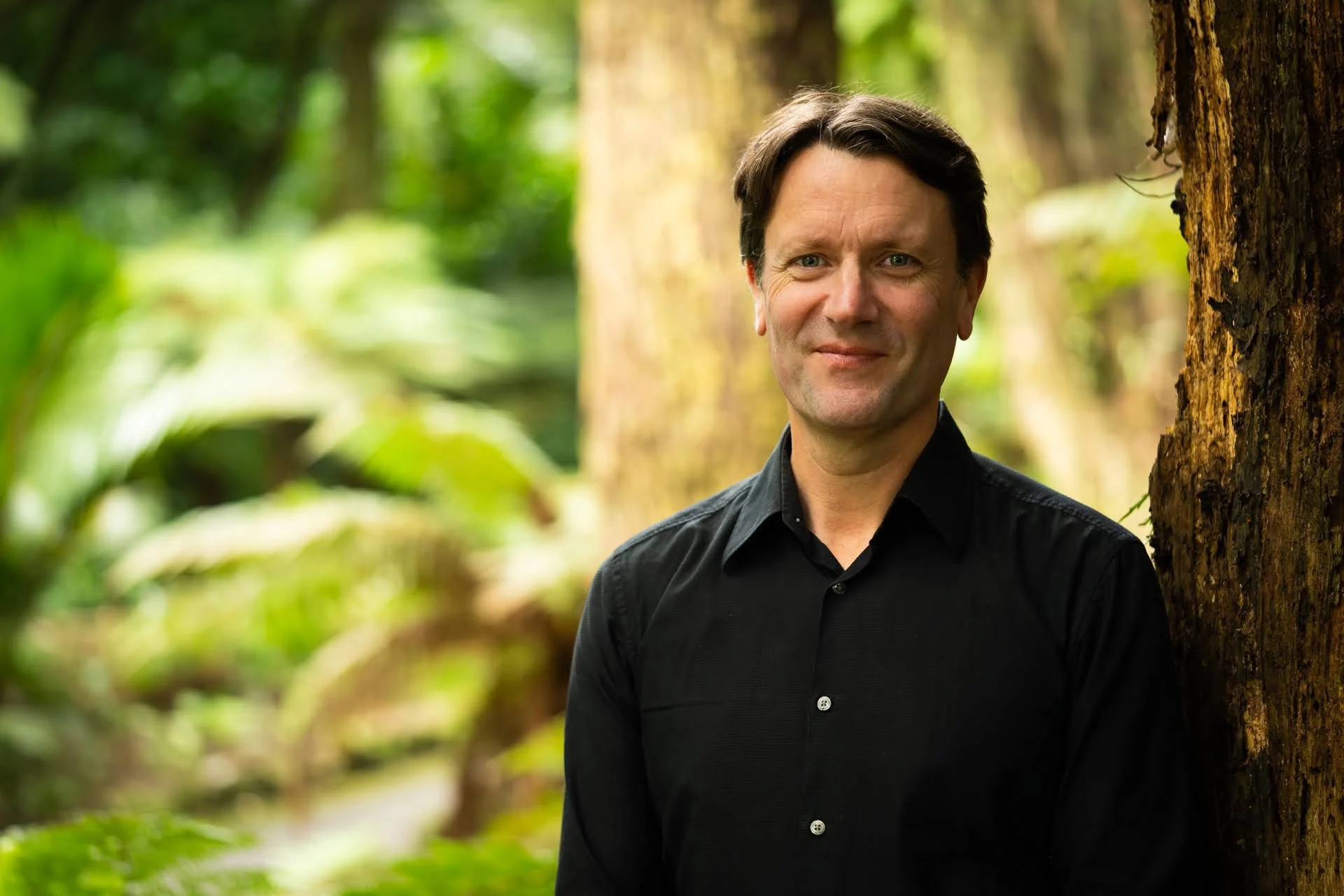
Composer Michael Norris
“…one of New Zealand’s most significant living composers.”
Photo credit: Latitude Creative
I attended the world premieres of all five works over the last decade. I also wrote about or reviewed several of them for Five Lines, NZ Listener or RNZ Concert's Upbeat programme. My attempt to bring fresh ears to this new album is tempered by strong recollections of the impact of those live performances.
The album opens with the title track, Rerenga for taonga pūoro, orchestra and live electronics. The work was commissioned by the NZSO and premiered in July 2019 as part of national commemorations of the 250th anniversary of the arrival of Captain James Cook in Aotearoa on the Endeavour.

Alistair Fraser, specialist performer on Māori tradition instruments
“…playing carefully chosen taonga pūoro in Rerenga.”
Photo credit: Ben Wood
The taonga pūoro, played in the NZSO premiere and this recording by Alistair Fraser, were carefully chosen, traditional instruments made from toroa (albatross) bones, the vertebrae of an upokohue (pilot whale) and the wood of kowhai and kauri trees. They represent and embody the indigenous flora and fauna the Endeavour scientists planned to classify.
A second layer of representation, Norris told me before the premiere, is how the electronic sounds, picked up by the orchestra, evoke the journey across the sea. The third musical idea is, he explained, “the way the flowing wave-like sounds are woven together in the texture, perhaps the way Māori weave with harakeke.”
Rerenga demonstrates marvellous control of the sonic environment by a master composer. It opens with profound, other-worldly sounds, a deep drone from the hue puruhau (the large gourd) enhanced electronically, evoking the void. Higher instruments enter, a melodic shape floats above, and light opens up with the arrival of the koauau, three flute-like instruments. Time is suspended, the music weaving timbres and textures, the changes and shifts sometimes subtle, sometimes dramatic and arresting.
The work develops as a conversation between taonga pūoro and orchestra, the trumpet-like pūkaea almost vocal in its expressive effect, answered first by strings and then full orchestra with percussion. After a climactic moment, the soloist plays quietly on pūmotomoto, a rare type of traditional flute, played originally to unborn and newly born children to implant musical and other traditions into their subconscious.
This beautifully structured orchestral music could only have been created in Aotearoa. Its emotional and sonic arch moves from low to high, from darkness to light, led by the soloist. High harmonics evoke the stars, over a quiet, deep drone below. Throughout Rerenga, the many timbres of taonga pūoro, orchestral and electronic sounds marvellously blend together while maintaining their own distinctive colours and symbolism.
For Horizon Fields for piano trio, commissioned by NZTrio in 2022 and the second track of the album, Norris turned to Europe for inspiration. Horizon Fields is a response to British artist Antony Gormley’s enormous site-specific installation Horizon Field Hamburg, created for the 2012 documenta exhibition of contemporary art. The composer explains that “Gormley’s themes of floating planes suspended in architectural space, mirror-form reflections and gentle oscillations have been freely interpreted to form the core sonic ideas and musical behaviours” of the composition.
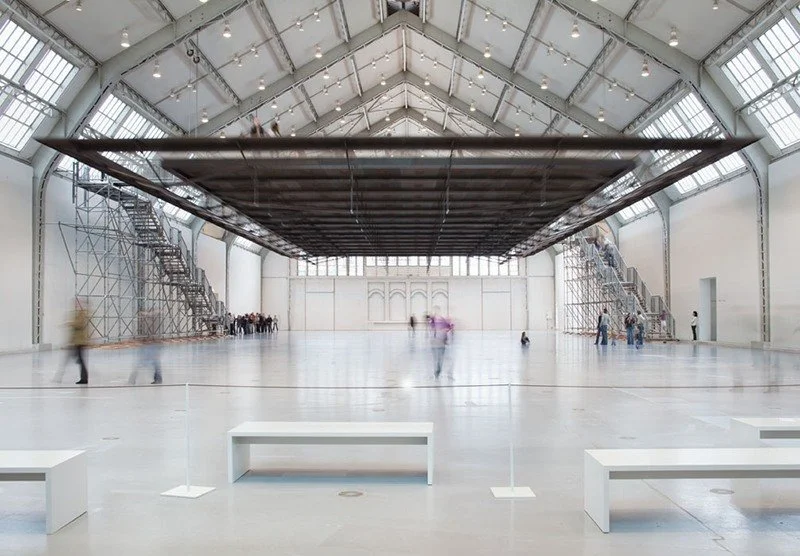
Horizon Field Hamburg by Antony Gormley
“…inspiration for Michael Norris’s Horizon Fields for the NZTrio.”
Norris’s attraction to sculpture is significant. His trio is, like its inspiration, a large, floating construction, the music static and repetitive but shifting subtly around a pedal C#, lyrical and expressive effects reflecting and echoing across the pedal as if across a mirror. Horizon Fields is a beautiful, gleaming work, exploiting the strengths of the NZTrio, the colour palette of Somi Kim’s gorgeous rippling pianism, the dramatic multi-coloured string playing of Amalia Hall and Ashley Brown and the responsive ensemble work of the whole group.
A structural turning point comes when the music surprisingly shifts from the sustained pedal, the piano becoming higher and slower. As in Rerenga, the subtle textures throughout Horizon Fields reveal the electronic composer at work, momentum created not by tonal harmonies but by timbres and dynamic effects, the strings sometimes agitated and bouncing, sometimes sliding whimsically, moods ranging from dreamy to dramatic, the ending quiet and light.
The oldest work on the album is Claro, written in 2015 for the NZSO. The title, meaning ‘light’ or ‘clear’, has inspired a work of beautiful transparency, music that plays with colours and pitches, dynamics and articulation. Norris opens Claro with gentle, elusive plucked sounds from strings, piano and harp, and percussive bell-like crotales, vibraphone and glockenspiel. Energy gradually accumulates as pitches change and lines become more sustained.
Claro is another carefully-built and complex structure, built around the opening pitch material but also parameters far from tonal harmony. Our ears are attracted by timbres, our emotions played with by textures and pace. Norris’ skill in describing what is going on in his music – the university teacher of composition – provides brilliant sleeve notes. He tells us Claro is inspired by the patterns of bell-ringers “changes”, while sustained effects are like “‘tintinnabulation’, a wonderful word coined by Edgar Allan Poe to describe the lingering resonance of a bell after it has been struck.”
All is not playful tinkling. The work is a marvellous vehicle for the NZSO, building to a climactic moment of grandeur, brass above and low strings below in a full, intense texture. The clarity implied by the title is always present, individual lines heard clearly, the harp employed quite beautifully, but also full, brassy textures and splendid percussion, melodic fragments creating a dense orchestral conversation.
Layers accumulate as the end approaches but a wide tessitura ensures all lines are clearly audible. Norris’s masterly orchestration takes us into a big, fierce percussion-dominated section, soaring string gestures, the return of pizzicato effects, upward-rising lines, before chimes from harp and other instruments take us to an ending reminiscent of the bell-like opening. The NZSO performance is quite splendid on this recording and another performance of this engaging work is overdue.
Much of this album was inspired by the brilliance of performers, the NZSO itself for Claro, Fraser’s mastery of taonga pūoro in Rerenga, and the NZTrio’s skills and commitment to new music for Horizon Fields. Two individual virtuosi inspired the last two works on the album, performers whose amazing abilities and musicianship go far beyond the ordinary.
Wellington-based vocalist and sonic artist Jonny Marks studied khoomei, traditional Mongolian throat-singing, in Inner Mongolia and Xinjiang, and incorporated it into his broader musical practice. Norris’s Sygyt, composed in 2017 and premiered by Marks with Stroma that year, was inspired by Marks’ vocal skills and features two types of throat-singing, sygyt (high style) and kargyraa (low style).
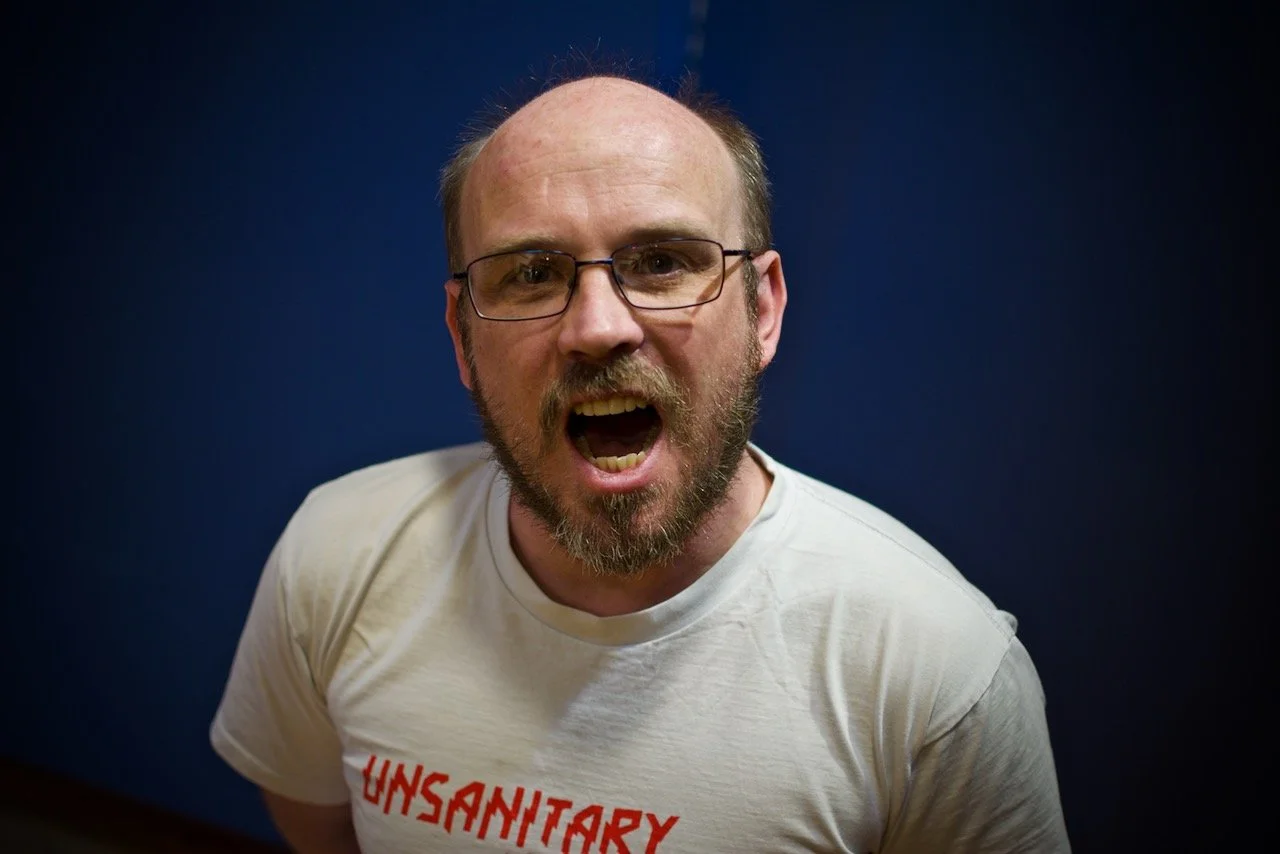
Throat-singer Jonny Marks
“…his singing is the compelling centre of the action throughout Sygyt.”
Image supplied
Sygyt starts with a sense of drama, Stroma’s instruments edgy and colourful, winds high and fluttering, low brass and electronics underpinning repetitive, static music. Then the voice enters and commands all attention.
The sound of Marks’ throat-singing is remarkable, coming from a deep, almost other-worldly place, jaw-dropping in both live performance and recording. In kargyraa, the low style in the first part of Sygyt, the singer produces a drone while emphasizing the undertone or subharmonic one octave below, the sound raw, resonant and, though human, like no singer I’ve ever heard.
The use of harmonics below and above the fundamental tone of the drone in throat-singing allow the voice to become an extraordinary instrument, and Marks’ singing, including improvisations beyond traditional Mongolian practice, is the compelling centre of the action throughout Sygyt. Norris uses both the instruments and the live electronic sounds as what he calls a “grand resonator” for the voice; they’re more than an accompanying backdrop, imitating the harmonics, slipping back to reveal the voice, sometimes surrounding it with stripes of surprising colours. Using the deeper timbres of bass flute, bass trombone and double bass, Norris, with Marks, creates textures that are sometimes dark and menacing.
Again, it is the colours, textures and pace that drive the structure of Norris’s composition. With the use, later in the work, of the high, “sygyt” voice, modified by live electronics, the sonorous music enters a cavernous space, evoking a timeless sense of great distance.
Sygyt is a completely astonishing work, and the premiere performance was unforgettable. This recording has captured its multi-faceted appeal and increases my appetite to hear it in concert again soon.
Three of the five works on the album won Norris the prestigious SOUNZ Contemporary Award, Rerenga in 2020, Sygyt in 2018, and Violin Concerto ‘Sama’, the fifth and final work on the album, in 2019.
Violin Concerto ‘Sama’, premiered by Orchestra Wellington in 2018, is dedicated to the artistry and virtuosity of that orchestra’s concertmaster, Amalia Hall, soloist for both the first performance and this recorded version by NZSO. She has “serious fingers”, Norris told me while writing the work, referring to her remarkable technical facility. Certainly Sama is extremely virtuosic, but the composer has clearly also responded to Hall’s lyricism, effortless musicianship and versatility. It’s an exhilarating work, and a great choice to complete the album.
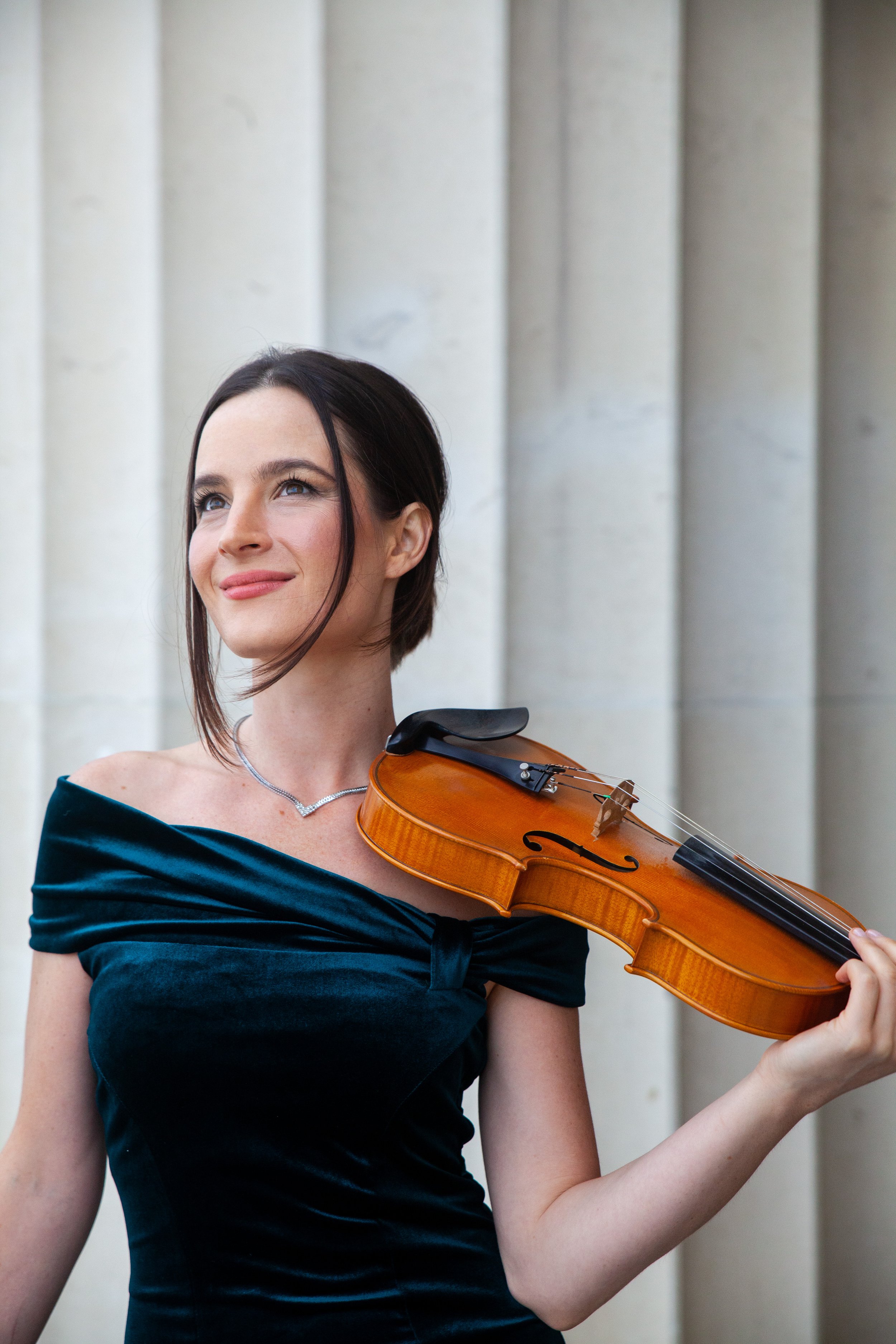
Violinist Amalia Hall
Michael Norris’s Violin Concerto ‘Sama’ is dedicated to her artistry and virtuosity.
Photo supplied
The subtitle Sama refers to the ritual elements of a Sufi ceremony, in particular the version of the Mevlevi Order in Turkey, which includes dancers (‘semazen’ or ‘dervishes’) whirling and spinning in a trance-like state between the realms of earth and sky.
Norris has structured the strikingly original work as a three-movement concerto, a slow movement separating two fast movements. The movement titles relate to the postures of the dancers. In the first, Ard (=earth), the spinning dancer is rooted to the earth by their left foot; in the slow central movement, Fad (=cosmos), a hand is raised palm-up to the universe; in the spinning dance of the 3rd movement, Semazen, the skirts of the ‘whirling dervishes’ open out into full circles, a remarkable sight.
The Concerto shimmers with exotic timbres and harmonies, the violinist entering in Ard over a rich and static texture, Hall holding her place even when the orchestral part threatens to drown her intense and energetic playing. Timpani and other percussion make a dramatic foil for her passion as she heads up into the stratosphere, before floating downwards, the orchestra dark and static below. There’s a lot going on, at speed, and the recording engineers have created excellent balance in this challenging movement, which ends with fast, repetitive figures from the soloist against a big brass intervention.
The second movement Fad is brilliantly orchestrated, with surprising moments as tiny oscillating bell-like sounds pierce a big stripe of texture, solo violin meanwhile floating and sliding, a thread in a big fabric. It is a slow movement, but Hall is travelling at speed with rapid string-crossing and assertive strength against the increasing power of the orchestra, before floating up again into the cosmos as the movement ends.
Norris is in brilliant control of the work’s shifting energies and momentum. In the spinning dance of the third movement the violinist whips up the whirling, up and down the violin, moto perpetuo, percussion joining as her speedy partner after a longish solo stretch. Hall impressively maintains her beautiful sound in the most virtuosic, rhythmically intense passages.
Norris has referred to this movement as his own “fevered re-imagination” of the spinning dance, which has elements of the “dance to the death” of The Rite of Spring. There are also surprising colours – col legno strings, muted trombones against whirling violin, eventually galloping drums and virtuosic timpani in a final frenetic drive to the finish, before ethereal string harmonics pull all upwards to disappear into the ether.
Norris’s musical imagination, control of his materials, breadth of inspiration and outstanding variety of language have enabled him to create compositions that will hold their place as major contributions to the New Zealand canon. Someone suggested once that New Zealanders stand on our beaches looking out to the world, that we are rooted in the whenua while acknowledging the international context in which we live. This is an apt description of Norris’ work, created by a fierce musical intelligence well aware of global trends yet strongly of Aotearoa, its sounds, its cultures and its contradictions.
“Rerenga” has many meanings in te reo Māori, and for this album it refers to a journey or voyage, or in more abstract terms ‘flight’ or ‘flow’. The journey to the album was several years long and required perseverance and commitment from many, but the result is one of the most important collections of music from Aotearoa released this decade. Kudos to Steve Garden and Rattle Records for yet another major release, to conductor Hamish McKeich, to the musicians of the NZSO, NZTrio and Stroma and to the skilled production team, engineer Graham Kennedy and producer David McCaw. Ka rawe!
RERENGA Michael Norris featuring NZSO, STROMA and NZTrio, with Hamish McKeich (conductor) Alistair Fraser (taonga pūoro), Amalia Hall (violin) and Jonny Marks (voice). (RATTLE). Purchase link here