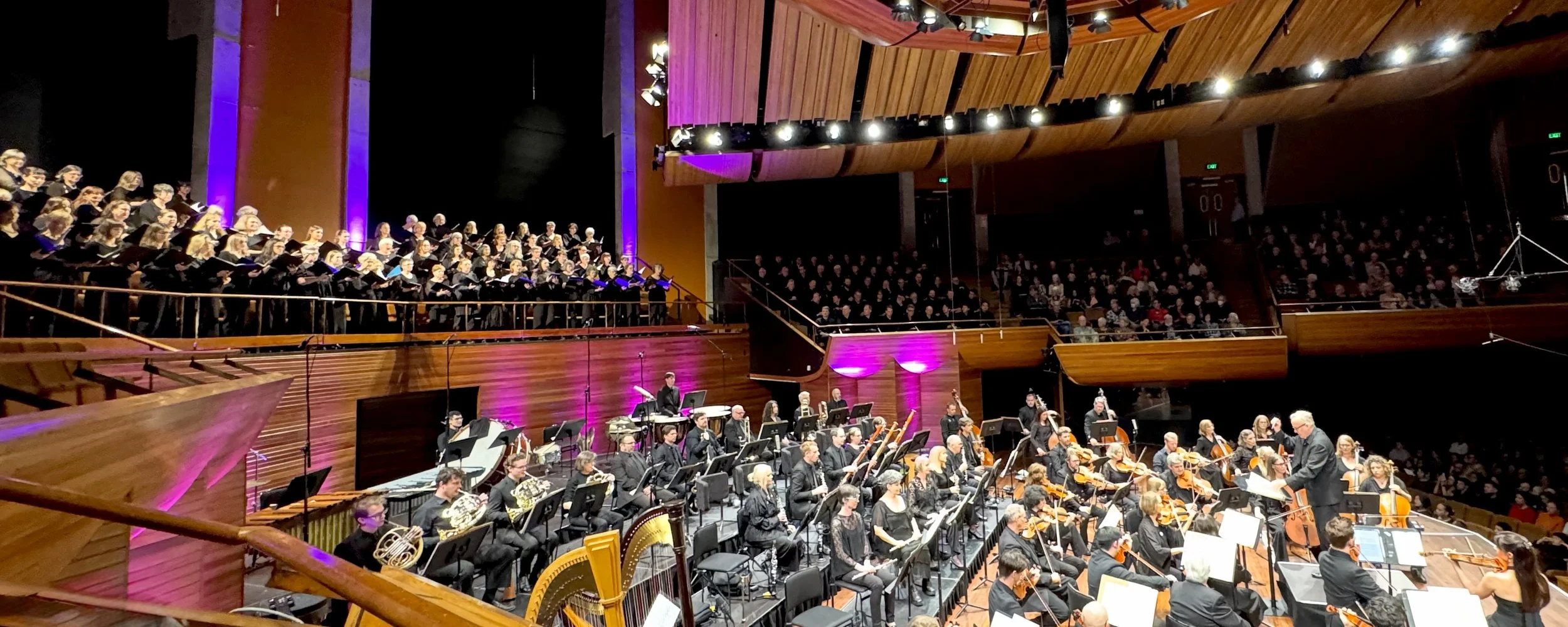
Orchestra Wellington performing Debussy’s Nocturnes with conductor Marc Taddei and the women of the Orpheus Choir
Image credit: Andy Best
Orchestra Wellington gathered many elements together for their recent programme, “Revelations”. One of the longest and most monumental piano concertos ever written. One of Claude Debussy’s most beloved orchestral works, inspired by painter James McNeill Whistler and some of his contemporaries. The world premiere of a work by a New Zealand composer responding to both Debussy’s work and a painting by Whistler. An orchestra, a youth ensemble of string players, a choir of women’s voices, another of men’s voices and a dazzling piano soloist, all performing under the baton of Marc Taddei. And Orchestra Wellington’s large, loyal, engaged audience, up for anything and expecting to be intrigued and delighted.
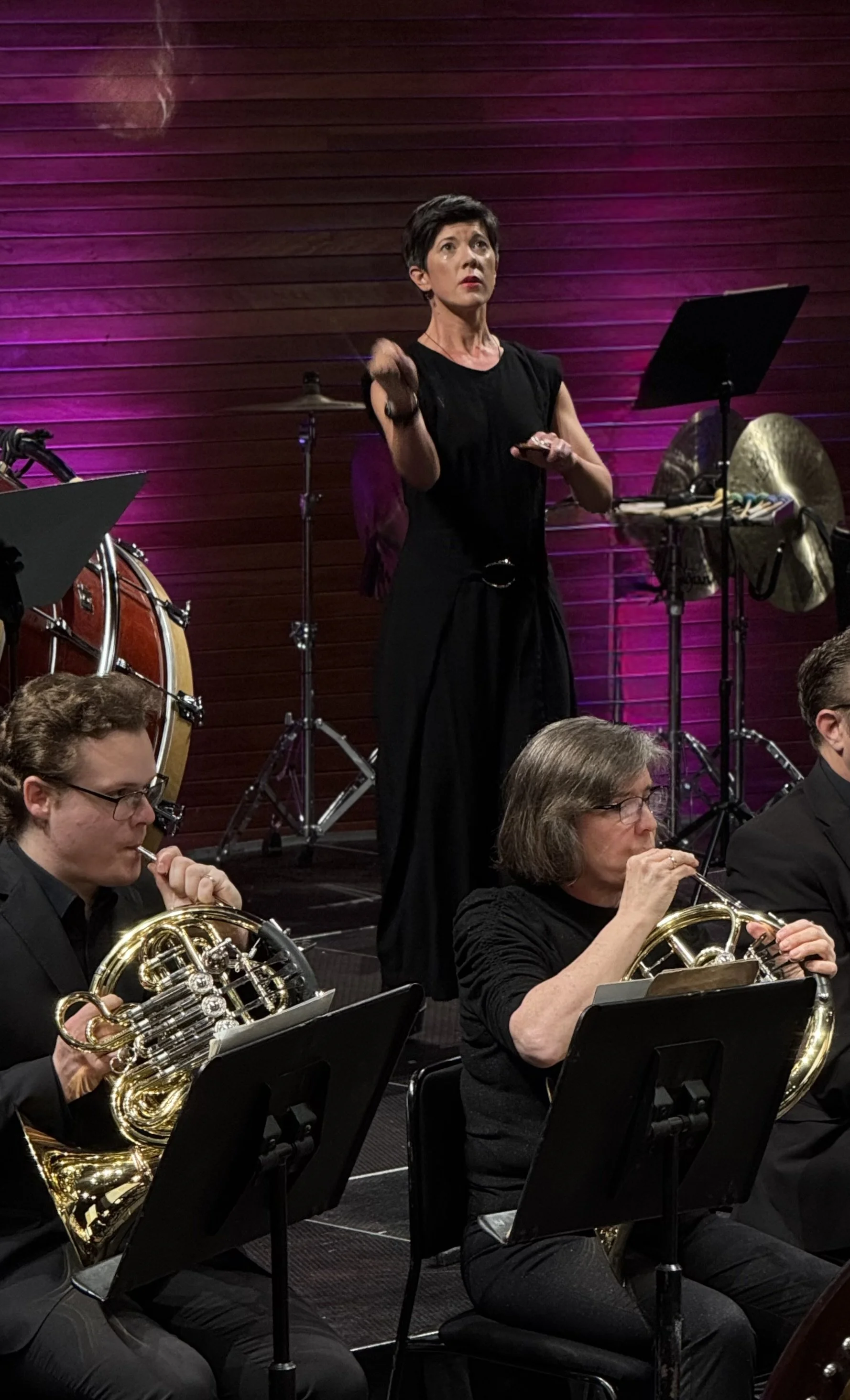
Composer Natalie Hunt
“whirling the pūrerehua, a reference to Wellington’s famous winds.”
Image credit: Andy Best
The concert began with the sound of the pūrerehua, a traditional Māori whirling bull-roarer, in the hands of composer Natalie Hunt. Her composition, Nocturne in Black and Gold - The Falling Rocket, took its name from the “Nocturne” painting by Whistler that was her inspiration. The composer brought that influence back to the local environment through the taonga pūoro, its deep, quiet hum a reference to Wellington’s famous winds.
Hunt’s new work was written in response to the 2026 SOUNZ Commission for Orchestra and Sistema Youth Orchestra, and on stage were the young musicians of Arohanui Strings+, sharing music desks with the professionals of Orchestra Wellington. The composition is both an imaginative response to her influences and a splendid meeting of the commission’s requirements, carefully written to ensure the young musicians participate fully within a skilfully orchestrated texture of glittering colours and dark, dramatic sounds.
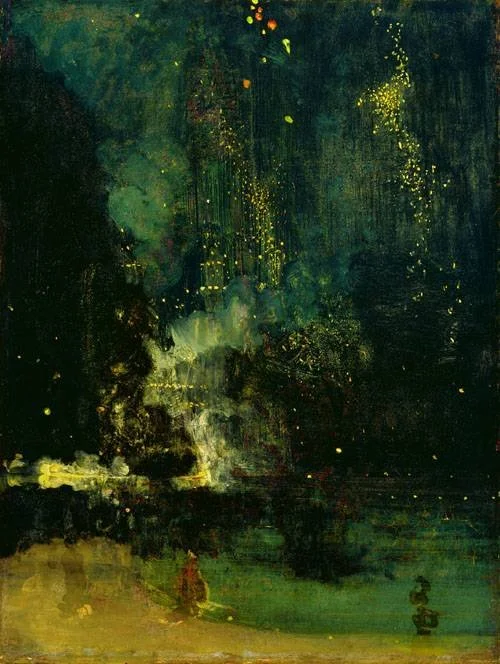
Whistler’s painting Nocturne in Black and Gold - The Falling Rocket
“…the work gave its name to Natalie Hunt’s composition for Orchestra Wellington and Arohanui Strings+, with its skilfully orchestrated texture of glittering colours and dark, dramatic sounds.”
At times there was a jazzy feel, no surprise from Hunt, who I remember as the composer of a witty string quartet called Data Entry Groove. A poignant bluesy trumpet solo floated forth from the orchestral melodies, while flourishes from tuned percussion matched the fiery sprays of Whistler’s painting. As the music grew in volume and texture, bass drum, timpani and gong added to the drama, the strings emerging high in their range before the work ended quietly, as it began, with the haunting, barely audible pūrerehua.
The audience responded warmly, and the younger players of Arohanui Strings then took the stage with the older students to play, with aplomb, three short “encores”, “Carillon” from Bizet's L'Arlesienne Suite, the famous Irish folk tune John Ryan's Polka and the waiata Tihei Mauriora. The collaboration between Orchestra Wellington, SOUNZ Centre for New Zealand Music and Arohanui Strings is now a decade and a half old, and has proven a fruitful source of both new music and orchestral experiences for young musicians.
Hunt’s Nocturne in Black and Gold - The Falling Rocket was also a direct response to Debussy’s composition Nocturnes, which followed in the programme. Debussy’s title did not refer to the musical tradition of nocturnes, which were mostly solo piano works by composers like Chopin and John Field. He was very aware of Whistler’s evocations of night in his Nocturne paintings, just as Whistler had borrowed his title from music. Both artists, familiar with each other’s work, were creating and suggesting images, movement, atmospheres and colours, not to tell stories but to conjure impressions of a scene or natural environment.
In his orchestral work Nocturnes, Debussy painted colours with the instruments of the orchestra for the three movements called “Nuages”, “Fêtes” and “Sirènes”, (Clouds, Fetes and Sirens). He talked to friends about how he visualised, in music, clouds swept by a stormy wind, festive crowds in the Bois de Boulogne watching the passing of the drum and bugle corps of the Garde Nationale, and, in the third Nocturne, mysterious siren songs drifting over the sea, “the waves silvered by moonlight”.
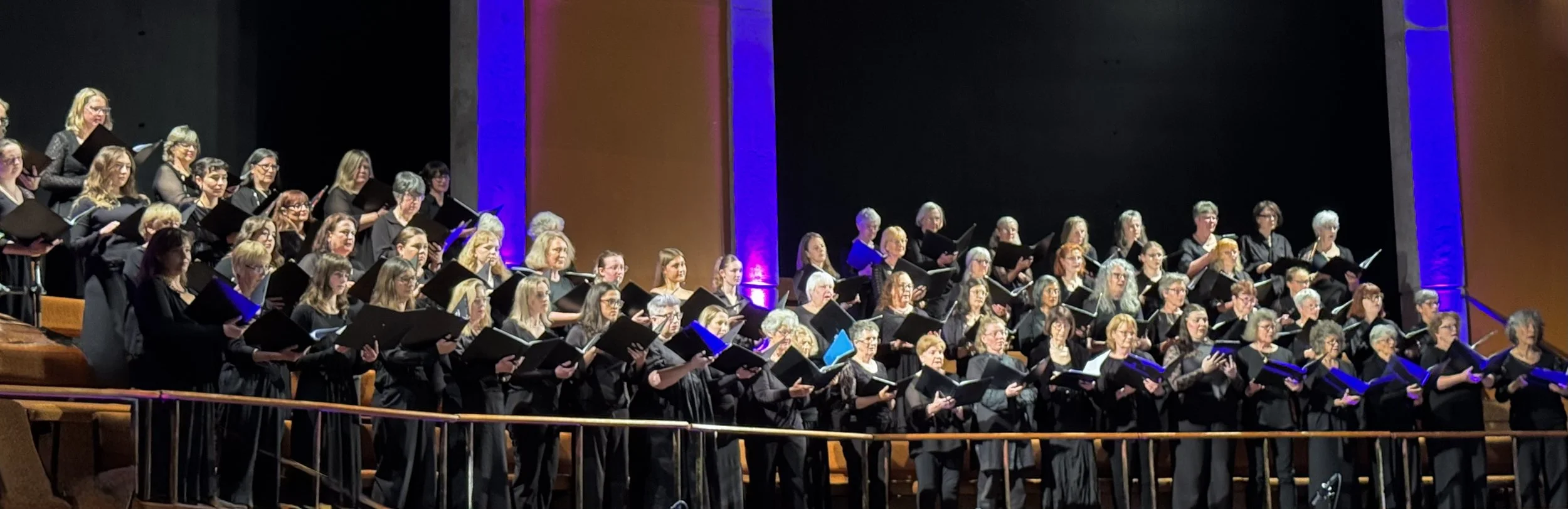
The women of the Orpheus Choir singing their siren song in the third of Debussy’s Nocturnes.
Image credit: Andy Best
In this performance, we heard a gorgeous play of timbres, although at times a stronger string sound would have helped the balance of the ensemble. In Nuages, the recurring cor anglais solo was marvellously effective, bringing a slightly oriental quality to the music. Fêtes worked beautifully, fast and edgy, Taddei managing his forces with élan, drawing drama from timpani and trombones, sweeping harp flourishes and fine playing from horns and woodwinds.
In the third movement, the women of Orpheus Choir brought their siren song, quiet wordless singing floating into a magical atmosphere, strings shimmering as Debussy conjures with his harmonies the silvery ocean of his imagination. Orpheus is a big choir, and perhaps fewer sirens could have achieved an even more subtle, ethereal effect? But overall, it was a lovely performance of a marvellously evocative work.
During the interval, pianist Jian Liu was no doubt limbering up for the most substantial work on the programme, Busoni’s huge Piano Concerto in C major Opus 39. This Concerto is seldom played, for obvious reasons – its five movements extend to over 70 minutes in length and require unrelenting virtuosity from the soloist. The composer cannot be accused of making unreasonable demands, however, as he himself played the piano part in the work’s premiere with the Berlin Philharmonic in 1904.
Nor is the Concerto just a flashy show-off opportunity. The piano part is musically embedded in the work, rather than a conventional exchange between soloist and orchestra. Busoni originally conceived some of the music as an opera, or at least some kind of music drama, based on the verse drama of Aladdin by Danish poet and dramatist Adam Oehlenschläger. When the composer moved on from this plan, reworking the music as a Concerto, he used a men’s chorus, “Cantico”, in the concerto’s final movement. He also maintained the flowing melodies that remind us he is an Italian composer who has absorbed the beauties of 19th century opera.
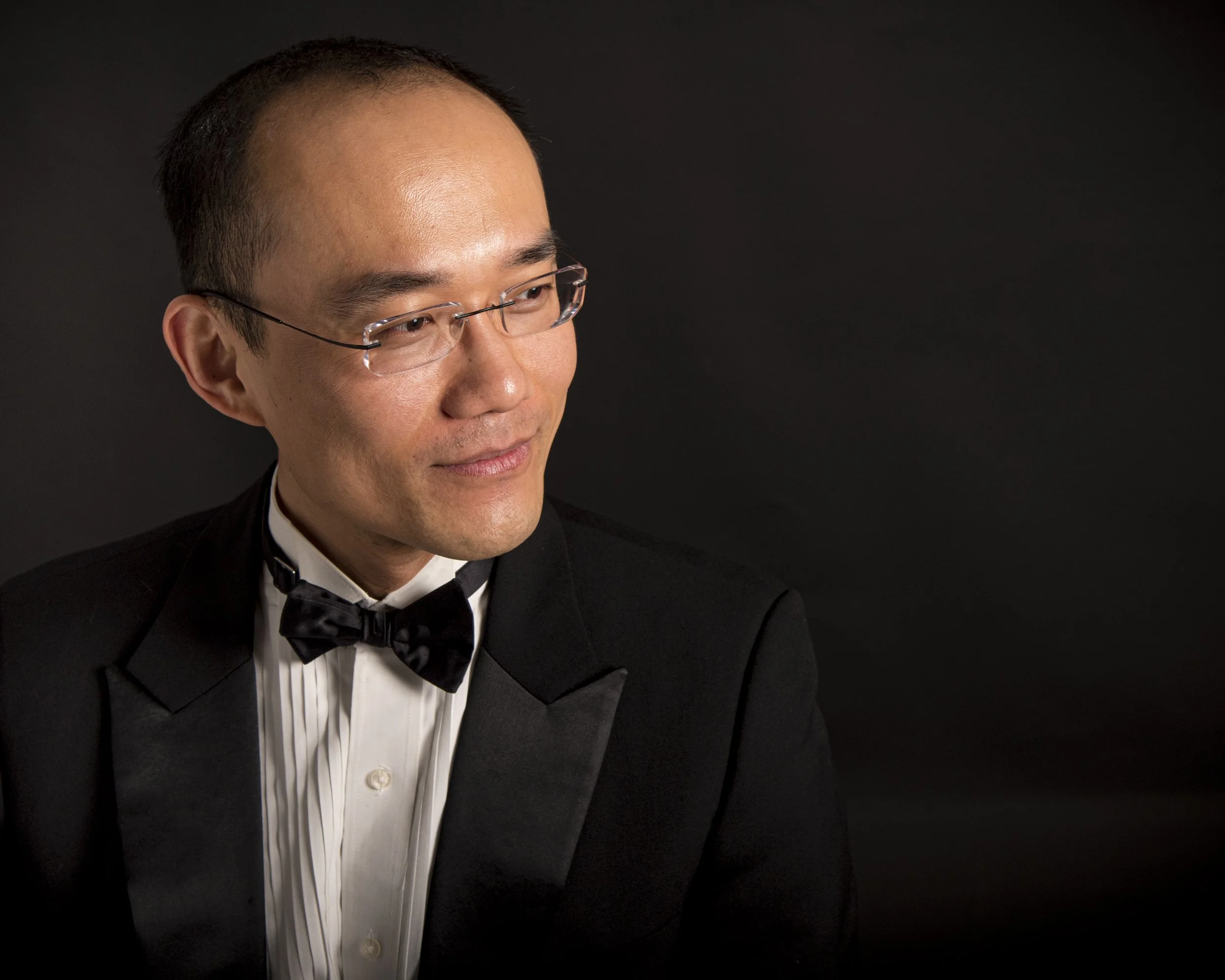
Jian Liu
“…a formidable pianist and a musician of great artistry.”
Image credit: Debbie Rawson
The deeply romantic work also has the breadth of scope and story-telling quality of an opera, both pianist and orchestra protagonists in the musical drama. The opening orchestral introduction plays the role of an overture, laying out the style and thematic material, the brass sections introducing some grandiosity.
From the moment the piano enters the scene, Jian Liu is in commanding control. Liu is a formidable pianist and a musician of great artistry. He makes a beautiful sound, has extraordinary facility and an unfailing commitment to the composer’s intentions. But this work has some of the quality of an athletic feat; the demands are unrelenting, the repetitive big strong gestures potentially injurious. The gorgeous piano sounds in the first movement, some in duet with oboe and flute, are beguiling, but can this level of playing be maintained for well over an hour?
The second movement, marked by Busoni “ playful” and “lively, without rushing” has rapid runs and figures. Liu’s playing ripples lightly through speedy exchanges with the orchestra and a solo accompanied by cymbals. The pianist’s virtuosity is extraordinary, with the orchestra in determinedly rhythmic response. Pizzicato strings, a nice clarinet solo and, in the background, a gentle tambourine suggest Aladdin’s story is not far from Busoni’s thoughts. But in the concert hall, Liu is the undoubted hero of the musical story, clearing all hurdles with ease in a dark, dramatic atmosphere.
Busoni described the structure of the Concerto to his wife as a kind of temple, the outer movements the pillars, the central slow movement another grand part of the building. Birds and flowers characterise the second movement scherzo, Vesuvius and cypress trees the tarantella of the fourth.
The third movement, the longest of the five, is serious and dreamy. The orchestral playing under Taddei’s baton is beautiful with surging themes, particularly a big romantic tune from the viola section. Liu’s playing is also gorgeous, using the full range of the keyboard, big chords rolling, strong and expansive melodies with accompaniment, and unrelenting passage work against strong orchestral gestures, solo lines and brassy fanfares. This is a very different aesthetic from Debussy’s, but it is equally evocative, romantic harmonies conjuring a scene.
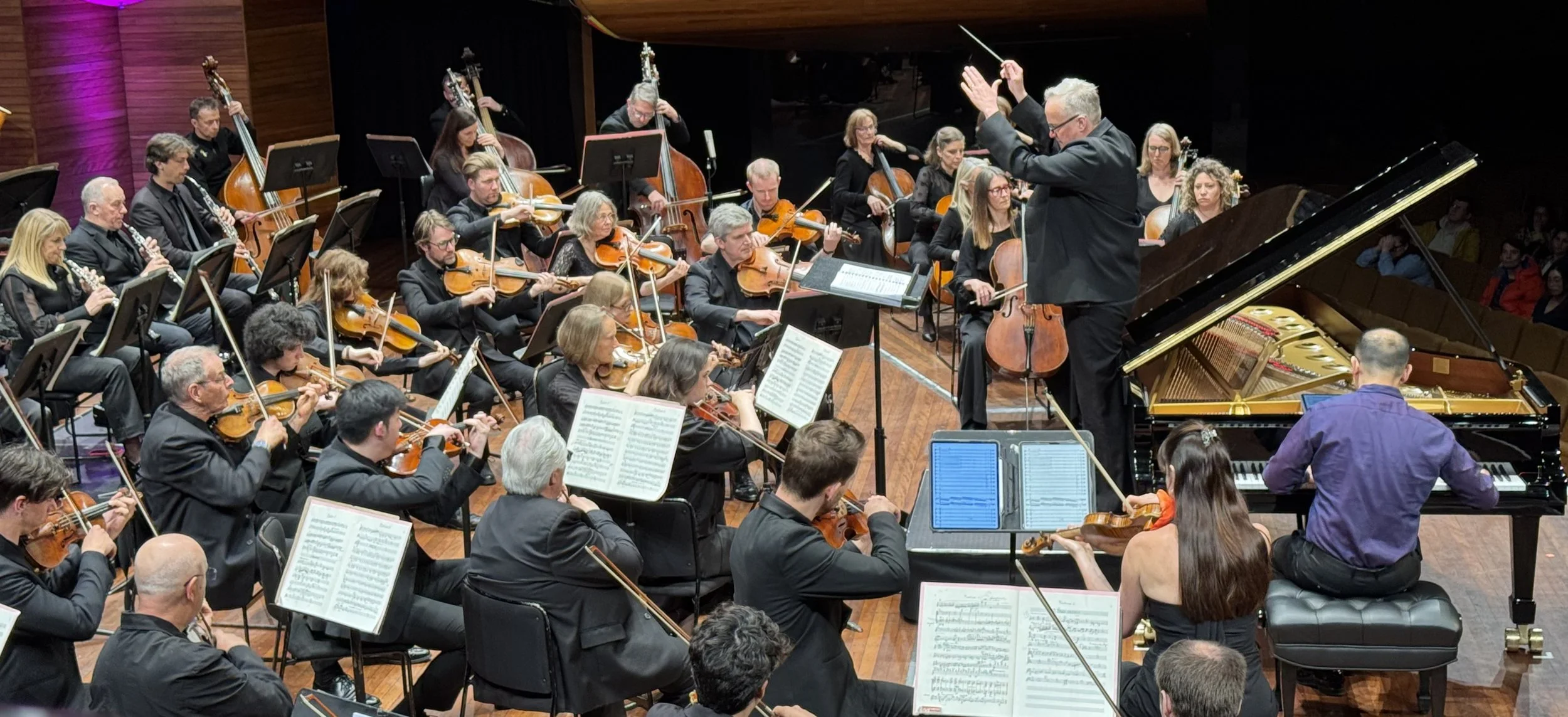
Orchestra Wellington with conductor Marc Taddei and pianist Jian Liu
“…the piano part is musically embedded in the work.”
Image credit: Andy Best
A tarantella is a famous Italian dance historically associated with sweating out the venom of the bite of the tarantula spider. Busoni’s fourth movement has a similar hysteria, fast and brilliant music pushing forward at speed with a galloping rhythm. Liu’s playing of the complex part is astonishing, dancing as the tempo accelerates, strings and winds bouncing, a great brassy fanfare, percussion adding lots of colour with tambourine, triangle and snare drum. A short fearsome piano cadenza is followed by a little Chopinesque interlude and the music heads to a quasi-conclusion.
With an extended section of wide-spaced arpeggios, the pianist slows the music to the more expansive mood of the finale and, accompanied by a hushed hymn-like section and a big soulful horn melody, the choir stands for the final, slow Cantico. Male voices sing Aladdin’s “Hymn to Allah”: “Deep and quiet, the pillars of rock begin to sound”.
Busoni’s directions were for the choir to be off-stage and invisible, their mysterious voices “adding a new sonority” to the orchestral sound. Logistically, that was probably not possible in the Michael Fowler Centre, and the men of the Orpheus Choir, positioned in full sight behind the Orchestra, nonetheless add a wonderful, deep, sonorous timbre to the spiritual effect of the final movement.
Floating underneath the choir, Liu’s solemn piano reflects the dirge-like descending lines, eventually rippling in magical runs against a loud fierce orchestral texture, woodwind melodies intertwining, choir and pianist dramatic together as all ascends chromatically, pizzicato low strings marching below.
Busoni creates, and eventually resolves, great tension in this movement, worthy of an operatic denouement or even a Hollywood ending. The choir plays a major role in the work’s conclusion, but the piano has the last word, with a final burst of brilliant chord sequences underlined by the orchestral climax.
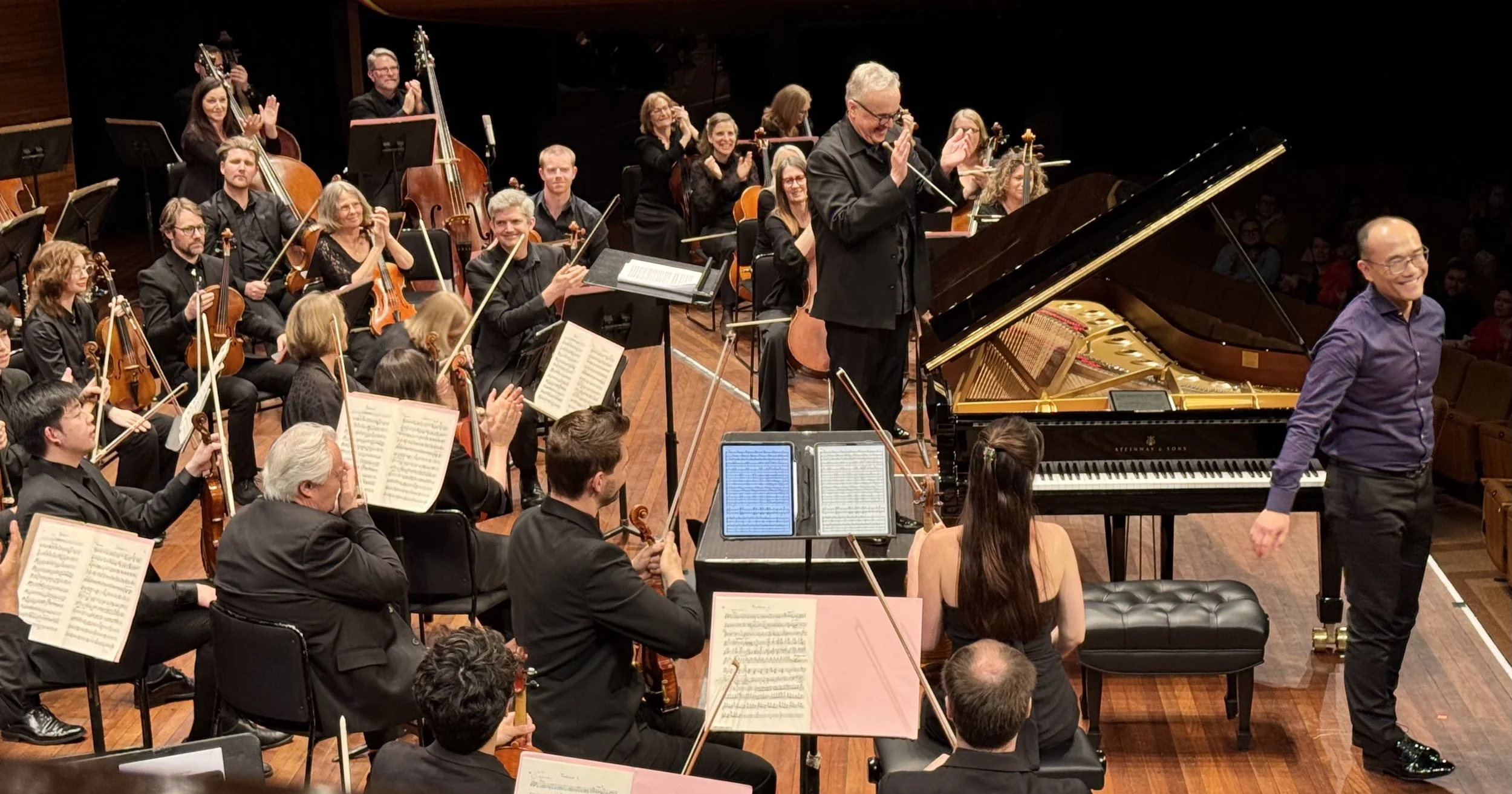
Pianist Jian Liu
“…receiving a richly deserved and prolonged ovation.”
Image credit: Andy Best
The audience erupted, Taddei and Liu embraced, and the pianist received a richly deserved and prolonged ovation, many standing to applaud his extraordinary feat. Congratulations to Orchestra Wellington and Jian Liu for offering their audience a rare and memorable experience within the context of this imaginative programme.
Orchestra Wellington: “Revelations”. Music by Natalie Hunt, Claude Debussy and Ferruccio Busoni with Marc Taddei (conductor), Jian Liu (piano), Arohanui Strings +, and Orpheus Choir Wellington. October 24, 2026.
You can read a Five Lines profile of pianist Jian Liu here and a review of his 2026 recital tour programme here.
For more information about Orchestra Wellington and to join their mailing list, click here.