
The Adam Festival: the playful joy of chamber music
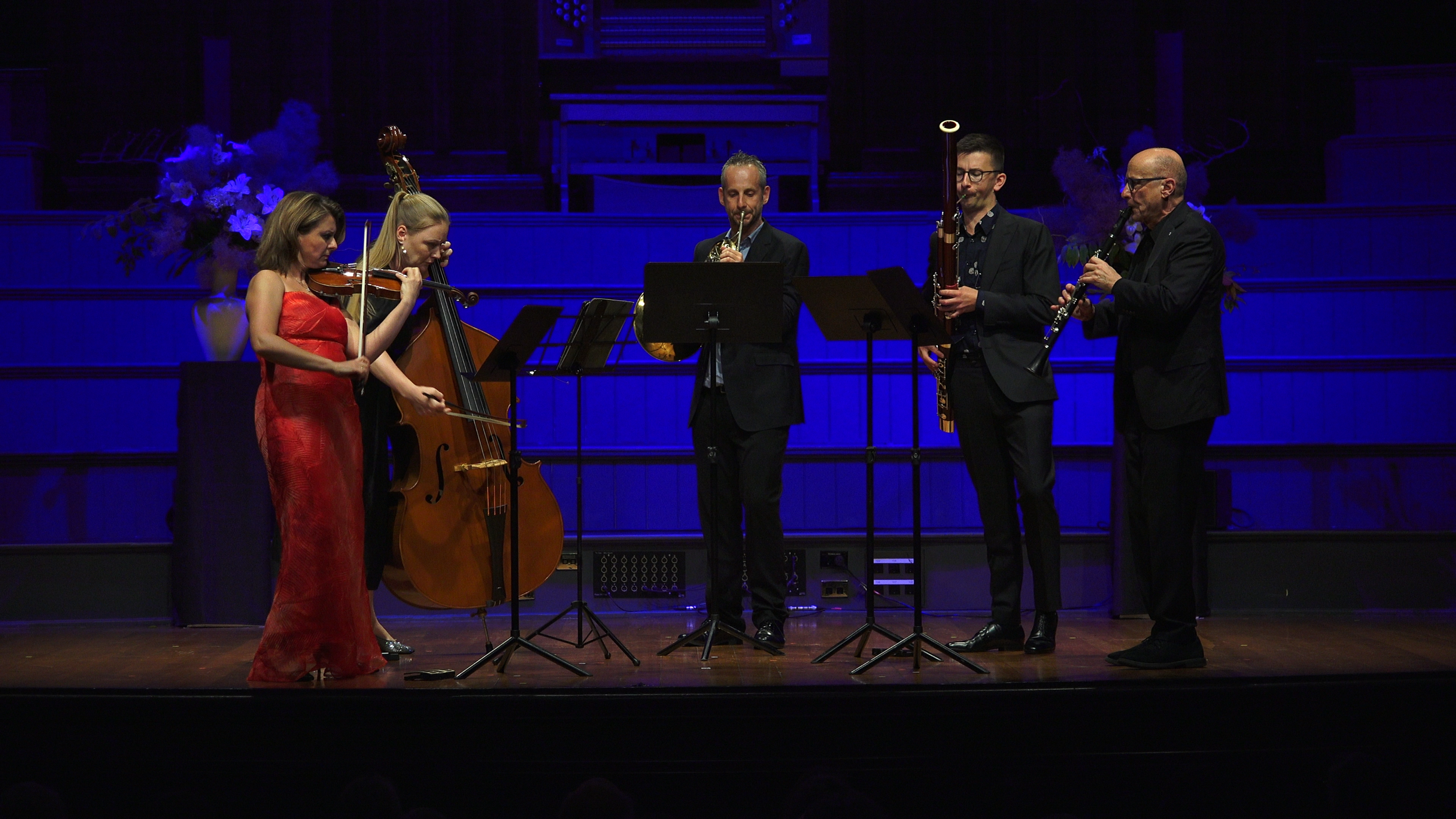
Image credit: Chris Watson/SOUNZ
Five crack musicians took the stage in one of the last concerts of the ten day Nelson-based musical feast known as the Adam Festival of Chamber Music. London-based violinist Natalia Lomeiko, Australian double bassist Phoebe Russell, Wellington-based French horn player Shadley van Wyck, Sydney-based New Zealand bassoonist Todd Gibson-Cornish and Canadian clarinetist James Campbell may not have met, let alone played together, till the week before the Festival. But I begin my Festival review with this highly accomplished, witty and characterful performance of a quintet arrangement of Richard Strauss's Till Eulenspiegel's Merry Pranks because it demonstrates perfectly the musical sparks that fly when musicians gather at an international chamber music festival – and also the huge amount of fun everyone, musicians and audiences, were having in Nelson.
“The Adam”, as the festival is affectionately known, remained joyous throughout some 30 events over ten days. The varied and stimulating programme of chamber music, from solo recitals to ensembles of every size from duo to octet, was curated with flair and expertise by Artistic Director Gillian Ansell, violist of the NZ String Quartet, who also played in numerous ensembles and concerts and presided over it all with benign grace.
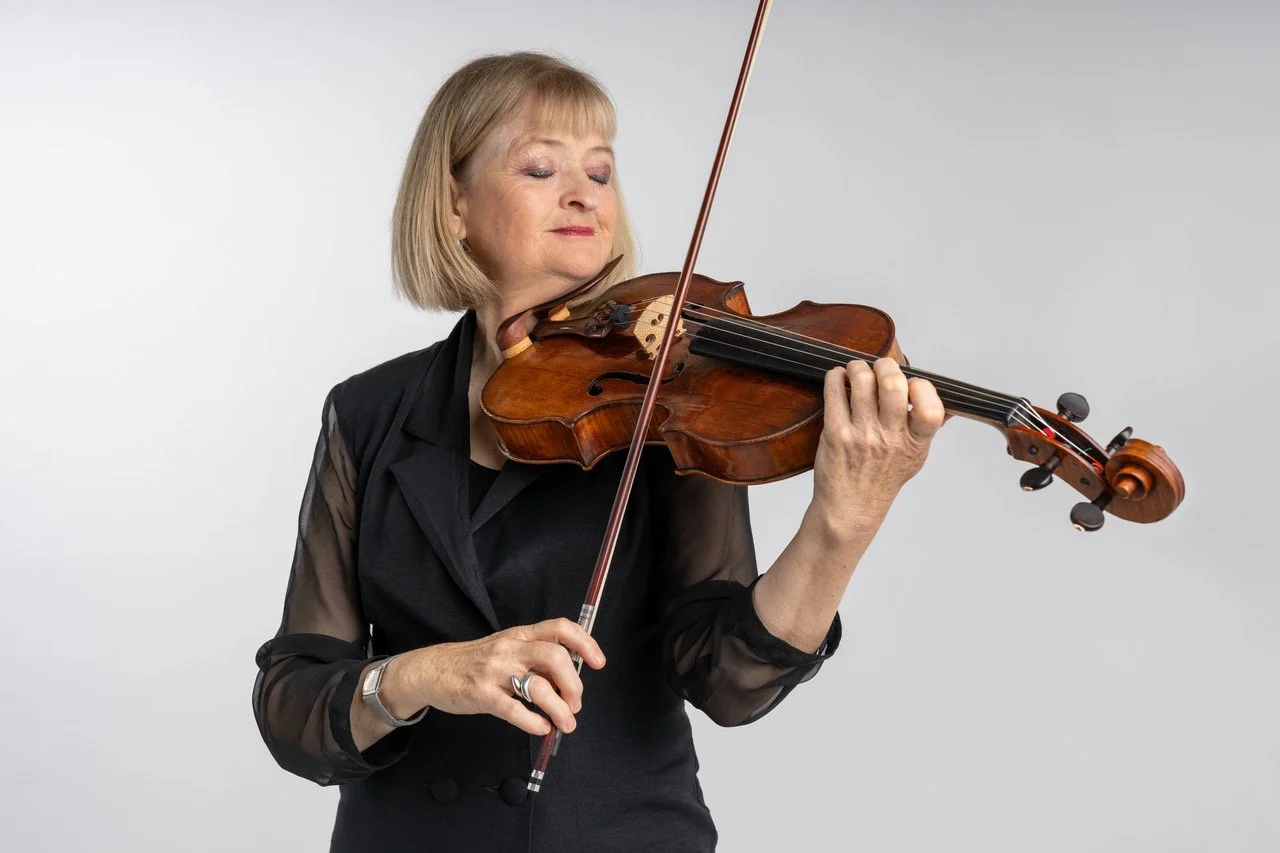
Violist Gillian Ansell
Artistic Director of the Adam Chamber Music Festival
The NZSQ has always been a central ensemble at the Adam Festival, and in spite of the group’s challenging transitional year, with many changes of personnel since the end of 2024, the four musicians had a busy ten days playing a wide range of works. For this Festival, the NZSQ’s line-up included permanent members Peter Clark, violinist and Ansell on viola, with guest violinist Arna Morton and newly appointed cellist Martin Smith, who will shortly take up the permanent role. As well as playing as a quartet they participated in other ensembles, and Smith was able to show off his accomplished and lovely playing in his curated programme “Echoes and Ephemera: Martin’s Choice.”
Alongside smaller ensembles, the Adam Festival Orchestra, inaugurated this year and ably led by Clark, combined the three available string quartets and double bassist to present Bach cantata excerpts and a concerto in the ever-popular “Bach by Candlelight” concert and more recent repertoire in other programmes. And the Festival was taken widely into the Nelson community with free programmes around town by the musicians of the Antipodes String Quartet, talented young chamber musicians gaining invaluable concert experience at the Adam.
Pianist Jeremy Denk
As usual, there were international big-name drawcards at the Festival, alongside many of New Zealand’s finest. American pianist Jeremy Denk had never been to New Zealand before, and his presence was undoubtedly a Festival coup, facilitated by a recommendation from his friend and colleague Richard O’Neill, violist of the Takács Quartet, the stars and audience magnet of the 2024 Adam.
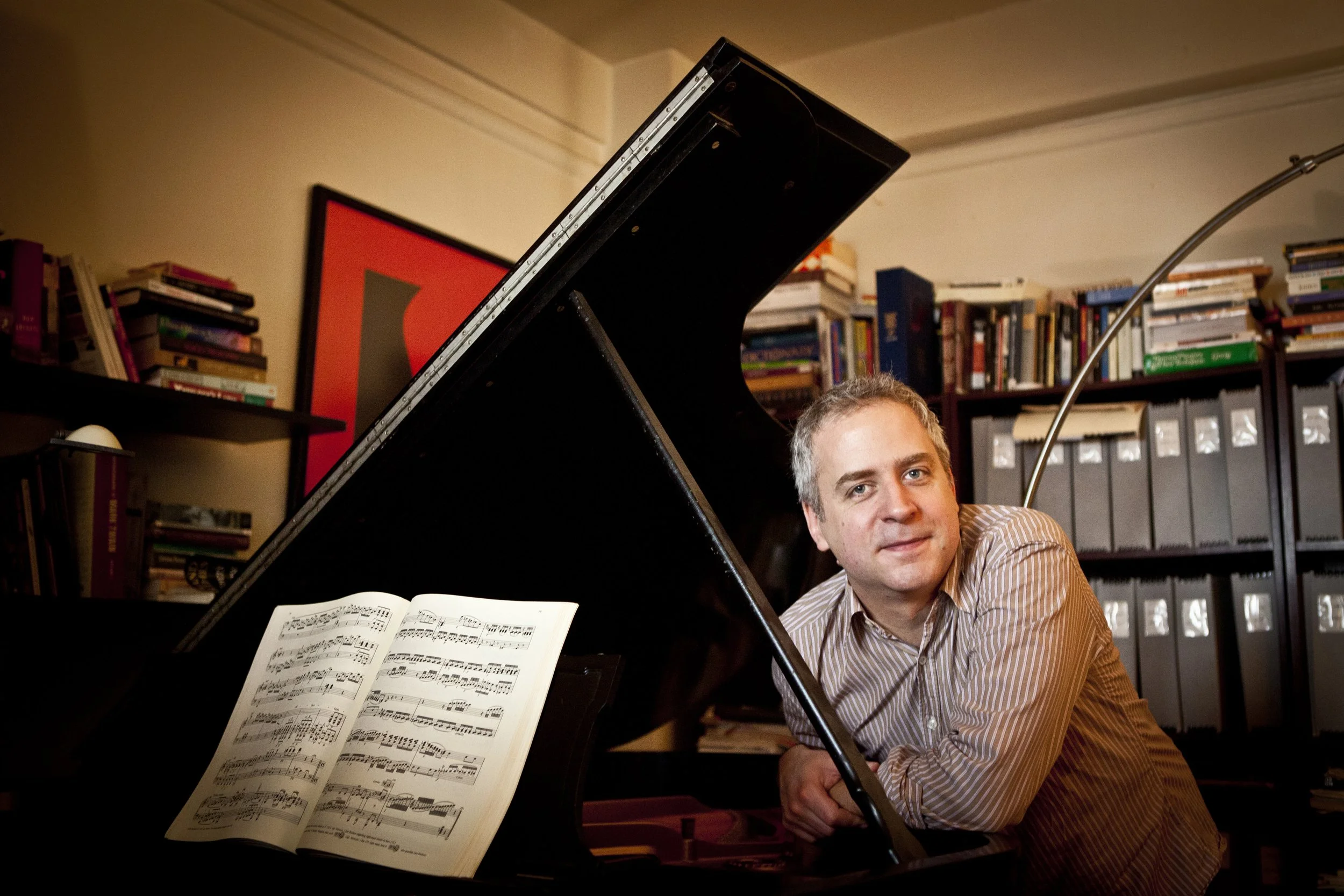
Pianist Jeremy Denk
“…joined his new colleagues for ensembles that provided many of the Adam Festival’s highlights.”
Denk is one of America’s foremost pianists, recipient of a MacArthur ‘Genius’ Fellowship, the Avery Fisher Prize and a member of the American Academy of Arts and Sciences. He performs regularly with such luminaries as violinist Joshua Bell and cellist Stephen Isserlis.
In Nelson, his beautiful playing, outstanding musicianship and collaborative and communicative style contributed to many programme highlights. In his solo recital, “Heartbreaker”, in playing that transcended technique, he showed his astonishing range in Robert Schumann’s Fantasie in C major Op. 17. The music became transparent in the most complex textures, Denk always finding the melodic essence, exquisitely tender in expression of sad, yearning feelings, then assertive and full-bodied in more extrovert moods.
In Brahms’ Four Pieces for Piano Op. 119 his luminous, almost improvisatory playing in the first movement made the music somehow modern, giving way to a liquid flow of melody in the second movement, a rustic, richly enjoyable “beer hall dance” in the third and a grand romantic tour-de-force to finish.
These masterpieces by Brahms and Schumann formed the second half of Denk’s generous recital. Before the interval Denk explored ten short works by women composers, first introducing the audience to pianist and little-known composer Hélène de Montgeroult, an extraordinary woman living and working against the background of the French Revolution. A contemporary of Beethoven, de Montgeroult is reputed to have saved herself from execution by improvising on La Marseillaise in front of the Revolutionary Tribunal, going on to become the first female professor at the new Paris Conservatoire and hosting many big French names, musical and political, at her famous salon.
Denk played four impressive Études from De Montgeroult’s huge “Complete Method” for piano, demonstrating her formidable composing and his own dazzling playing. Denk’s advocacy for this almost unknown composer had him turning towards the audience mid-flight, as if to say, “listen to this!”.
Denk played as a skilfully curated “suite” the music by women composers neglected by history or overshadowed by their male contemporaries, interspersing de Montgeroult’s Études throughout. American Missy Mazzoli’s dramatic, modern little Heartbreaker made complete sense in Denk’s hands. Though Amy Beach’s In Autumn has a salon flavour, this bouncing music is not the work of a shrinking violet. Meredith Monk’s mysterious, repetitive Paris winds up like a mechanical toy while evoking a busy Parisian scene, leading perfectly into Denk’s seductive playing of Frenchwoman Cécile Chaminade’s lovely, witty La Lisonjera (“The Flatterer”). Ruth Crawford Seeger’s brief, fierce Piano Study in Mixed Accents – boom! – led via another dazzler from de Montgeroult to Clara Schumann’s Romance in A minor Op. 21 No.1. This gorgeous, full-textured work concluded the set, demonstrating again Denk’s singing melodic style over many layers of accompaniment.
Denk is also a seasoned chamber musician and joined his new colleagues at the Adam for ensembles that provided many of the festival’s programme highlights. He also worked with three young pianists in an enlightening masterclass. But before I spend my whole review writing about one pianist, who else visited Nelson in February?
The Jupiter String Quartet
An international string quartet has traditionally been part of the Adam Festival. This year the visitors were the award-winning Jupiter String Quartet from America, playing both as a quartet and as individuals in other ensembles. I heard them first in their programme “Reverberations of Nature”, which opened with Haydn’s String Quartet in C major, Op. 33 No.3 “The Bird”, a delightful work that finds Haydn at his most appealingly whimsical.
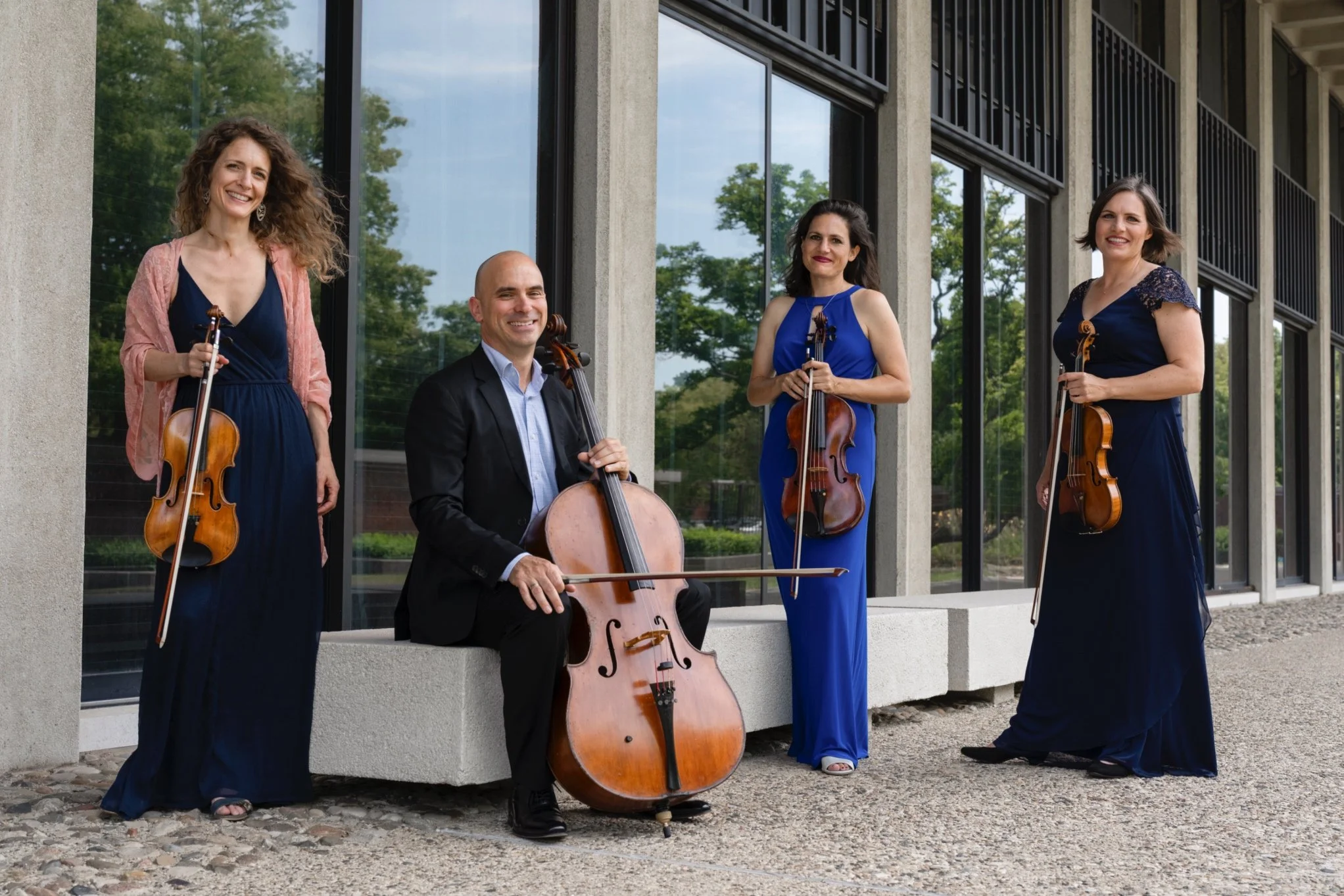
The Jupiter String Quartet
(from left) Mélanie Clapiès (first violin), Daniel McDonough (cello), Liz Freivogal (viola) and Meg Freivogel McDonough (2nd violin).
Image credit: Todd Rosenberg
Sometimes quartets play Haydn’s music as if they are four separate characters in a fascinating conversation, relishing and exaggerating Haydn’s musical jokes. The Jupiter took a more intimate approach, their phrases shapely, a lovely balance between the voices, with use of dynamics sympathetic to Haydn’s musical argument. Nothing was too emphatic, the sound often quiet and bigger effects subtly used.
The Jupiter String Quartet’s bio refers to the 25-year-old ensemble as a “tight-knit group”. The violinists are Frenchwoman Mélanie Clapiès (who joined the ensemble in August last year) and Meg Freivogel McDonough, one of the founder members, with her sister Liz Freivogel on viola and her husband, cellist Daniel McDonough. Since 2012 the Jupiter has been quartet-in-residence at the University of Illinois Urbana-Champaign, where they direct the chamber music programme.
Their approach to quartet playing was particularly effective in one the first Aotearoa performances of New Zealander Salina Fisher’s Heal, a work the composer described in her introduction as “vulnerable and deeply felt”. It’s a beautiful work, lovely melodic lines threaded through the texture and enhanced by the Jupiter’s careful and moving performance. The audience was spellbound through to the quiet ending.
Moments of drama in the final work of the programme, Schumann’s String Quartet in A minor, Op. 41 No.1, made it clear the Jupiter’s quiet, subtle approach is a deliberate choice. I wondered what it would be like to hear them in a smaller hall – the Nelson School of Music Auditorium has both a terrific acoustic and excellent sight-lines but is on the large side for real intimacy. The work showed off their great ensemble work, fine sense of momentum, lovely romanticism in the Adagio and a brighter sound in the speedy 4th movement.
In a mixed concert called “reConstitution”, Jupiter violist Liz Freivogel contextualised a set of American folksongs, spirituals and rags with a short look back at some of America’s darker history, including the treatment of slaves and later discrimination against African-American composers and musicians. The Jupiter Quartet used a bigger sound for this music, and they and the audience enjoyed the flavours of poignant spirituals, cheeky fiddle tunes and ragged ragtime in a well-curated set by black composers Florence Price, Margaret Bonds and H.T. Burleigh, ending with William Bolcom’s expressive version of Deep River.
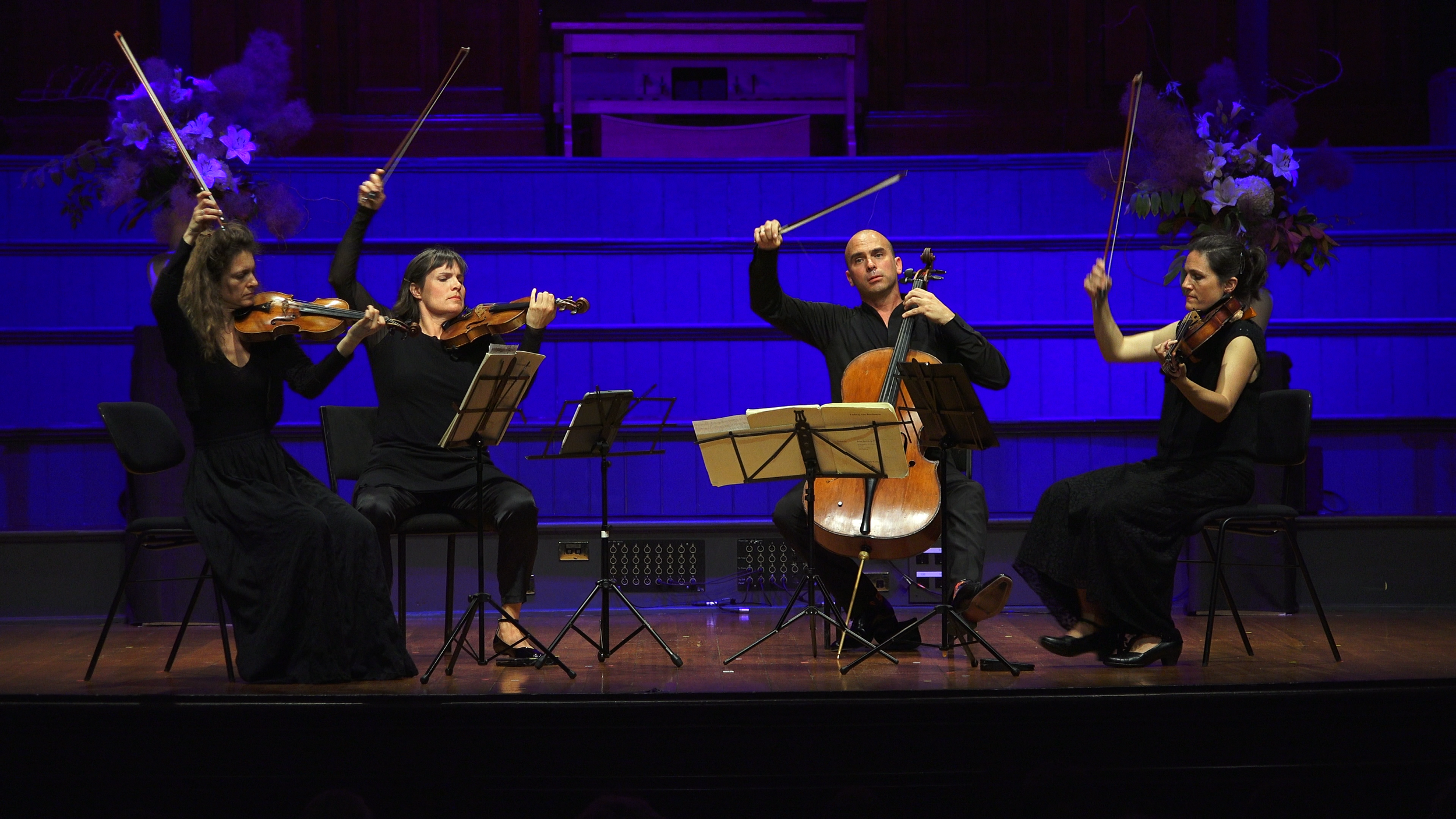
The Jupiter Quartet plays Beethoven
“…unified conception, clear contrapuntal sense and a splendid drive to the finish.”
Image credit: Chris Watson/SOUNZ
This programme continued the American theme with John Adams’ well-known minimalist string septet Shaker Loops, violinist Clark, cellist Lavinnia Rae and double bassist Russell joining the Jupiter musicians. The work requires great accuracy, and this fine performance illustrated the spiritual ecstasy of the Shakers, expressed through the rapid string tremolos and mesmerising sustained effects.
For their final performance in Nelson the Jupiter Quartet offered Beethoven’s first Razumovsky Quartet, known as “The Russian”. Their unified conception allowed the music to carry Beethoven’s message without unnecessary drama, revealing a clear contrapuntal sense, a “leaning in” to the mysteries of the nostalgic slow movement and a splendid drive to the finish in the fleet-footed final Allegro. The Festival audience’s farewell to the group was warm and appreciative.
International guest artists
Russian-born violinist Natalia Lomeiko is well-known to New Zealand audiences, with family connections here and her win in the 2003 Michael Hill International Violin Competition. Now based in London, she combines performing engagements with her roles as Professor of Violin at the Royal College of Music and the Yehudi Menuhin School.
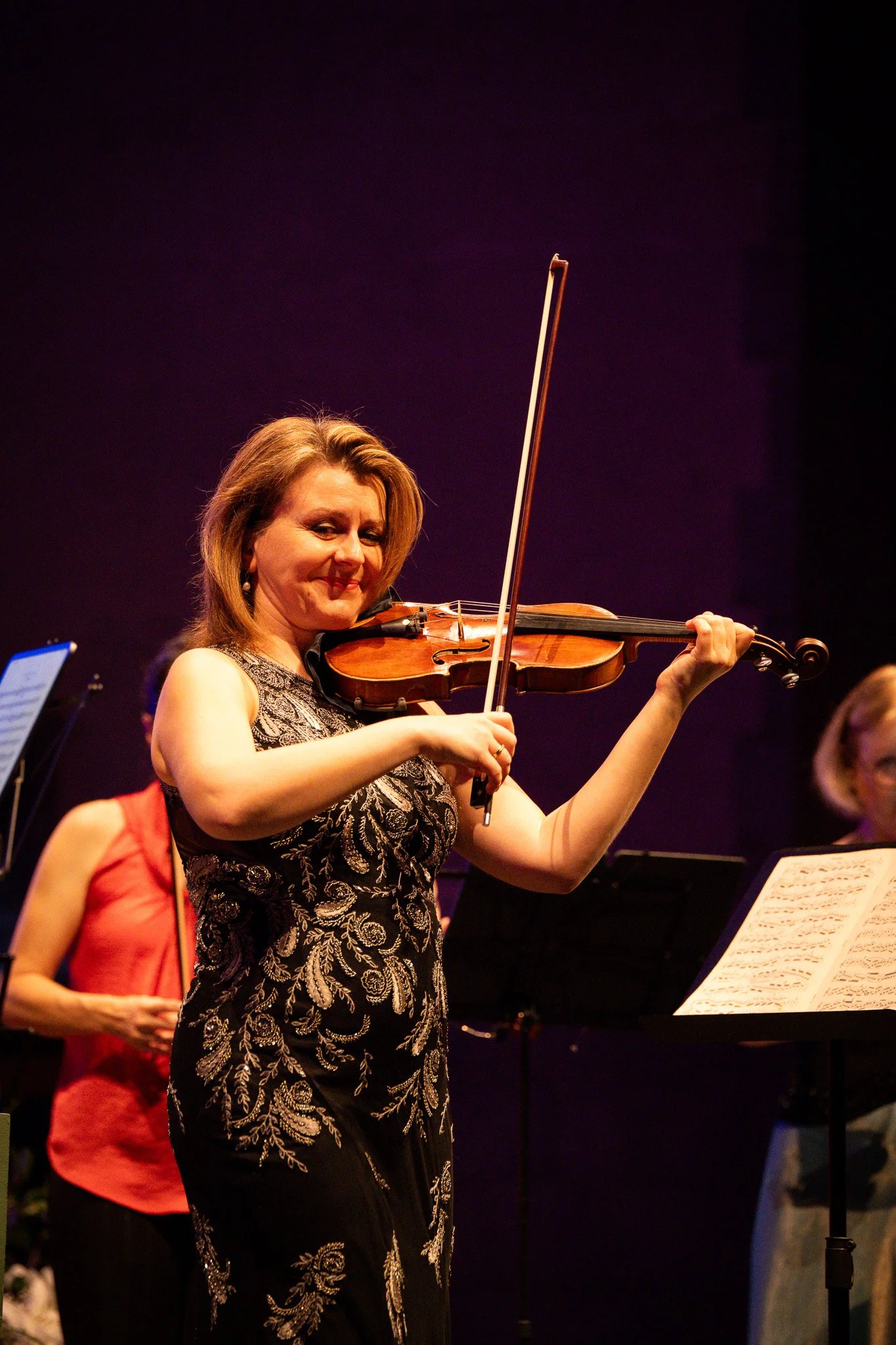
Violinist Natalia Lomeiko in JS Bach’s Concerto for Violin in A minor BWV 1041 in the “Bach by Candlelight” programme
“…a warm, rich violin sound and lyrical playing.”
Photo credit: Melissa Banks
Lomeiko’s warm, rich violin sound and lyrical playing enhanced the many ensembles she joined at the Adam, Brahms’ 1st Piano Quartet in G minor with Denk, Ansell and Smith in the “Grand Finale” an outstanding example. Lomeiko seems particularly at home in late-romantic repertoire, as she showed in her well-received solo programme, “Mazurkas & Memories: Natalia’s Choice”, with pianist Sarah Watkins, which opened with Mazurkas by Belgian composer and violin virtuoso Eugène-Auguste Ysaÿe. Her pedagogical strengths and detailed understanding of such matters as phrase shape, emphasis and the composers’ intentions were revealed as well in her well-attended masterclass with three young string players from the Antipodes Quartet.
A frequent visitor to the Adam Festival over the years has been acclaimed Canadian clarinetist James Campbell, who again brought his fine musicianship and collaborative approach to ensembles large and small. A highly experienced chamber musician, Campbell is an old friend of the musicians of the NZSQ, who have visited his annual Festival of the Sound in Ontario many times. Joining other fine wind players at the festival, oboist Robert Orr, van Wyck on French horn and bassoonist Gibson-Cornish, Campbell’s role sometimes included subtle musical leadership. Mozart’s Quintet for Piano and Winds in E flat, K452, with Canterbury-based German pianist Michael Endres, was one of many delights of stylish playing by all five musicians.
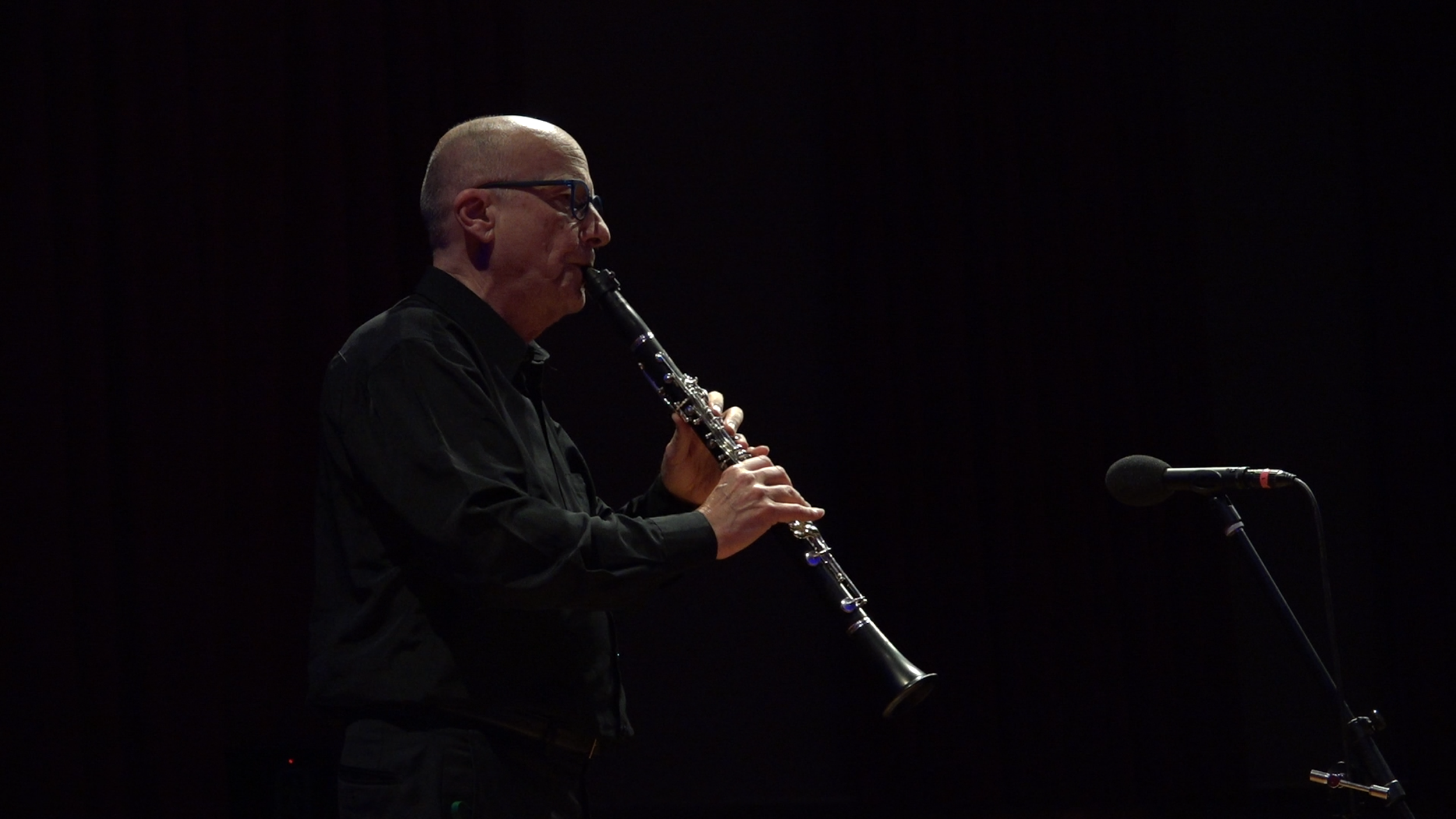
Canadian clarinetist James Campbell
“…fine musicianship and a collaborative approach.”
Image credit: Chris Watson/SOUNZ
New Zealander Gibson-Cornish is a multi-award-winning bassoonist who has had a starry international career since graduating with honours from the Royal College of Music in London. For the past decade he’s been Sydney-based as principal bassoonist of the Sydney Symphony, travelling the world for concerto performances. In the festival’s “Grand Finale” concert, he and Denk joined forces for an awe-inspiring display of both musicianship and virtuosic technical accomplishment in French composer Pierre-Max Dubois’s Sonatine-Tango, a work written as a challenging Conservatoire test piece. “Tango-inspired”, it is both quirky and occasionally humorous, Gibson-Cornish playing with mellifluous beauty and both musicians revelling in its high-speed brilliance.
One of the strengths of this year’s Adam Festival was the happy and sometimes playful camaraderie amongst the musicians and the way this was reflected in performances. Trips to the beach and lakes, winery visits and concerts out of town enabled musicians as well as audiences to enjoy the summer pleasures of the Nelson region. For those who’d travelled from the wintry northern hemisphere, it must have been an especial delight.
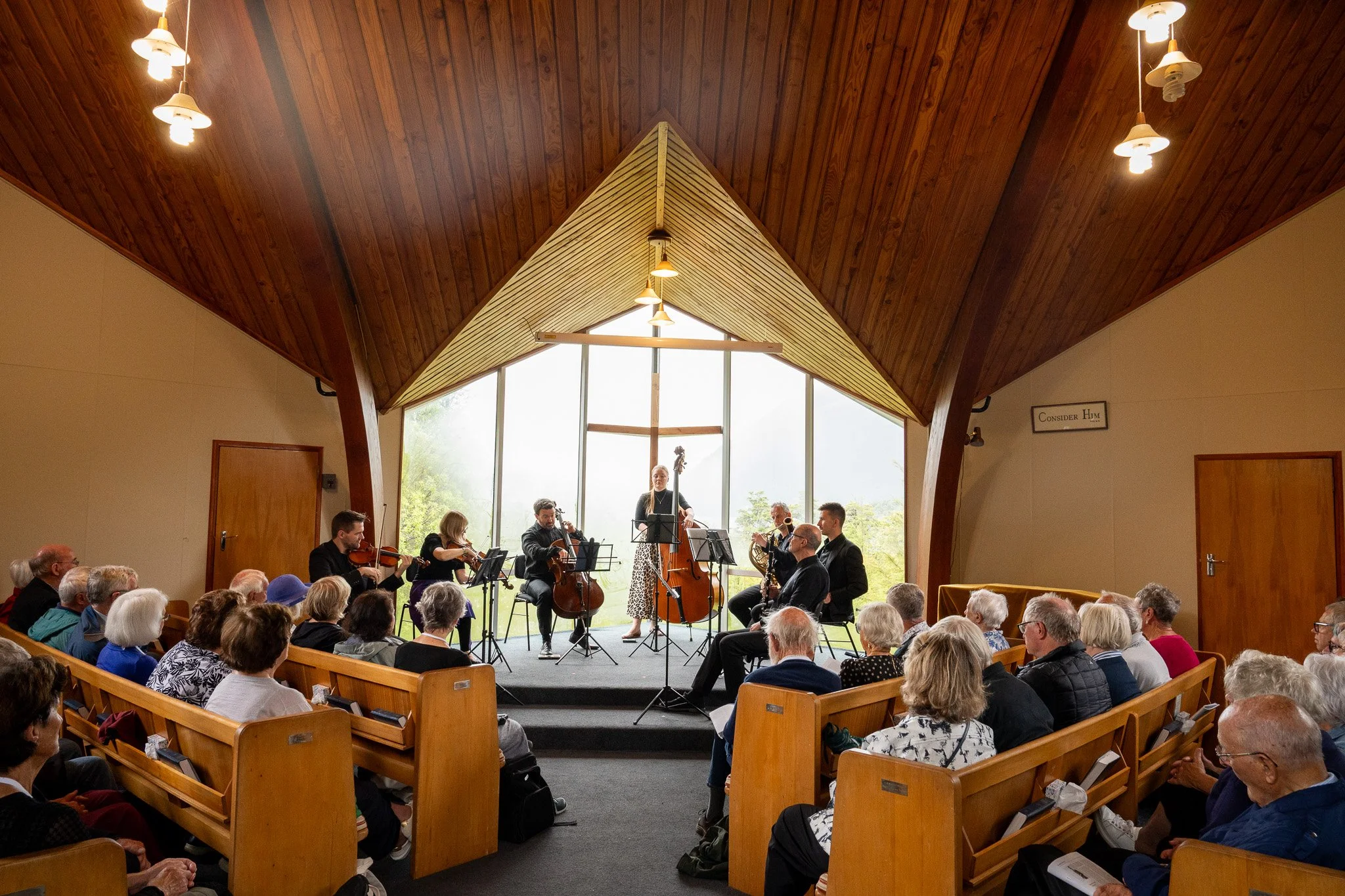
Beethoven by the Lake
Beethoven’s Septet in E flat major Op. 20, played by (from left) Peter Clark (violin), Gillian Ansell (viola), Martin Smith (cello), Phoebe Russell (double bass), Shadley van Wyck (French horn), Todd Gibson-Cornish (bassoon) and James Campbell (clarinet).
Image credit: Melissa Banks
Bassist Phoebe Russell is a musician who clearly loves working and playing with colleagues – an essential characteristic of a bass player, no doubt - and who participated energetically in all aspects of the Festival. (You can read my profile of Phoebe here.) Her sense of fun combined with her outstanding skills in musical collaboration meant every chamber performance she was part of had an extra quality of ensemble ‘togetherness’.
In a popular concert called “Beethoven in the Afternoon”, Russell played Rossini’s Duet in D major for cello and double bass with Smith, a delightful, singing performance notable for its rapport, wit and virtuosity. They were then joined by five other musicians for Beethoven’s Septet in E flat major Op. 20, all seven musicians (four strings, three winds) leaning into the master’s cheerful, light-hearted masterpiece with musical generosity.
In recent Adam Festivals, the presence of a singer has broadened the repertoire. This year Canadian tenor Colin Ainsworth joined the line-up of international stars, his beautiful, clear high voice and versatility featuring in a wide historical range of repertoire, from Bach cantatas through a memorably gorgeous performance of Schubert’s Die schöne Mullerin with Denk at the piano to the world premiere of an entertaining New Zealand work.
One of many highlights was Ainsworth’s performance of Vaughan Williams’ song cycle, On Wenlock Edge, settings of six poems from the collection A Shropshire Lad by English poet A.E. Housman. The original version of this cycle was premiered in 1909, for tenor, string quartet and piano and it was this we heard, Ainsworth accompanied by a sensitive ensemble of the NZ String Quartet and pianist Endres.
Vaughan Williams’ writing is very dramatic, and Ainsworth’s singing, revealing his operatic experience, was consistently lovely and emotion-laden, using a range of expressive colours as the poems traversed themes of love, loss and the beauties of the countryside. The composer’s word-painting, underlining the atmospheres of Housman’s affecting poetry, was beautifully portrayed by the accompanying quintet.
New Zealand music and musicians at the Adam
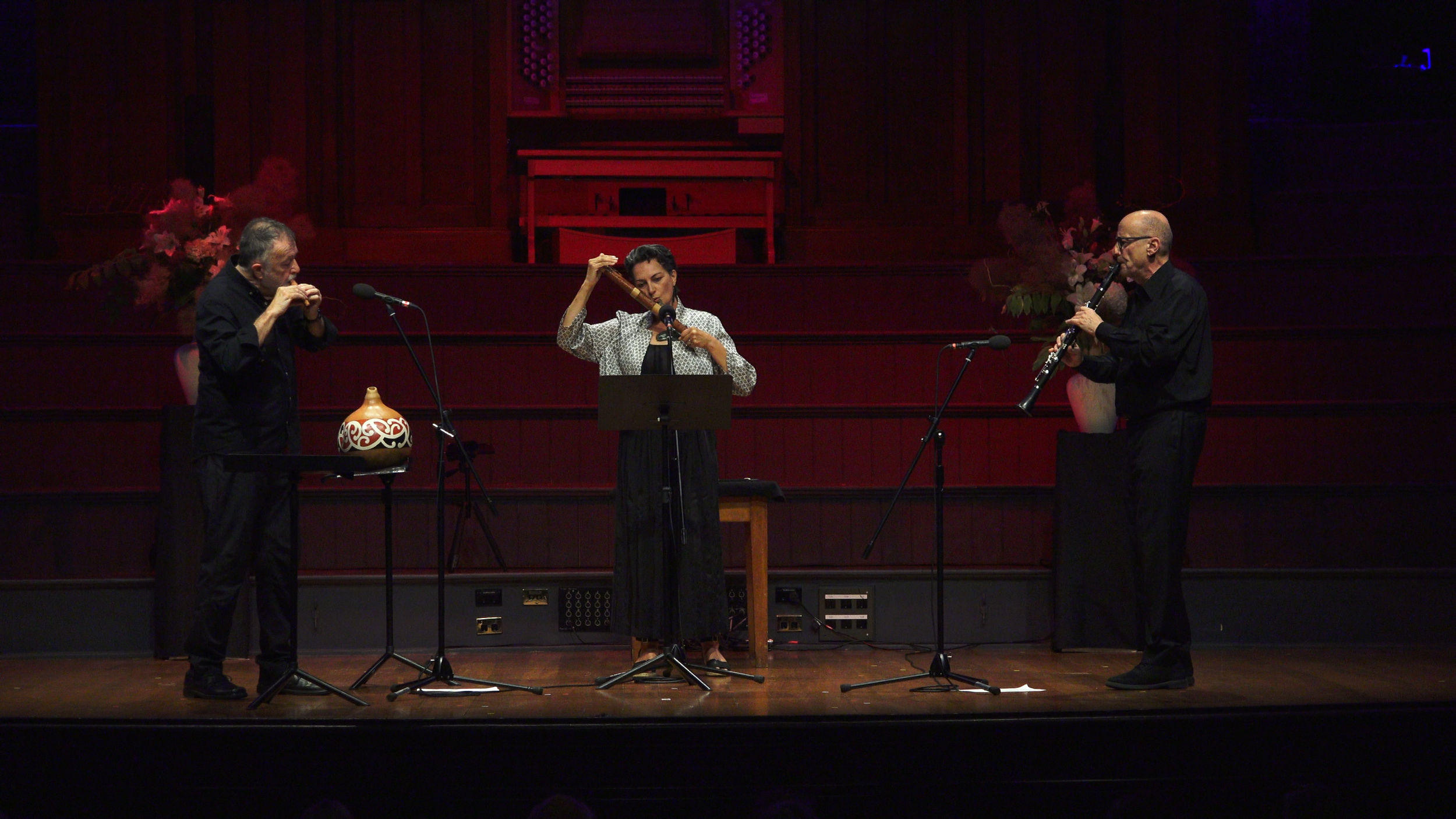
Waitangi Day at the Adam Festival
Bob Bickerton (left) and Ariana Tikao (taonga pūoro) with James Campbell (clarinet)
“…gathering and weaving our cultural threads together.”
Image credit: Chris Watson/SOUNZ
Over the decades of its existence, the Adam Festival has developed a strong reputation for presentation of music by New Zealand composers. This year was perhaps not the most robust representation of Aotearoa’s creative work at the event; I counted 14 works, seven of these on Waitangi Day (a public holiday in Aotearoa commemorating the signing of Te Tiriti o Waitangi – the Treaty of Waitangi). The presence of composer-pianist Liam Furey as “Emerging Composer-in-Residence” and Salina Fisher, composer of three programmed works, enabled the audience to meet and hear from these artists before performances.
The evening concert on Waitangi Day opened with a very successful improvisatory performance by Ariana Tikao, singer and taonga pūoro specialist, with her colleague Bob Bickerton on taonga pūoro and clarinetist Campbell. Tikao introduced this performance with a powerful message about the cultural threads Aotearoa needs to gather and weave together, demonstrated beautifully in music by a Māori, a Pākeha and an overseas visitor, a musical offering clearly much appreciated by the audience.
Fisher is one of the strongest and most internationally successful New Zealand composers of her generation, and as well as the Jupiter Quartet’s performance of Heal, we heard her string trio Mata-Au, played by members of the Antipodes Quartet, and a subtle and thoughtful performance of her Mono no aware (物の哀れ) by Smith and Furey, both works influenced by her Japanese heritage, and introduced with quiet eloquence by the composer.
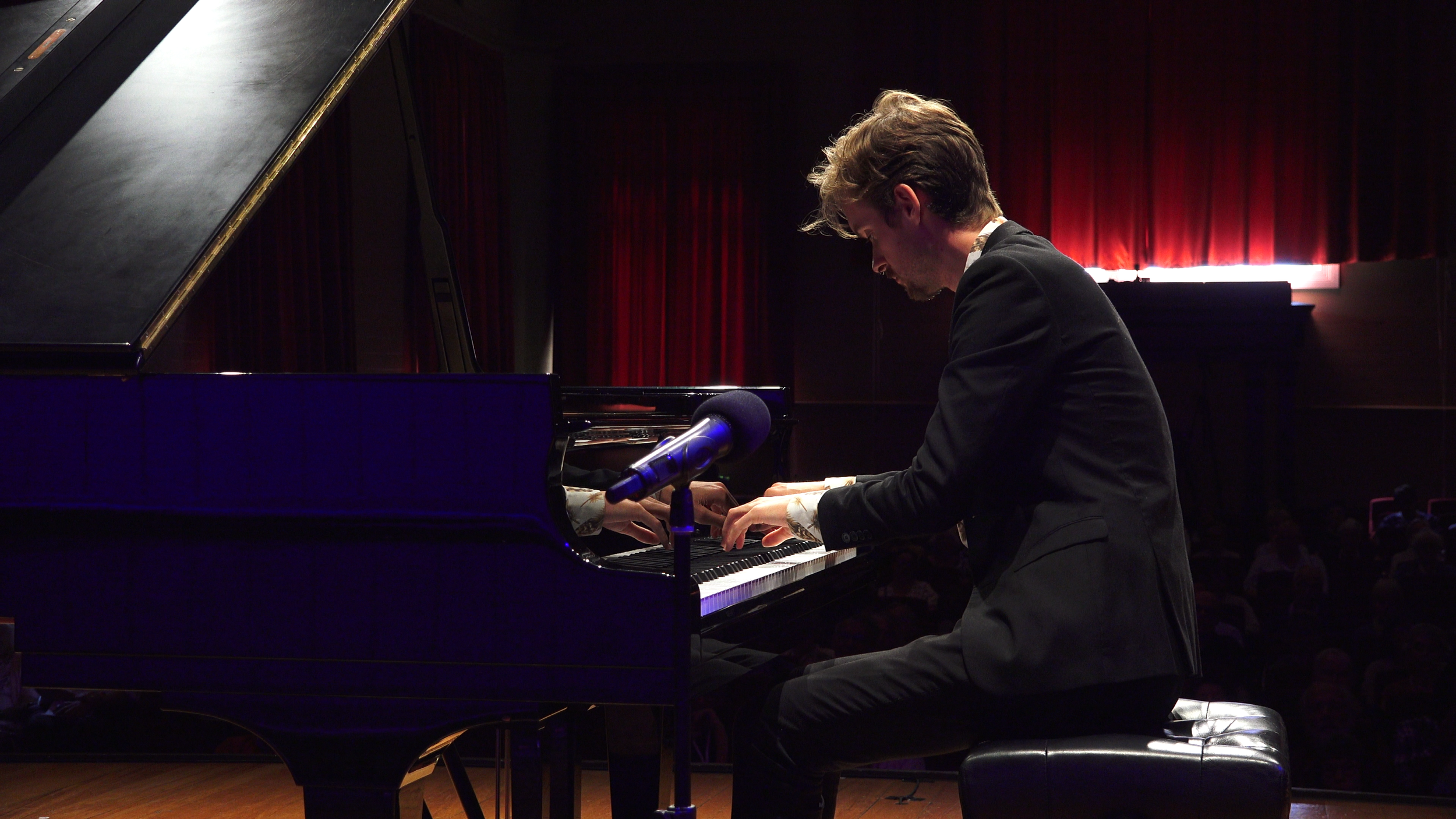
Pianist and composer Liam Furey
“his waggish …limbic evolution…for string quartet and cellulare obbligato was premiered at the Festival.”
Image credit: Chris Watson/SOUNZ
Furey had a good profile at the Festival, enhanced by his abilities at the piano. The premiere of his own waggish …limbic evolution…for string quartet and cellulare obbligato required “good sportsmanship” from the NZ String Quartet members in a cleverly composed theatrical work that had them dealing with interruptions from audience cell phones, directions to speak and eventually shout excerpts of text, the music proceeding meanwhile through bouncy pizzicato sections, sustained quiet chords, comical flourishes and eventually ending with a staged obligatory selfie with the composer. The work, which retained some notoriety throughout the rest of the festival, probably did more to encourage the audience in cell-phone etiquette than repetitive and eventually tedious pre-concert exhortations.
Furey also had a curatorial role with the “Sounds of Aotearoa” concert on Waitangi Day, which opened with two of his works, the experimental Disturbance 1:Macro 1 (Wave) for solo viola, played by Tai Amoore, and the birdsong-infused The Birds are Joyous; for it is Morning for piano, played by the composer. He linked the latter in a nice bracket to two more attractive birdy works for solo piano, Night Cries in the Mountains by his former teacher, the late Gillian Bibby, and Arapātiki by Gillian Whitehead, the most arresting of the three with its evocative effects and cascading gestures.
New Zealand composer Ross Harris responded to Ansell’s request for arrangements of some of the klezmer works he plays with his group The Kugels, and his Klezmer Tunes was given a lively outing by the NZSQ in this programme, with speedy klezmer exuberance, bittersweet Jewish melodies and frenetic pizzicato.
The comedic highlight of the Festival was the world premiere of composer Janet Jennings’ monodrama The Auctioneer, commissioned for the event. A hilarious work, it was written with the theatrical talents of Ainsworth in mind. Accompanied by the NZSQ, the tenor approached the stage down the aisle, greeting audience members en route, before introducing himself as “Melvin from Quick Step Real Estate”. Jennings wrote the libretto, laden with real estate cliché, at first about Melvin’s dreams – “a home for discerning buyers”, “resonating with elements of Feng Shui principles”, “sought after suburb”, “black granite benches, chef’s delight”, rising to a climax for “seamless indoor-outdoor floooow!” – which had the audience roaring with delighted recognition. The wit also extended to musical references, hints of other settings of New Zealand poetry and flavours of Baroque aria, scope for Ainsworth to show off his operatic tenor style.
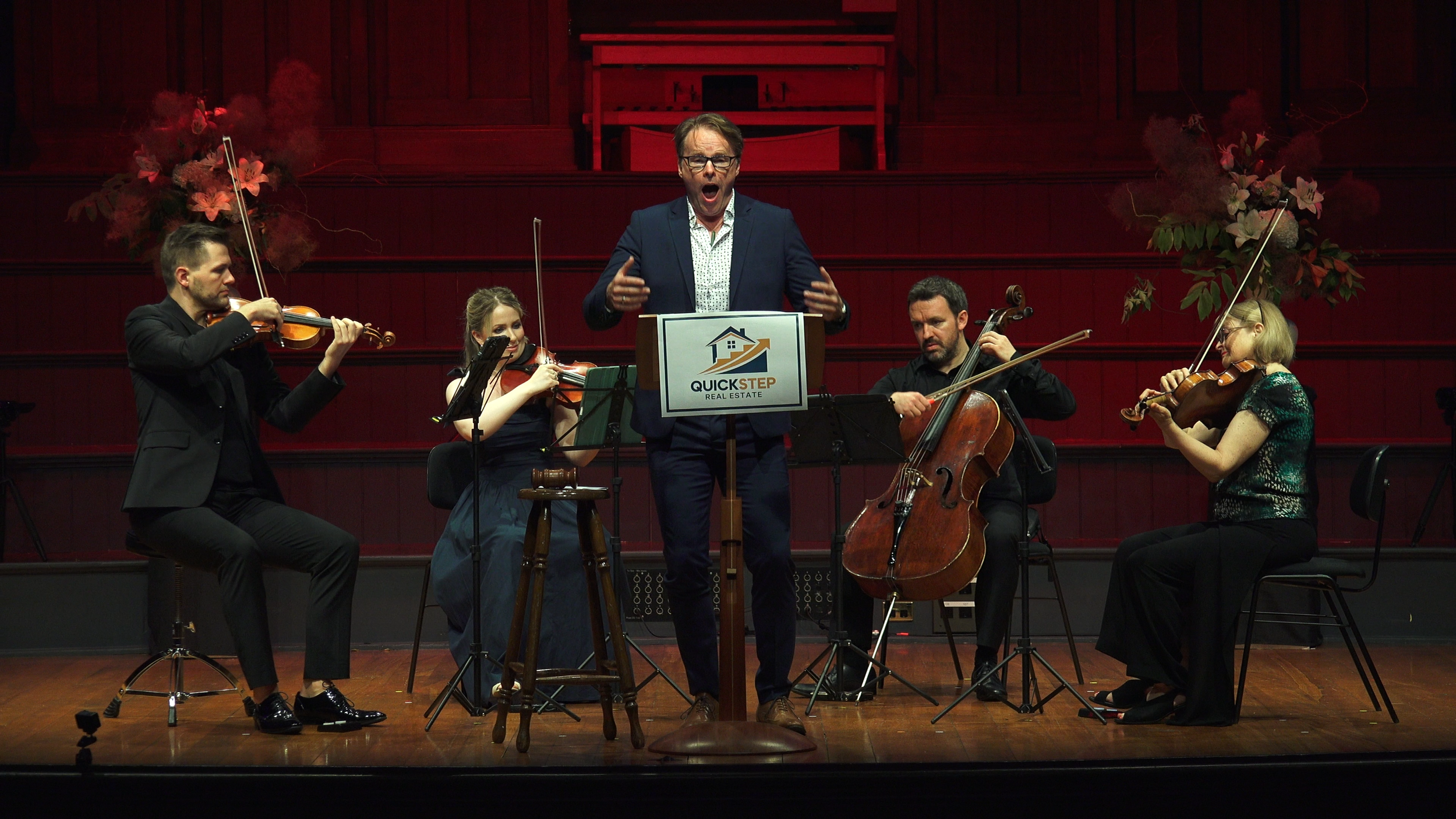
Tenor Colin Ainsworth with the New Zealand String Quartet
“…the premiere of Janet Jennings’ hilarious monodrama The Auctioneer had the audience roaring with delighted recognition.”
Image credit: Chris Watson/SOUNZ
The actual auction turns out to be a mortagee sale of a much less desirable property, with a clever change to a grittier musical feel, and phrases like “full of potential”, and, tellingly, “vendor’s instructions: sell it!”. The Auctioneer was beautifully constructed, with great dramatic timing – ideal festival fare that sold itself.
Behind the scenes
The 2026 Adam Festival was a happy event with outstanding artistic standards and unfailing care and respect shown to performers and audiences. Congratulations to Manager Sophie Kelly and her team, who ensured the delivery of the large and complex event was smooth and professional. The Nelson Centre of Musical Arts, its fine auditorium complemented by an attractive foyer, fine backstage facilities, a large function room and technical and recording facilities, proved again to be an ideal venue for the Adam Festival. A highly professional stage management crew (complete with white gloves) did a superb and unobtrusive job in the face of constant changes of stage arrangements.

Members of the New Zealand and Antipodes String Quartets gather on stage for a selfie at the end of the Festival with international visitors Jeremy Denk, Colin Ainsworth, Todd Gibson-Cornish, Natalia Lomeiko and Phoebe Russell.
“…a happy event with outstanding artistic standards.”
Photo credit: Arna Morton
Sadly, budget restrictions meant Radio NZ Concert, which has regularly recorded Adam Festival concerts and events and shared these with the on-air audience throughout the two years between festivals, was unable to attend, but Festival management arranged for concert recordings by local expertise and it is hoped RNZ Concert will take advantage of these recordings for high-quality on-air content. SOUNZ Centre for New Zealand Music filmed some of the concerts featuring New Zealand compositions.
The next Adam International Chamber Music Festival in Nelson is scheduled for 3-12 February, 2028. Start planning your participation now!
Adam International Chamber Music Festival, Nelson, 29 January – 7 February, 2026
For more information and to join the Adam Festival mailing list, visit the website.
Read a Five Lines profile of double bassist Phoebe Russell here.