
Album reviews: modernism, minimalism and melancholy
The sound world of the piano
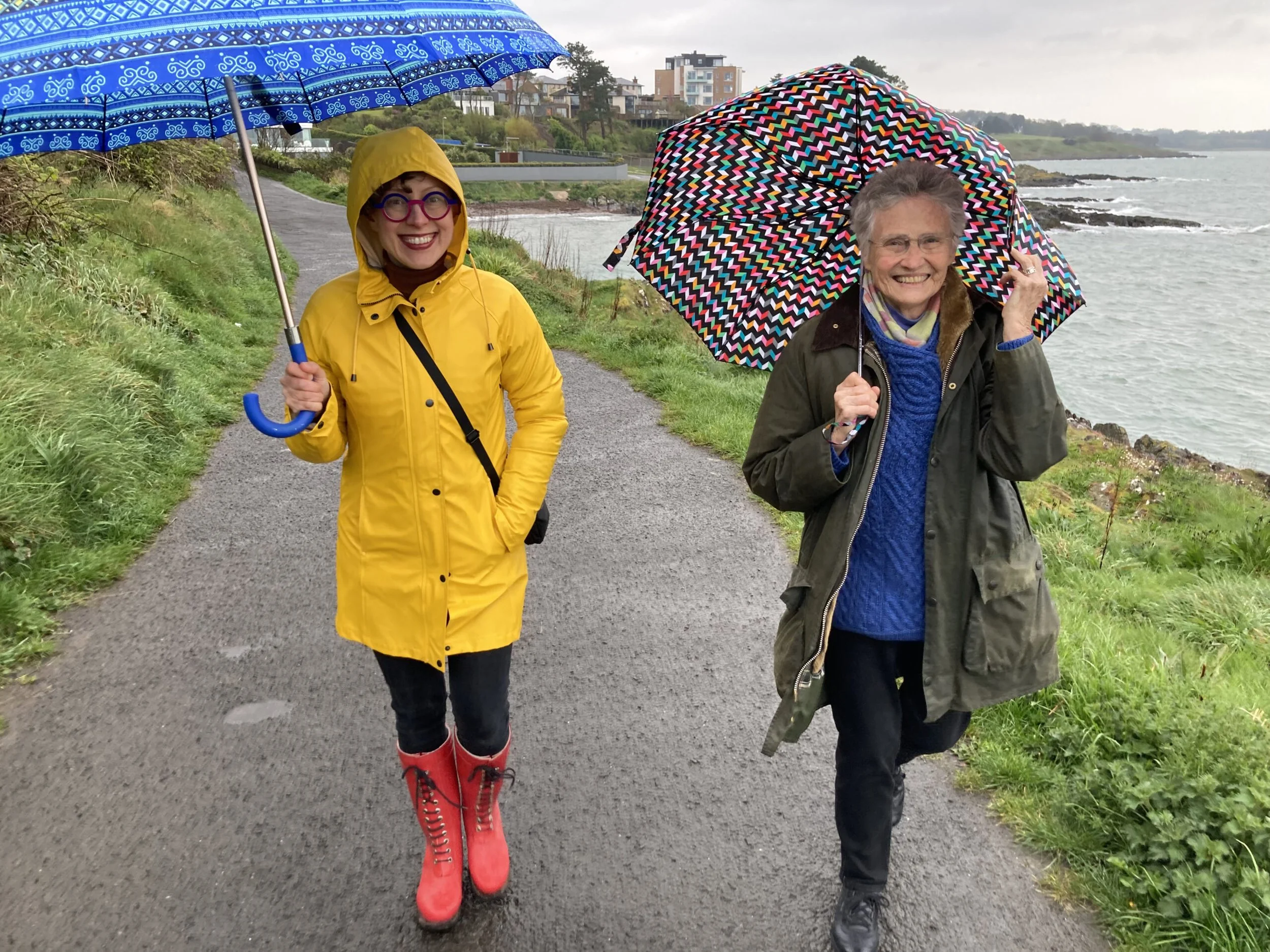
Pianist Xenia Pestova Bennett (left) and composer Annea Lockwood in Ireland - the new album involved close collaboration.
Image credit: Ed Bennett
The notoriety of Annea Lockwood's “Piano Transplants” – Piano Burning, Piano Garden and Piano Drowning – may have drawn attention away from her other works for piano. This new album of four of Lockwood’s compositions, recreated by expatriate New Zealand pianist Xenia Pestova Bennett, was recorded in Ireland in close collaboration with the now 86-year-old composer, whose innovative spirit is as lively as ever.
Ear-walking Woman was composed in 1996, commissioned by pianist Lois Svard. Like the other works on the album, it is uncompromisingly experimental, the pianist using ‘found’ materials and voice with piano sound, playing both inside the piano and from the keyboard. The sonic world is resonant and atmospheric. We’re travelling amongst fascinating timbres and effects, big singing gongs with gamelan colours, or deep grandeur from the low register of the grand piano. Pianist and composer are exploring together and the listener needs to “ear-walk” with them on this slow journey – you’ll need to stop and admire the sonic vistas.
Red Mesa, written in 1989 for pianist Max Lifchitz, evokes a real landscape, flat-topped mesa in the desert country of the American Southwest. This static music of repeated or sustained sounds reflects the flatness of the landscape, with sudden and appealing little flourishes, circling and oscillating figures that vary the pace. Pestova Bennett’s care with sonority and her flexible approach combine with the rippling technique required.
New Zealand pianist Emma Sayers played Red Mesa in the first Aotearoa Composing Women’s Festival in 1993, and I remember the audience’s rapt attention through to the final sequence of quiet, closely voiced chords. The measured sound exploration of Lockwood’s thoughtful, contemplative music is something of an antidote to our 21st century desire for speedy action.
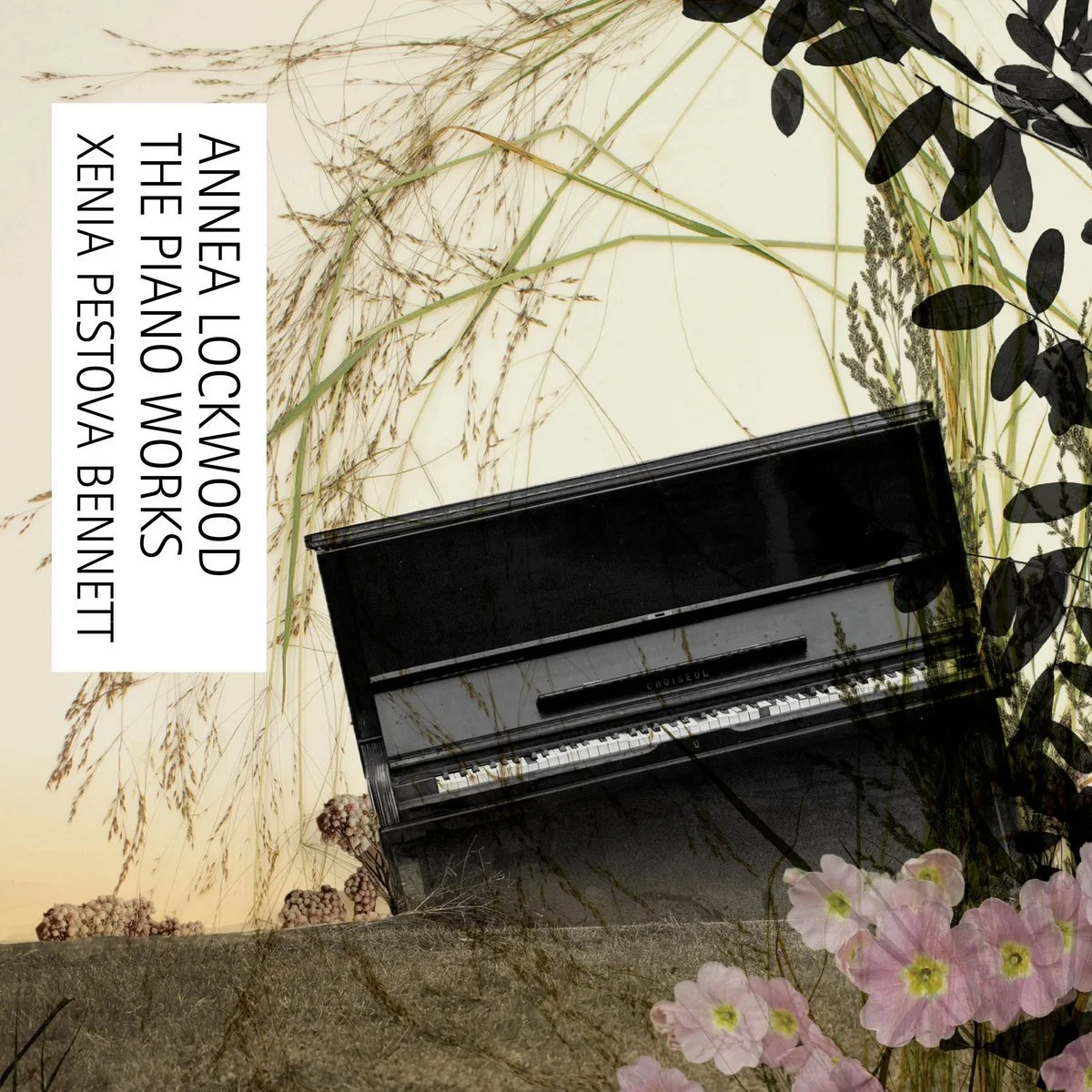
A new album of Annea Lockwood’s works for piano
“…pianist Xenia Pestova Bennett’s care with sonority and flexible approach.”
The shortest work on the album is RCSC (2001), commissioned by pianist Sarah Cahill as one of a set of seven pieces by women honouring American composer Ruth Crawford Seeger. As elsewhere on the album, I was struck by the fine recording work by Craig Jackson of the Sonic Arts Research Centre at Queen’s University in Belfast, the complex piano sounds clear and up close. This impactful short work is less meditative, more agitated – and over quickly.
The album ends with Ceci n’est pas un piano, commissioned in 2002 by pianist Jennifer Hymer and here using Pestova Bennett’s voice. Lockwood refers to the pianist’s generosity in performance, speaking about her hands, her parents’ hands and the pianos she has played, owned and loved, and merging those words with the sounds of the instrument. “My hands are working hands…I’ve been practising, the hands are ready and capable.”
As listeners we’re told a story, accompanied by dramatic exploration of piano sounds, which sometimes threaten to submerge the voice. It’s engaging and communicative and a fitting end to an album based marvellously on what Lockwood calls “the inexhaustible sound world of the piano.”
ANNEA LOCKWOOD The Piano Works Xenia Pestova Bennett (piano) (Unsounds)
Loops, delays and patterns
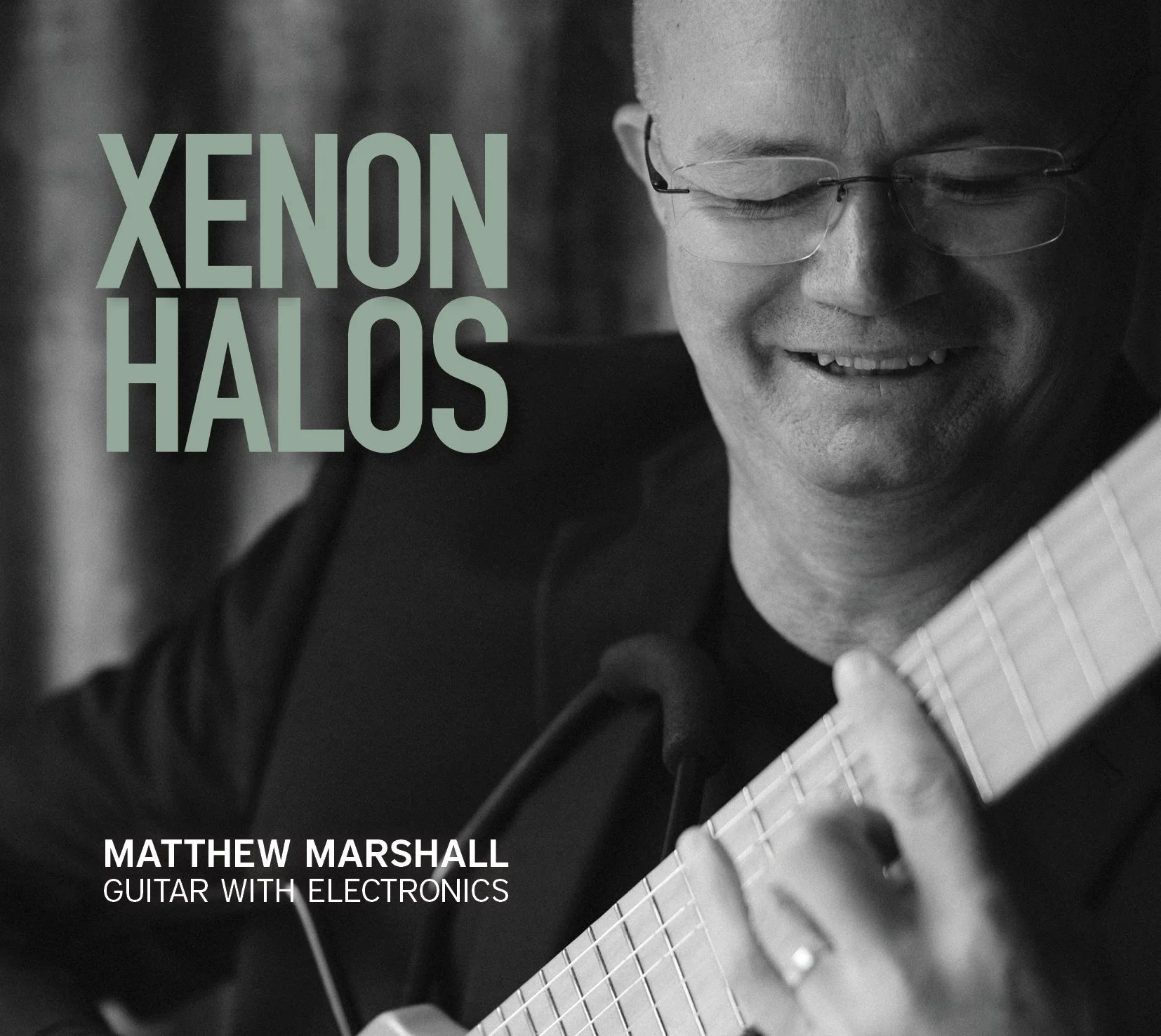
XENON HALOS is a recent album from New Zealand classical guitarist Matthew Marshall
“…exploring new music for guitar using electronic transformations.”
The title track of New Zealand classical guitarist Matthew Marshall’s new album refers to a visual phenomenon, the repetitive image of “halos” around streetlights on a misty night as they stretch away to a vanishing point. Xenon Halos by Australian composer Shaun Rigney was composed especially for Marshall, enhancing the virtuosity of this brilliant guitarist with a looping function, adding multiple layers and providing a nice metaphor for the whole album.
Marshall has set aside his classical guitar for these experimental electronic works, using instead a SoloEtte practice guitar, basically, he says, “a plank of wood” originally designed for silent rehearsal. It can also, like an electric guitar, be plugged into an amplifier and the works on the album represent music he has been exploring on the SoloEtte for the past two decades from composers around the world.
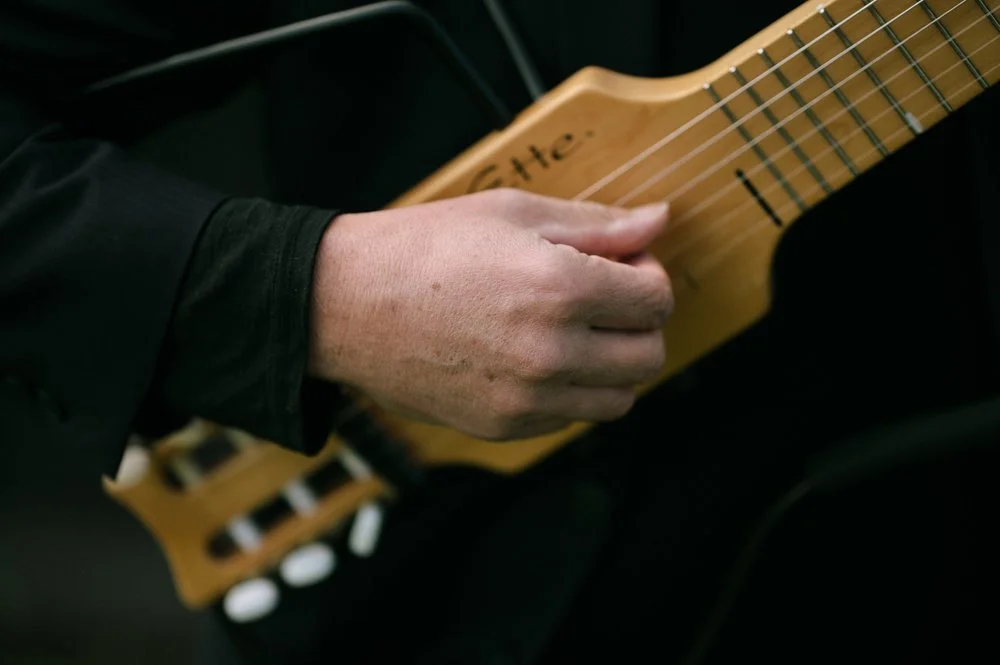
Marshall is using an amplified SoloEtte for these works
“…the resonant timbres from this ‘plank of wood’ are remarkably attractive.”
The album is a deep dive into musical patterns, created first by guitar and electronically developed by delays, loops and multi-tracking. Like Xenon Halos, much of the music is minimalist, with subtle changes through electronically assisted repetition. The resonant timbres from the “plank” are remarkably attractive, with cascades of arpeggios, as in Cinderella by Alexey Arkhipovsky or the improvisatory, flexible and eventually rapid virtuosity of Soepa by Ingram Marshall. “Soepa” is the Tibetan word for “patience” and indeed, if you’re patient, you’ll hear a lot going on in the seductive unfolding of all these works.
The final track, Truman Sleeps, is Marshall’s own arrangement, in four multi-tracked parts, of music by Philip Glass, written by this doyen of minimalism for the 1998 film The Truman Show. The track was recorded live at a concert at Dartington College of Arts in England to celebrate Glass’s 70th birthday in 2007 and shows off, as does the whole album, Marshall’s dazzling and seemingly effortless guitar skills, here in singing melodic fragments above a chordal accompaniment.
XENON HALOS Matthew Marshall Guitar with electronics (Hatchett Music Ltd)
Three string quartets over four decades
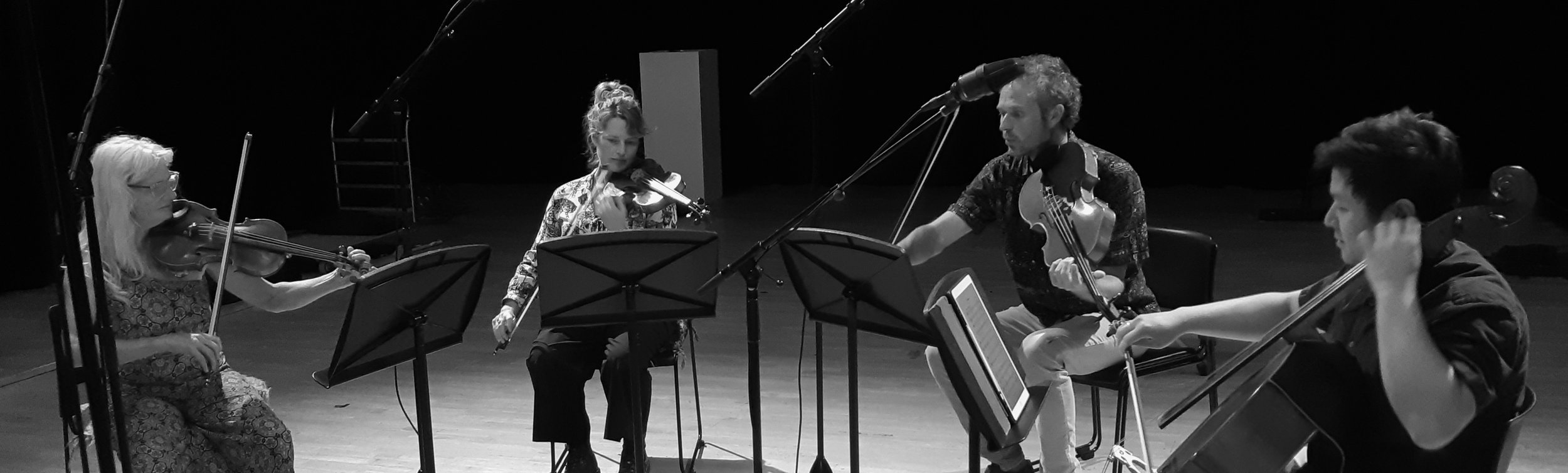
The Jade String Quartet in rehearsal
Composer Anthony Ritchie wrote his three string quartets at 20-year intervals, the first in 1983, the most recent in 2023. As composers have done over the centuries, he uses the intimacy of the quartet to express inner feelings and moods. The three compositions also reveal changes in his musical language over time, reflecting both different influences and stylistic shifts in the “classical” canon over those four decades.
In this new album from Rattle, “Melencolia”, the Jade Quartet offers fine performances of the three works, demonstrating a sympathetic understanding of Ritchie’s intentions. The third quartet, with the enigmatic title, ‘In Time’, was composed especially for the Jade musicians.
String Quartet No.1 (1983) is atonal in its language and has an unusual structure and approach. Four of its seven movements feature solo instruments with the rest of the ensemble in accompaniment, the fifth movement also focusing on duet pairings and the final seventh picking up passages from earlier movements and providing expressive solos for all four string players.
Ritchie wrote this work while studying at the Liszt Academy in Budapest, where he completed a doctorate in the music of Bartók. Unsurprisingly, the Bartókian influence is strong, particularly in the second, fourth and sixth movements, which use a full quartet texture, contrapuntal rather than conversational, with sometimes fragmented, quirky rhythms.
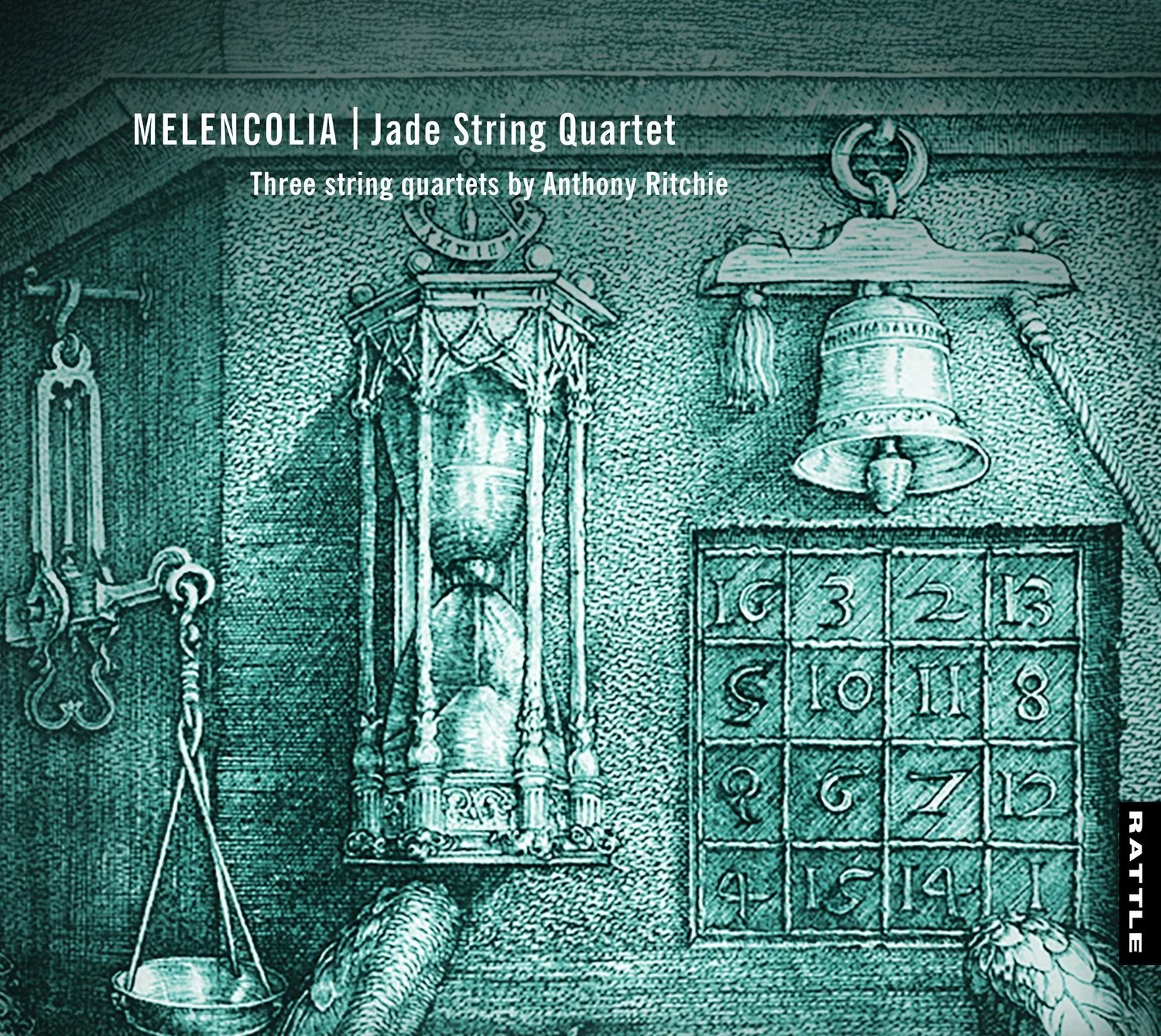
MELENCOLIA from the Jade String Quartet
“…Anthony Ritchie’s String Quartet No.2 uses ideas and motifs derived from the “magic square” featured in Albrecht Dürer’s woodcut Melencolia (1514).”
Fast forward to 2003 and String Quartet No. 2, a more conventional four-movement structure written for the Nevine Quartet, members of the NZSO. Ideas and motifs, the composer tells us, are derived from a “magic square”, specifically the one featured in renaissance artist Albrecht Dürer’s woodcut Melencolia (1514). Ritchie explains that he is exploring aspects of human personality, particularly the state known as “manic depression”.
The first movement really dances, but this energetic, jazzy music is more gritty than happy, with a yearning melody above the texture. The second movement may be my favourite track of the album. Called ‘Like a Lullaby’, its expressive and melancholy atonal fragments produce a quasi-tonal texture, four instruments in conversation with a lovely viola solo answered by sobbing violin.
The third movement is uncomfortable and troubled, with insistent dissonant little rhythmic effects, and the fourth, ‘Misterioso’, continues to explore atonality and dissonance, moving from its mysterious beginning to a kind of danse macabre – or perhaps danse mélancolique?
The five-movement String Quartet No.3 “In Time” (2023) is the most approachable of the three, composed in what the sleeve notes refer to as Ritchie’s more recent “naïve” style. The composer’s fondness for dances is there in the first and last movements, the second exploring melodic counterpoint over the “heartbeat” that gives the movement its name, and the fourth a moving, intimate and somehow personal funeral march.
The central 3rd movement is called Perpetual Motion but is no moto perpetuo, rather a thoughtful, meditative swinging pendulum. Kudos to the Jade Quartet who move with ease through the stylistic development of these very different works, always finding the expressive essence in this substantial collection of Ritchie’s chamber music.
MELENCOLIA: Three string quartets by Anthony Ritchie performed by the Jade String Quartet (Rattle)