
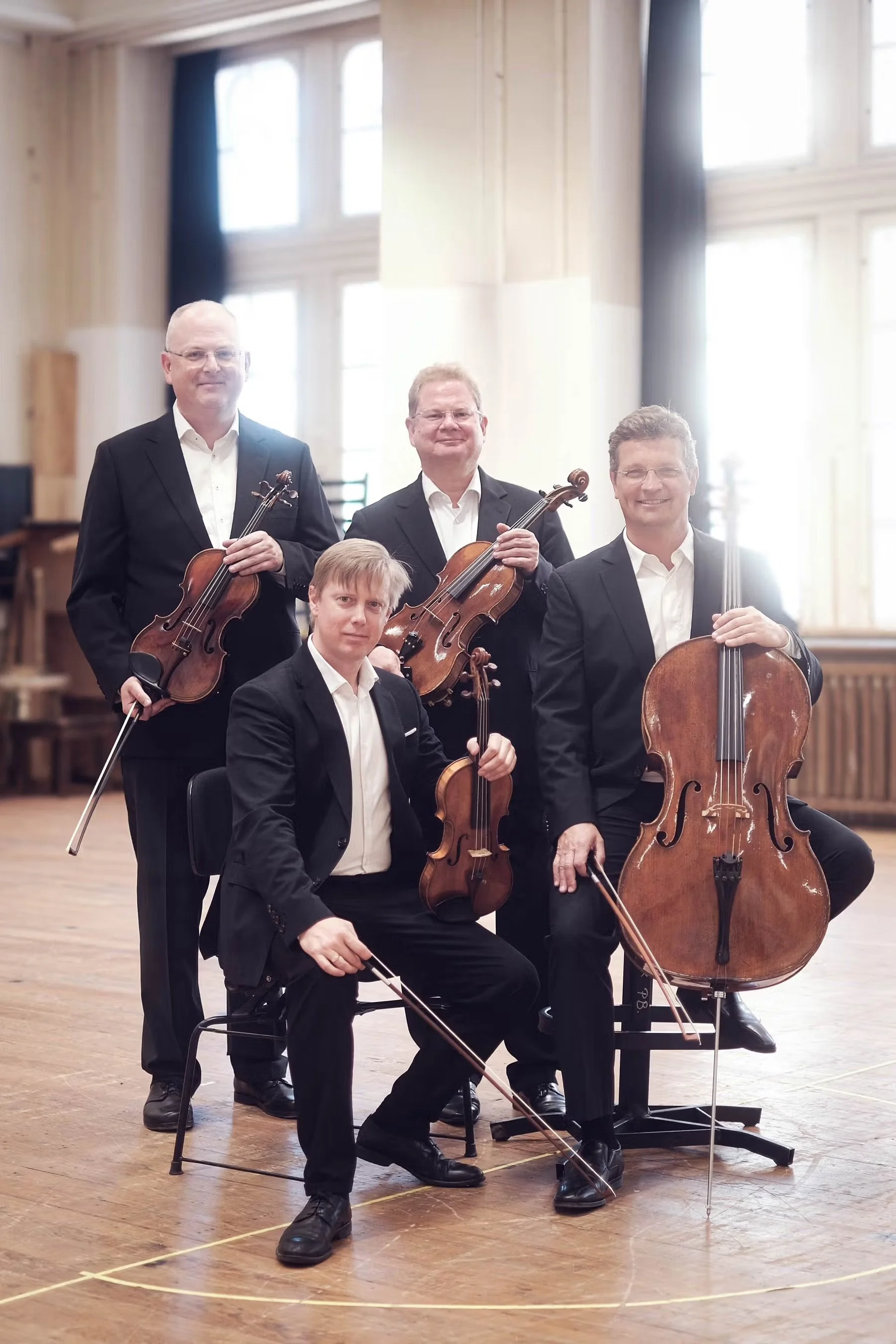
The Phileo Quartet, four musicians from Vienna, toured for Chamber Music New Zealand
Image credit: Chamber Music New Zealand
From the first moments of the recent concert by the Phileo Quartet one was struck by their very sweet sound, their beautiful intonation, impeccable ensemble work and the unified homogeneity of the playing of these fine musicians from Vienna. First violinist Benjamin Morrison is a New Zealander and he has brought some of his Vienna Philharmonic colleagues – Holger Groh (violin) Robert Bauerstatter (viola) and Wolfgang Härtel (cello) – to tour his home country as the Phileo Quartet.
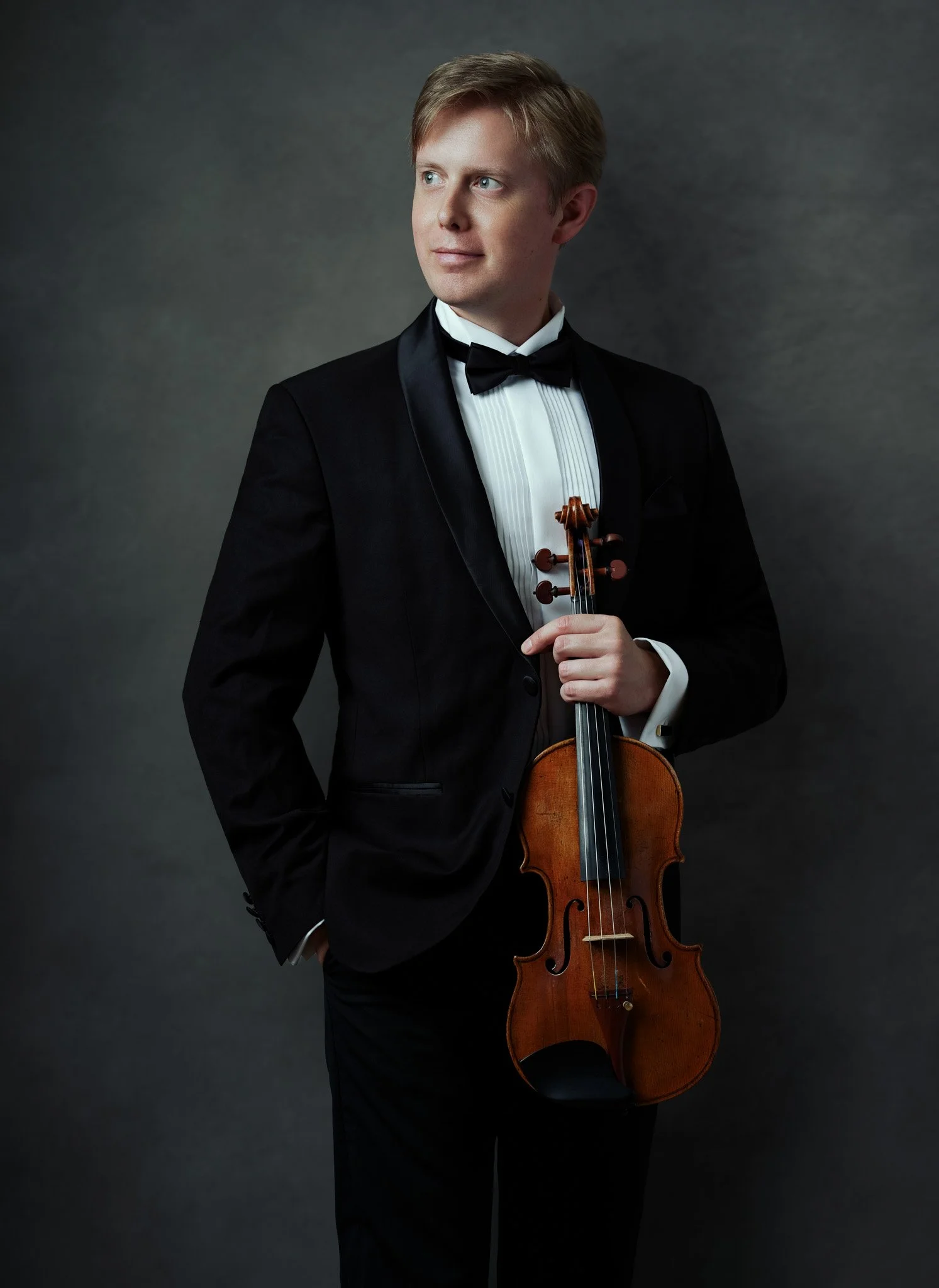
New Zealand violinist Benjamin Morrison
“…has brought some of his Vienna Philharmonic colleagues to tour his home country as the Phileo Quartet.”
Image credit: Michael Schnabl
The audience in the Michel Fowler Centre in Wellington was in a mood to be delighted by the concert. The Phileo Quartet’s July programme, part of a tour of seven cities, was the first actual chamber music they had heard in Chamber Music New Zealand’s annual main series in 2026. CMNZ had promised they would experience “the unique sound, style and traditions of the Vienna Philharmonic”, an odd assurance, perhaps, about that epitome of chamber music, a string quartet.
The evening began with Hugo Wolf's Italian Serenade in G major, a beguilingly light short work. Wolf's tempo marking of “Sehr lebhaft” ("very lively") suggests both a rapid tempo and the work's buoyant character, and the musicians took it at a fast clip. Wolf composed the work in just a few days and this performance was similarly tossed off with ease.
Also immediately apparent was the Phileo Quartet's approach to performance, reflecting a more formal, traditional European approach of allowing the music to speak for itself. There was no obvious sense of reaching out to the audience, not a word was spoken and nor was there any apparent eye contact amongst the four musicians.
They followed the Serenade with Mozart's String Quartet No. 19 in C major, K465, the so-called “Dissonance” Quartet. The first movement begins with an Adagio introduction, with the surprising harmonies responsible for the work's nickname. This was played ultra legato with the sweet, unified sound we heard in the Wolf, the four voices perfectly blended. The Allegro that followed was fleet-footed, played as if the music was second nature to the musicians, the texture integrated and only the MFC acoustic failing to contribute to textural clarity.
The 3rd movement Minuet had a Viennese light touch, tossed off like the Wolf, allowing the music to dance gracefully. I was beginning to find, however, that the Phileo’s interpretation was a little expressionless, their intimate, understated approach perhaps in the wrong hall.
Morrison's lovely singing tone and remarkable facility were apparent in the final Molto Allegro, but these musicians, while offering a unanimous sweet-sounding interpretation, played Mozart’s music with little of the civilised argument that can be one of the pleasures of the string quartet conversation. Ultimately this curiously uninflected playing was less engaging than I expected, the light ease of the performance risking a sense that Mozart’s lovely Quartet was somehow inconsequential.
This impression changed after the interval with Brahms’ String Quartet No. 2 in A minor, Opus. 51 No. 2. This is music of passion and the intensity was there, the musicians seeming more engaged with each other and coming alive in an expressive performance that found Brahms’ depth of feeling while revealing the architecture of the work. With a great range of dynamic contrasts, they also hinted at a charming Viennese flavour.
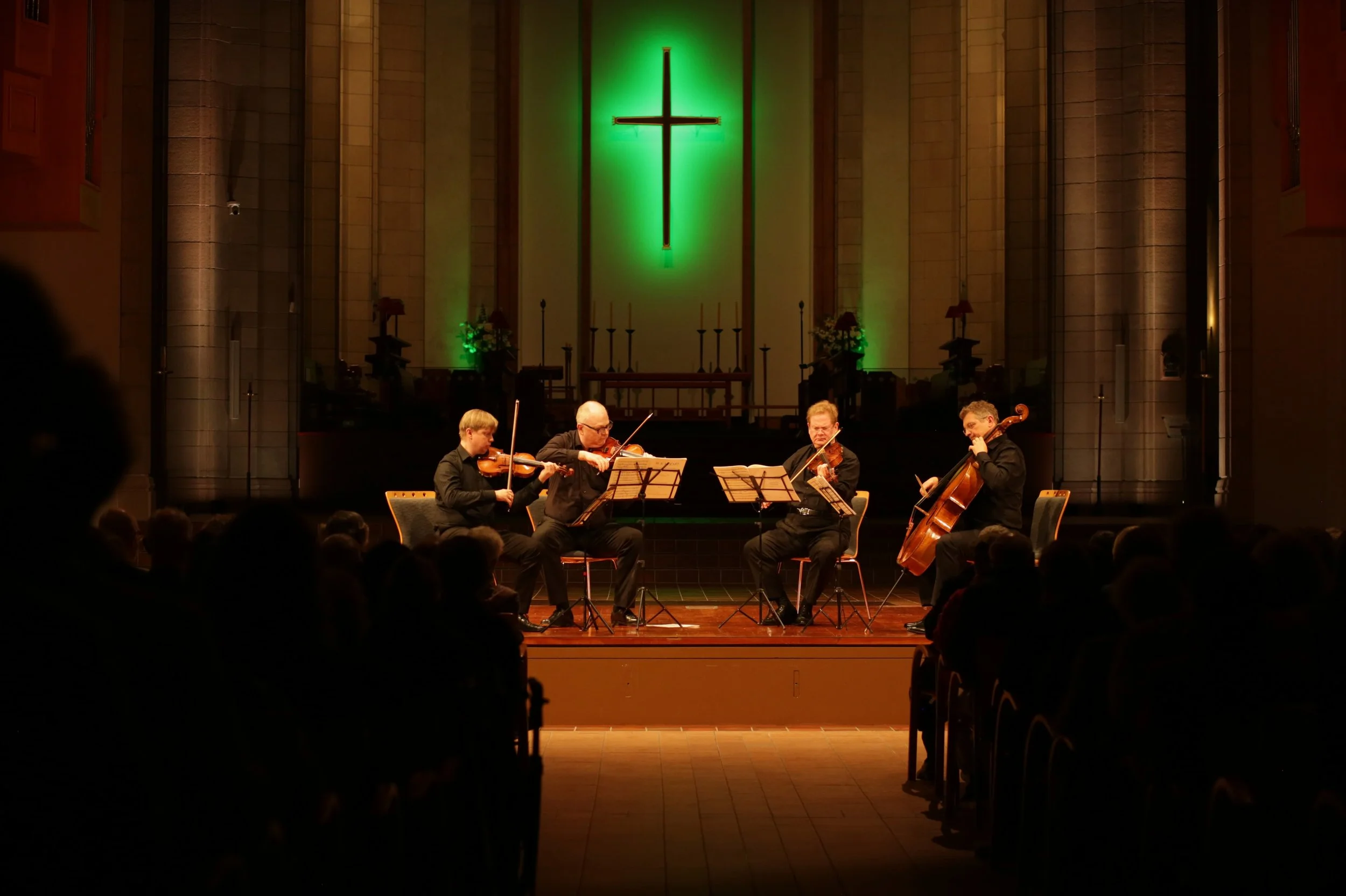
The Phileo Quartet performing in the Holy Trinity Cathedral in Auckland, New Zealand
Image credit: Megan Blackwell
In the second movement, Andante moderato, the Phileo’s playing had a nice romantic flexibility, the singing first violin line conversing with the other musicians. A darker-hued section shares the drama around, players leaning in to cello and violin solos with sensitive rubato. After the quiet, understated “Quasi Minuetto”, the ensemble, led strongly by Morrison, captured the forthright character of Brahms in the final fast movement, galloping to an exciting conclusion with impressive control of dynamics and pace.
The programme ended with Erich Korngold’s String Quartet No 2 in E flat major Opus 26, a striking change of musical style. The Jewish composer Korngold established his career in Vienna before, avoiding Nazism, he headed in the mid-1930’s to the United States and the embrace of Hollywood. This string quartet dates from his Viennese days in 1933, and the Phileo Quartet played the romantic, dancing work with a full tone and easy relaxed approach.
In the Intermezzo second movement the musicians enjoyed the work’s gentle, characterful humour and the Viennese flavour that later worked so well in Korngold’s movie scores. This music requires a lot of flexibility, and in the ethereal, slow 3rd movement with its bluesy harmonies the quartet members made more eye contact than elsewhere as they managed the romantic tunes and varied dynamics.
Korngold greatly admired Johann Strauss 11, and the final Waltz movement is an affectionate homage to Strauss, quoting from the older Viennese composer’s Emperor Waltz, written in 1889 as a “toast to friendship” between the Austrian and German monarchs. The Phileo Quartet captured all its charm and romance, gently taking off the waltz with subtle exaggeration of its tuneful beauties.
It was a great choice to end the concert, and the grateful audience was treated to another stylish and light-hearted sign-off, the Scherzo from Schubert’s 10th String Quartet in E flat major, beautifully played as encore.
The Phileo Quartet was presented by Chamber Music New Zealand in Wellington on Monday 20 July, 2026.