
Wellington Opera’s Manon: a stylish and musical triumph
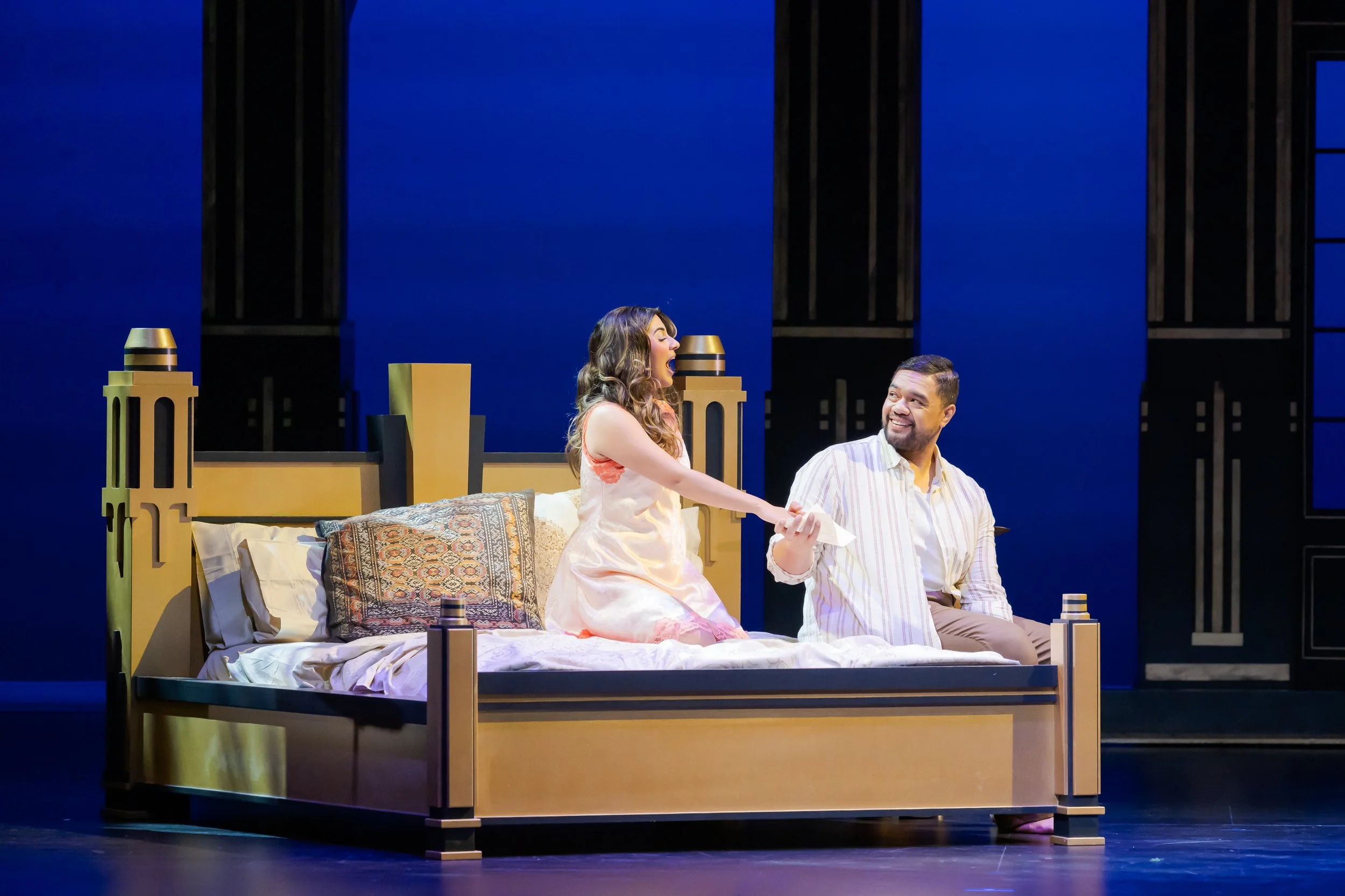
Amina Edris (Manon) and Pene Pati (des Grieux) in Wellington Opera’s production of Massenet’s opera Manon.
Image credit: Stephen A’Court
Many in the packed house at Wellington St James Theatre for the opening night of Wellington Opera’s production of Jules Massenet’s Manon were there to hear tenor Pene Pati in the role of Chevalier des Grieux. Rebecca Tansley’s outstanding documentary Tenor: My Name is Pati captured our hearts with its intimate, feel-good portrait of Pati and his brother Amitai, both famous locally as part of the popular trio Sol3Mio, and audience members had travelled from around the country to experience the magic live.
Act 1, however, reminded us that the opera is named for its heroine Manon Lescaut and that the soprano role, sung by Amina Edris, is the biggest and most important in this lovely French opera. As the overture moves to its conclusion, we first glimpse a young Manon preparing for a journey with her suitcase before disappearing into the wings with a provocative backward glance. Without singing a note, Edris conveyed some of the complexity of her character.
Act 1 moves swiftly to set up the key protagonists and the main elements of the story. Edris portrays Manon here as young, sweet and naïve, excited about her first trip away from home - although her family, worried about her desire for pleasure and wealth, are packing her off to a convent. Her cousin Lescaut (baritone Phillip Rhodes), responsibly meeting her from the train, is both entranced and a little bewildered by her girlish exuberance; the elderly Guillot de Morfontaine (tenor Patrick Power) and his friend de Brétigny (baritone Kieran Rayner) fancy her and want to draw her into their bon vivant circle, while de Grieux (Pene Pati) falls instantly in love with the beautiful girl.
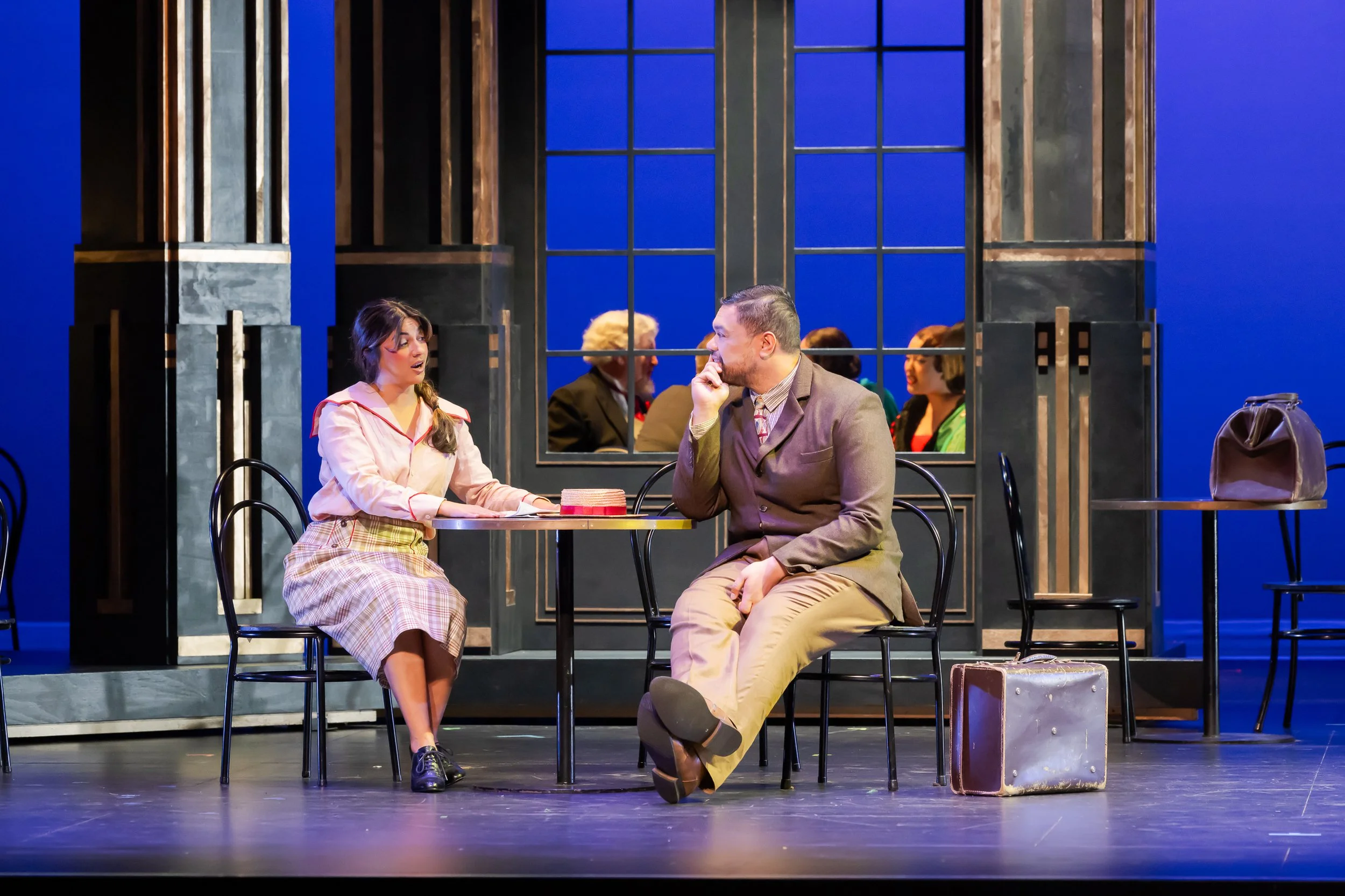
Amina Edris (Manon) and Pene Pati (des Grieux)
“…love at first sight.”
Image credit: Stephen A’ Court
At the centre of all this unaccustomed attention, Manon sings her first lovely aria, "Je suis encore tout étourdie" ("I am still completely dazed"), Edris revealing both the beauty of her lyric soprano voice and the wide-eyed Manon’s conflicting emotions. The first Act ends with the two young lovers giving everyone the slip and running away with charming innocence to that most romantic of cities, Paris.
Massenet wrote Manon in 1884, nine years before Puccini set the same story, based on Abbé Prévost’s original novel, as Manon Lescaut. Puccini’s version may surpass Massenet’s in dramatic timing, emotional directness and the sheer beauty of his melodic approach, but Massenet’s Manon is all French elegance and lyricism, deep emotions aired with Gallic restraint or underlined by the orchestra rather than directly expressed by the singers.
Four years ago I interviewed Pati about the release of his debut Warner album. His lovely aria from Act 2 of Manon, "En fermant les yeux" (“When I close my eyes”), touchingly evoking the couple’s future, features on that album. At the time he told me he was seeking to portray “a different colour of tenor” from one that just wants to sing “very high and very loud”. His singing on the Wellington stage gave the Manon audience what they’d come to hear, a singer with emotional sincerity and beautiful, subtly shaped phrases, the colours in his high tessitura marvellously varied. His gorgeous voice and restrained approach are perfectly pitched for Massenet’s music.

Tenor Pene Pati
“…a different colour of tenor.”
Image credit: Simon Fowler
Around the lovers is a strong cast of principal roles sung by internationally successful New Zealand opera stars. Rhodes as Lescaut is in fine voice and often captures the stage with his compelling presence. Lescaut has a range of responses to his flighty young cousin and her developing love affair, and Rhodes’ rich baritone expresses these conflicts, sometimes disapproving, sometimes faux-sympathetic, in social settings expansive and flirtatious. Another suitor for Manon’s affections, de Brétigny, is played by Rayner with vocal flexibility and theatrical flair. In Act 2, where des Grieux assures Lescaut of his honourable intentions towards Manon while de Brétigny attempts to seduce her with promises of wealth and status, the double duet is well-managed vocally and theatrically.
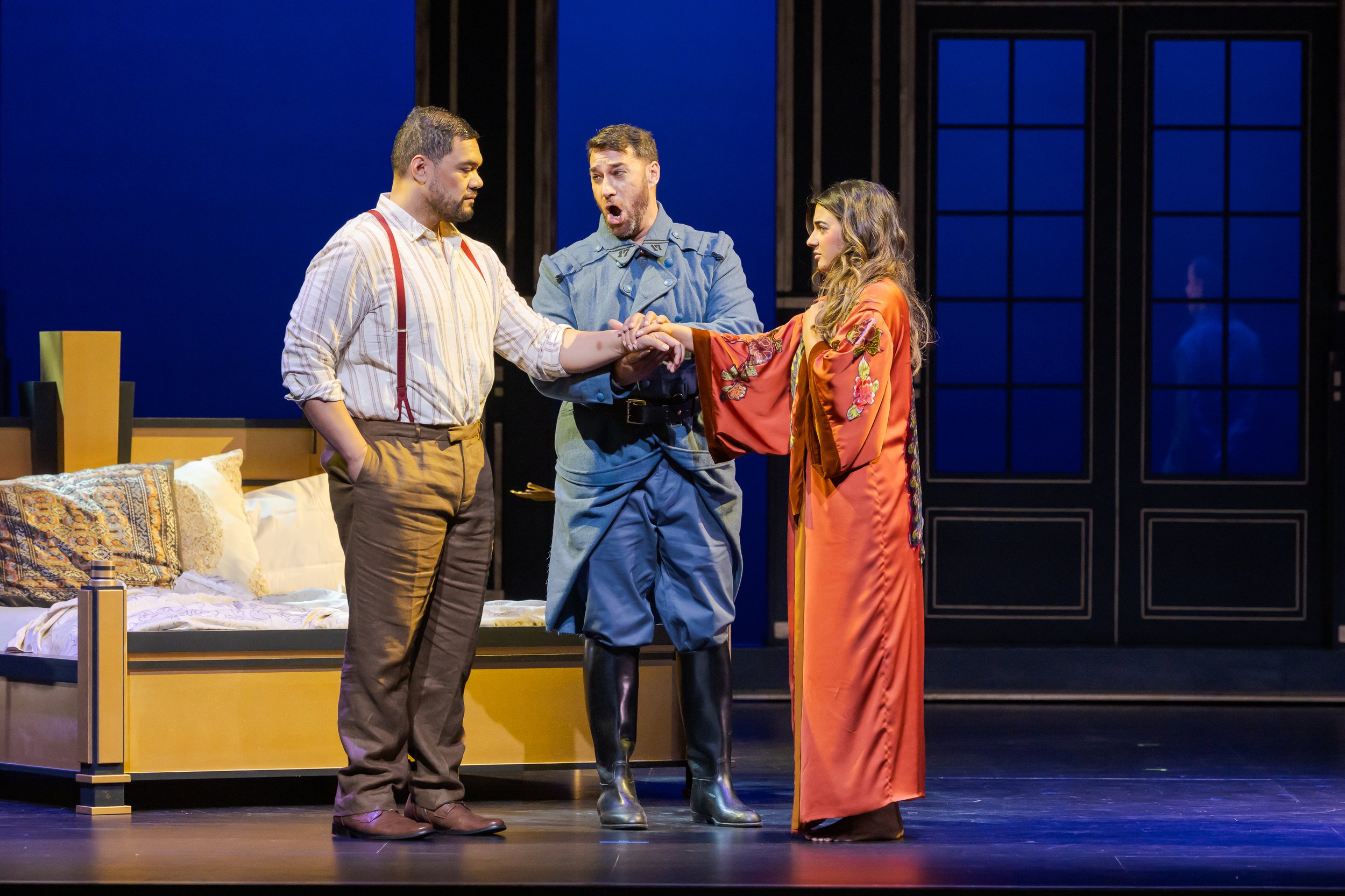
Baritone Phillip Rhodes (Lescaut) with Pati and Edris in Act 2 of Manon
“…captures the stage with his compelling presence.”
Photo credit: Stephen A’Court
In spite of its tragic story, Manon is “opera comique”, a form that includes spoken dialogue as well as singing, and some of the most successful comedic moments are provided by the role of Guillot, an aging libertine splashing the cash to impress women, played by Power with wit and character. Kernot meanwhile brings calm authority, a serious mien and his deep, resonant tones to his role as de Grieux’s concerned father Le Comte, attempting to rescue his son from both an unsuitable affair and the Church.
The chorus has a substantial role in the opera and these well-trained singers show their theatrical skills as they fill the stage at the beginning of Act 3 for a lively, colourful market scene at Cours-la-Reine, and later at the glittering casino in Act 4. Director Sara Brodie manages her large cast cleverly, ensuring attention focuses on key moments when necessary, sometime freezing the wider activity to highlight exchanges between the principals. It’s an effective technique, if a little too often employed.
Act 3 is the climax of the opera’s arc, Manon arriving lavishly dressed and bejewelled, a woman who has clearly chosen riches and fame over fidelity. A highlight of the Act is Edris’s singing of the famous Gavotte"Obéissons quand leur voix appelle" ("Let us obey when their voice calls us"), encouraging the other young women to celebrate and enjoy their youth and beauty. Her voice is beautiful, and the high register for this aria has a compelling and crystalline clarity.
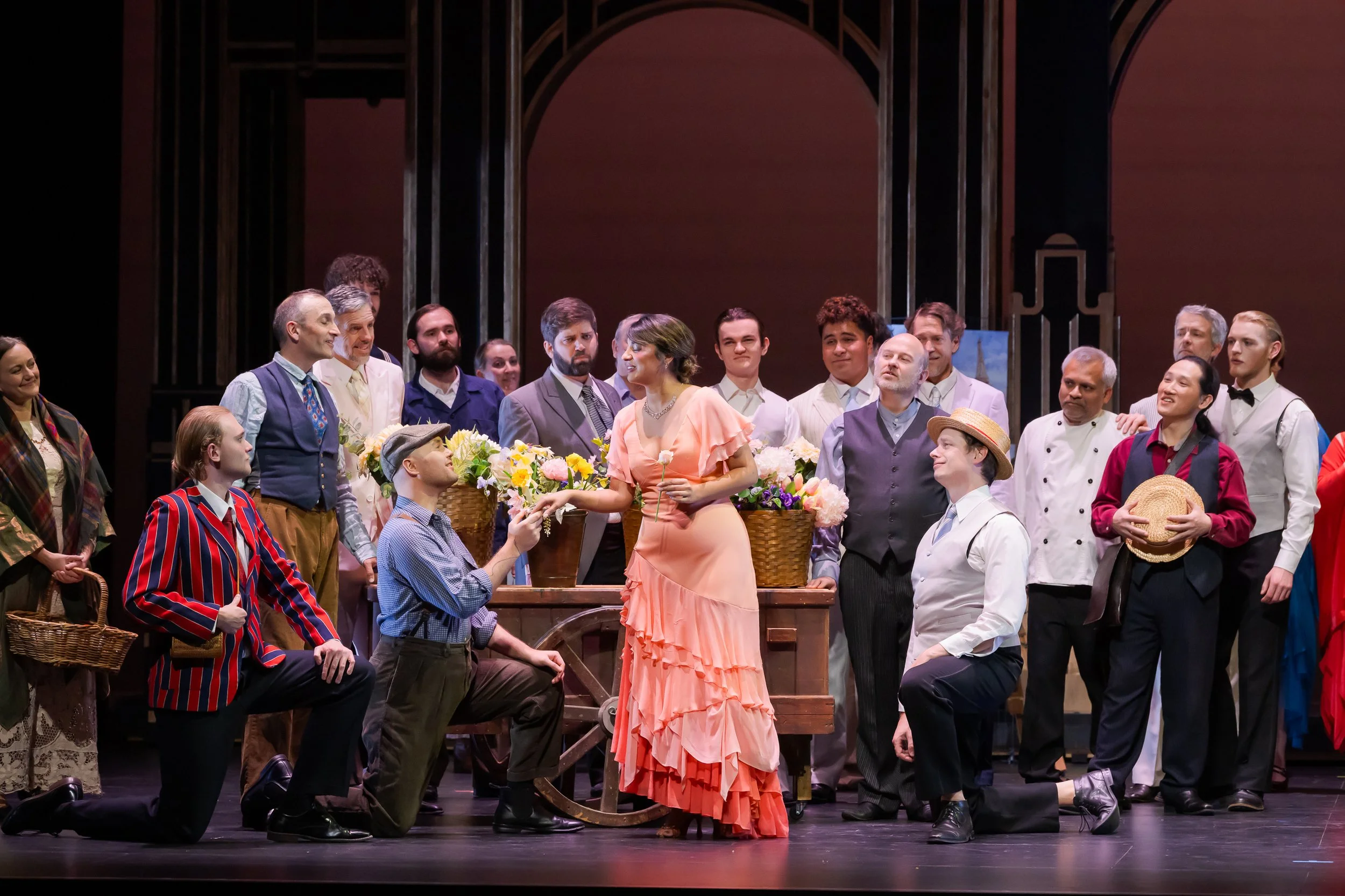
Amina Edris as Manon in Act 3 of Manon
“…a beautiful voice with crystalline clarity in its high register.”
Photo credit: Stephen A’Court
Here as elsewhere conductor Romain Dumas reveals both his understanding of Massenet’s intentions and his sensitivity in accompaniment, finding just the right flexibility in this graceful dancing aria, with occasional support from a well-choreographed chorus and entertainment from an elegant trio of ballerinas.
Manon was written early in La Belle Époque (c. 1871-1914) in Paris. It was a time when traditional roles for women were changing, but young Manon is not allowed to benefit for long from her increasing sense of freedom. As for many operatic heroines, her desires for sensual pleasures, riches and admiration lead to her exploitation by men and ultimately her downfall.
After the Gavotte, Manon learns that her abandoned des Grieux is taking holy orders, and the second scene of this climactic Act is set at the famous Parisian church St Sulpice. Production designer Micheal Zaragoza has used a simple and versatile Art Deco design throughout, with rectangular structures that effortlessly provide a restaurant, a train station, the lovers’ bedroom and an outdoor market. With atmospheric lighting, they now become an ecclesiastical evening setting, where des Grieux encounters his censorious father. He then prays for guidance in the emotional aria "Je suis seule" ("I am alone"). Pati’s glorious voice and genuine passion and regret thrilled the rapt audience, which burst into spontaneous applause.
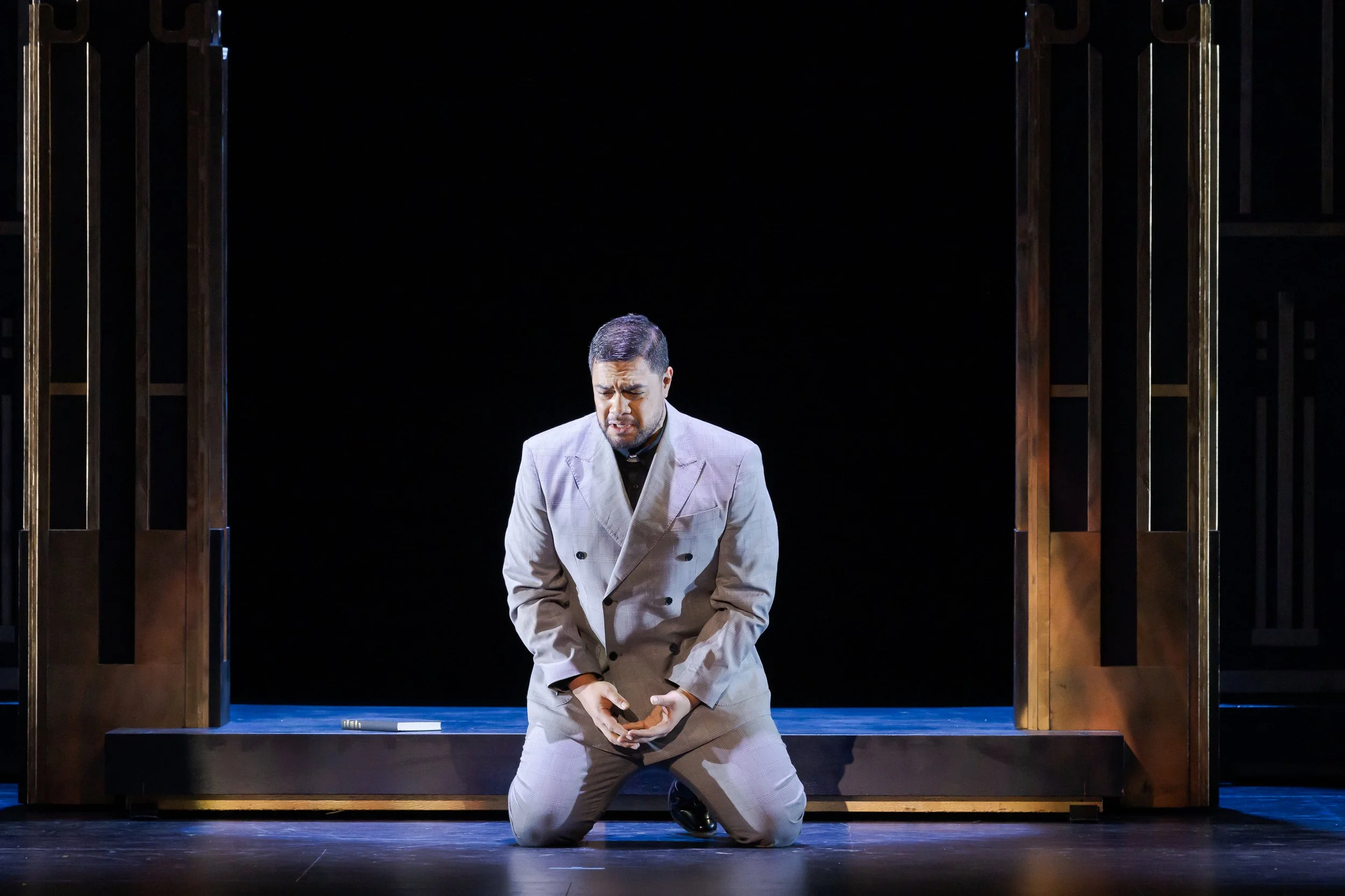
Pene Pati as des Grieux in Act 3 Scene 2 of Manon
“…singing the emotional aria "Je suis seule" ("I am alone").”
Photo credit: Stephen A’Court
The arrival of Manon is a crucial turning point in a story that can only end badly. She uses all her seductive skills –"N'est-ce plus ma main?" (“Is this not my hand?”) – and he succumbs eventually to her pleas for forgiveness and memories of their past love, abandoning his religious vows. They sing of their love together, the rapport between these two singers a romantic highlight of the production.
After this peak, Acts 4 and 5 move quickly to the story’s denouement. In the glittering casino at the Hôtel de Transylvanie, Rhodes as Lescaut is in the centre of the action, flanked by three colourful women of the demimonde, Pousette, Javotte, and Rosette (played with aplomb by sopranos Sarah Mileham, Jasmine Jessen and Charlotte Secker). This trio has playfully tempted Manon to join their superficial world of luxury since Act 1, supported by the naughty Guillot. She and des Grieux arrive, Manon shimmering in her social element, and he is persuaded to solve their financial problems at the gambling table. Accused of cheating, the pair are arrested and separated, Manon sentenced to deportation as a woman of dubious morals.
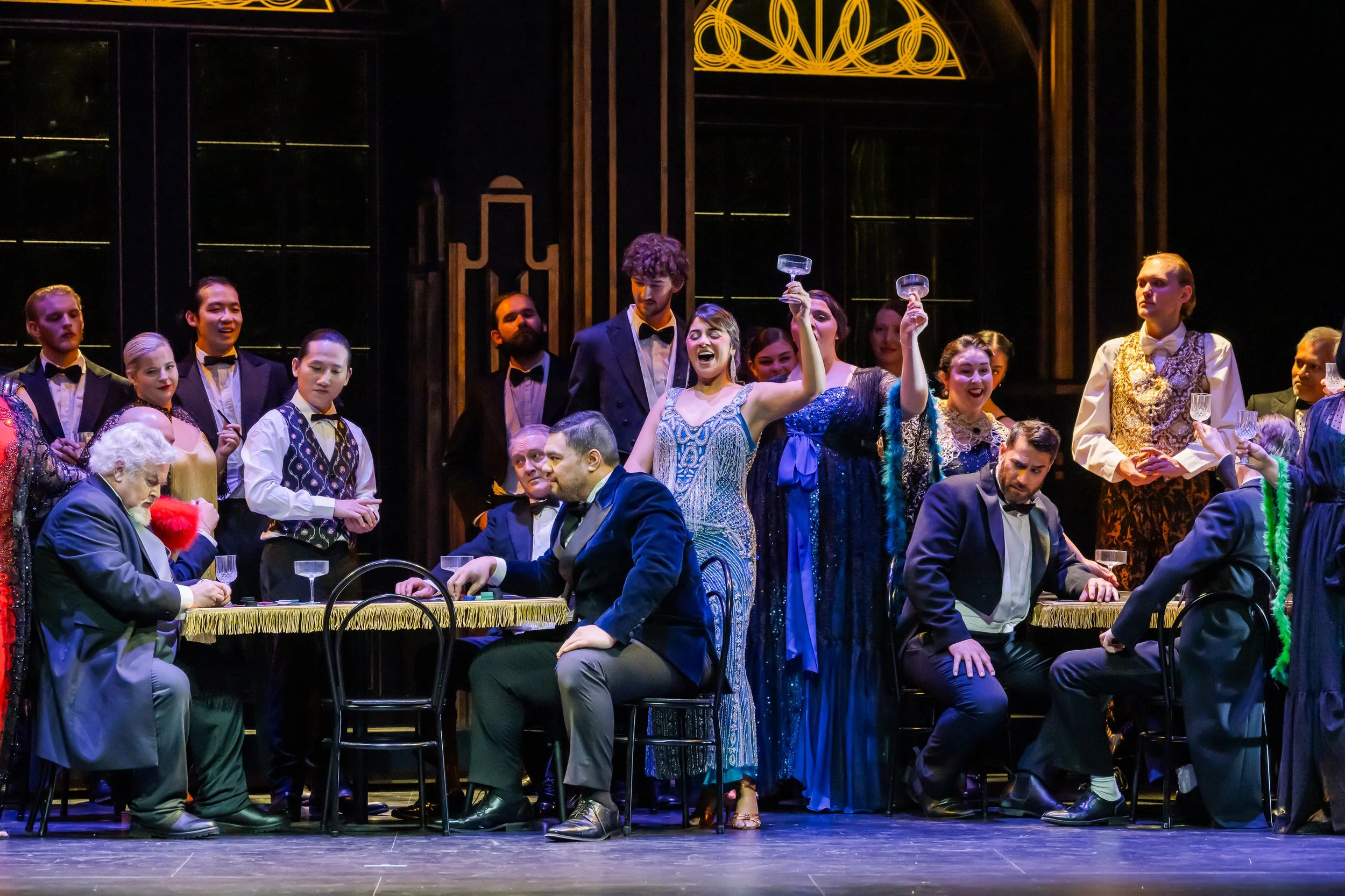
Des Grieux (Pati) plays cards with Guillot (Patrick Power) (left) while Manon (Edris) is in her element at the glittering casino
Photo credit: Stephen A’Court
The final Act is both rapid and bleak, a couple separated by a woman’s death, as in many operatic stories. A final, illicit meeting between the lovers ends as Manon, weakened by her ordeal, dies in the arms of des Grieux. Manon’s conclusion lacks the heart-wrenching raw grief of Puccini’s La Boheme, but the emotionally convincing musicality of Pati and Edris ensures it is genuinely moving.
A prolonged ovation ended the evening, the audience thrilled by the splendid performance. Wellington Opera has pulled off a triumph – not only a sold-out extended season which undoubtedly introduced new audience members to opera, but an artistically sure-footed and musically thoughtful production worthy of Massenet’s masterpiece.
Wellington Opera Manon by Jules Massenet Romain Dumas (conductor), Sara Brodie (director), Michael Vinten (chorus director), Amina Edris (Manon), Pene Pati (des Grieux), Phillip Rhodes (Lescaut), Wade Kernot (Le Comte des Grieux), Patrick Power (Guillot de Morfontaine), Kieran Rayner (Monsieur de Brétigny), Wellington Opera Chorus and Orchestra Wellington. Wellington 1-9 August, 2026.